dailynewsnblog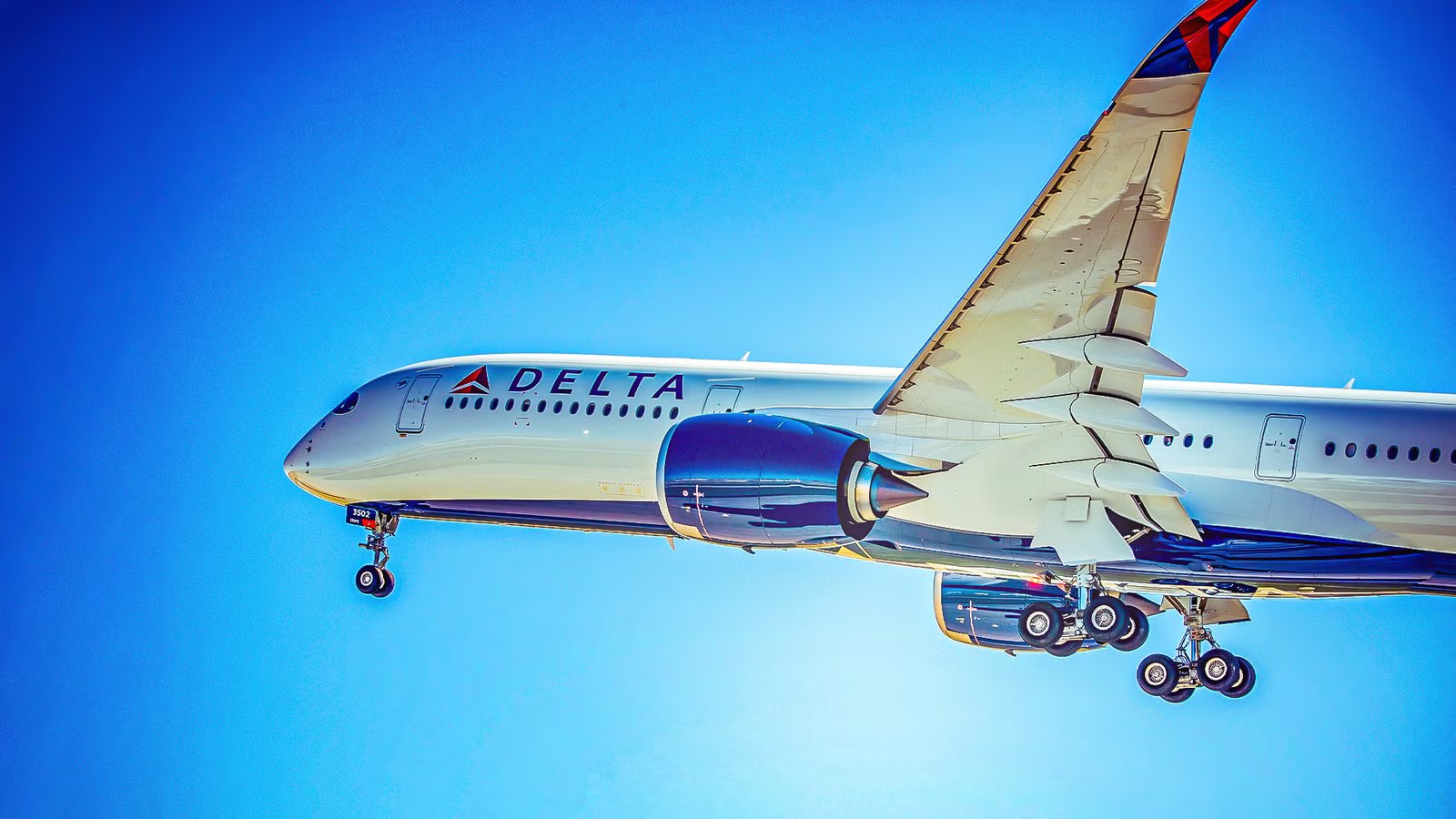
Since the Airbus A350 entered commercial service in January 2015 with Qatar Airways, the aircraft has proved immensely popular with airlines across the world. Thanks to its advanced fuselage and engine technology, the A350 is today one of the most fuel-efficient aircraft in the skies, particularly when deployed on long-distance routes.
The Airbus A350 is the primary competitor of Boeing’s popular 787 series of aircraft. In this article, we take an in-depth look at one of the A350’s operational features – its service ceiling. The A350’s service ceiling is around 43,000 ft, which is higher than many other commercial aircraft. Which factors contribute to the aircraft’s high service ceiling?
What Is A Service Ceiling?

Firstly, let’s establish what the service ceiling is when talking about aircraft. Put simply, the service ceiling is the maximum altitude at which an aircraft can fly and continue to operate normally and maintain a specific rate of climb. Once flying at or close to its service ceiling, an aircraft’s ability to climb is significantly reduced due to the thinner air found at higher altitudes. The typical service ceilings of some of the most common commercial aircraft found in the skies today are outlined in the table below.
Aircraft | Service ceiling |
|---|---|
Airbus A350 | 43,000 ft |
Boeing 787 | 43,000 ft |
Airbus A380 | 43,000 ft |
Airbus A330 | 41,500 ft |
Boeing 737 | 41,000 ft |
Airbus A320 | 39,000 ft |
By contrast, an aircraft’s absolute ceiling is the altitude that it can reach without being able to climb any further. There are many factors, often related to the aircraft’s design, that can affect its service ceiling. Let’s take a closer look at some of these.
Lighter Materials & Better Aerodynamics

Large parts of the Airbus A350’s fuselage and wings are made up of carbon fiber-reinforced polymer, which is much lighter than other traditionally used materials such as aluminum. This reduced weight allows the aircraft to perform better at higher altitudes.
The Airbus A350 also has a streamlined and aerodynamic design, which is the result of years of work from Airbus’ design teams, and several redesigns throughout the early years of the aircraft’s development. The aircraft’s swept wings, winglets, and sleek fuselage all help it to reduce drag, and therefore improve performance at higher altitudes, including up to its service ceiling of 43,000 ft.
Improved Engine Technology & Fuel Efficiency

It is not just the aircraft itself that makes the Airbus A350’s service ceiling so high. The aircraft is equipped with two Rolls-Royce Trent XWB engines, which feature advanced technology, making them among the most efficient and powerful commercial aircraft engines currently available. The Trent XWB is designed to perform well at high altitudes where the air is thinner.
The Airbus A350’s Rolls-Royce Trent XWB engines help the aircraft to achieve a high level of fuel efficiency. Not only is this important in helping airlines to keep costs as low as possible and to meet ambitious sustainability targets, but it also allows the aircraft to operate more efficiently at higher altitudes, raising its service ceiling.
Greater Passenger Comfort

Like many other aircraft, including the Boeing 787, the Airbus A350 features an advanced cabin pressurization system, which maintains a cabin altitude of around 6,000 ft, compared to the average of 8,000 ft on older aircraft. This allows the A350 to operate at higher altitudes without negatively impacting passenger comfort. As a result, passengers can enjoy a cabin pressure and atmosphere more similar to the one that they experience on the ground, with reduced fatigue.
Given the extra-long length of many of the routes operated by the Airbus A350, passengers are sure to appreciate this feature. For example, the A350 will soon be used by Qantas to operate its Project Sunrise direct flights from Australia to both Europe and the US. It is also currently deployed by the likes of Singapore Airlines and Qatar Airways on some of the world’s longest commercial flight routes.
Why The Airbus A350 Has Such A High Cabin Ceiling
Through advanced engineering and a focus on well-being, the A350 offers a superior flying experience.
All About The Airbus A350

The idea of the Airbus A350 was first developed by the European manufacturer in 2004, in response to Boeing’s upcoming 787 program. After several redesigns, the aircraft was eventually certified by both the Federal Aviation Administration (FAA) and European Union Aviation Agency (EASA) in 2014, and went on to enter commercial service with Qatar Airways just a few months later in January 2015 on a flight from Doha Hamad International Airport (DOH) to Frankfurt Airport (FRA).
The Airbus A350-1000 also entered commercial service with Qatar Airways on a flight from Doha Hamad International Airport (DOH) and London Heathrow Airport (LHR). The A350 has proved to be a resounding commercial success for Airbus, and to date, more than 650 A350s have been built, across the two main passenger variants – the A350-900 and the larger A350-1000. Thanks to its modern appearance and extra passenger comforts, the A350 has proved to be popular with passengers too.
Data from ch-aviation shows that the world’s largest operator of the Airbus A350 is Singapore Airlines, followed closely by Qatar Airways. Singapore Airlines has a total of 65 A350s, including seven A350-900ULRs (ULR = ultra-long-range), which the Star Alliance carrier deploys on its longest routes between Singapore Changi Airport (SIN) and US destinations such as New York John F. Kennedy International Airport (JFK), Newark Liberty International Airport (EWR), and Los Angeles International Airport (LAX).
As of last year, Airbus still had a delivery backlog of more than 700 A350s awaiting production and delivery, with the aircraft’s popularity showing no sign of slowing down.
Many Factors Contribute To The Airbus A350’s High Service Ceiling

The Airbus A350 has a service ceiling of around 43,000 ft, meaning that it can comfortably continue to operate normally at such altitudes. That said, it is unusual for a commercial aircraft to fly at such a high altitude for any real length of time. There are a number of different factors that contribute to the A350’s higher-than-average service ceiling.
As one of the most technologically advanced aircraft in the world, the Airbus A350 is able to fly at high altitudes. This is aided by its lightweight, composite fuselage, streamlined aerodynamics, and improved fuel efficiency.
The Airbus A350’s industry-leading operational performance and full efficiency, which have contributed to it having a high service ceiling, have also secured the aircraft’s commercial success. Thanks to its impressive credentials, the A350 is now a common sight in the skies around the world and is operated by more than 40 different commercial airlines around the world.