dailynewsnblog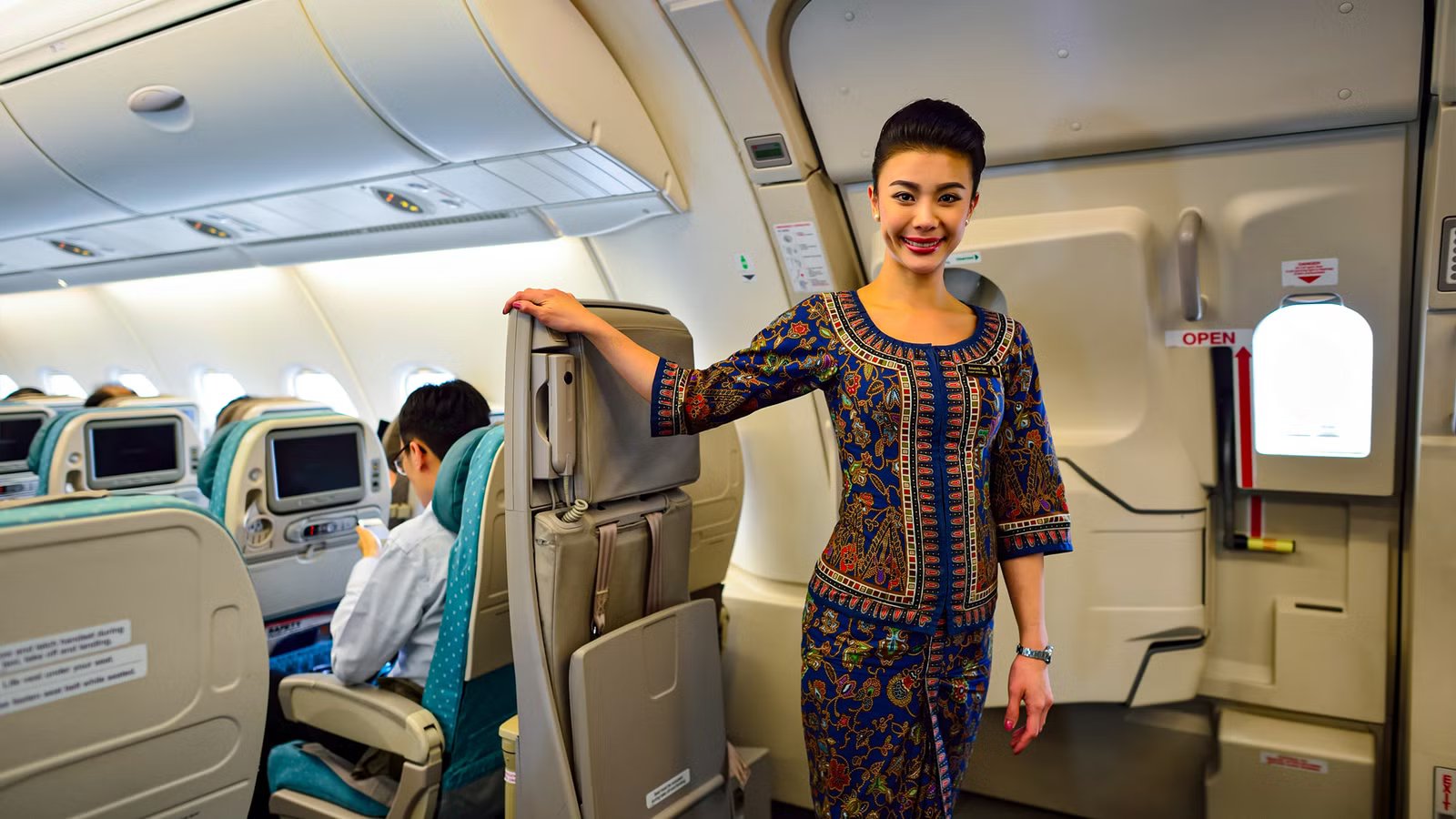
Ultra-long-haul flying has become one of the defining features of modern aviation, with flights now lasting 15, 17, and even 19 hours in total. However, while passengers generally focus on how to survive these journeys, the reality is that cabin crew must work, rest, and remain alert throughout the entire operation. Understanding how crew members actually sleep, rotate breaks, and manage fatigue is crucial to ensuring these flights operate safely and efficiently, while providing the best service for all passengers on board.
As airlines like  Singapore Airlines, Air New Zealand, and Qantasall push the boundaries of nonstop travel, crew rest infrastructure has become increasingly sophisticated to accommodate. From hidden bunk compartments and assigned sleep cycles to strict regulatory frameworks and pre-flight fatigue management, there is far more happening behind the scenes than most passengers ever see.
Where Crew Rest Fits Into Ultra-Long-Haul Flight Design

On flights exceeding 13–14 hours, airlines are required to provide designated rest areas for both pilots and cabin crew. These can include enclosed bunks, discreetly hidden compartments, and controlled lighting environments that support proper sleep cycles, but as long as there is somewhere for the crew to rest, flights of that duration can operate safely. As shown on Singapore Airlines’ Airbus A350-900ULR aircraft, which operate the longest flights between Singapore and New York, crew rest areas are as critical to the safety case as fuel, payload, or flight planning.
These areas are typically located above the passenger cabin in the crown of the aircraft, accessed via locked staircases or doors that passengers never see. Airlines like Air New Zealand, which operates the 17.5-hour New York–Auckland sector, as noted by 7 News, use these spaces to rotate their crew through consistent sleep cycles while maintaining full service coverage in the cabin. Onboard NZ1, crew rest begins just a few hours after departure, with flight attendants rotating every 2–3 hours to maximize alertness and mitigate fatigue.
Each carrier configures its crew rest differently depending on aircraft type and mission length. Boeing 787s, A350s, and 777s usually include between six and ten bunks for cabin crew and two to three for pilots, per CNN. As long-haul flights extend to 19 hours or more, regulatory bodies support longer, more structured rest periods that allow at least one complete sleep cycle, typically around 90 minutes.
15-19 Hours In The Sky

The foundation of crew rest begins long before boarding even starts. Per Flying Magazine, airlines must schedule their flight attendants and pilots to ensure they are fully rested before duty, a process that grows increasingly complex for ultra-long-haul operations due to the lengthy preparation required. Crew members often receive standby notifications hours before departure and must manage their sleep strategically, especially when operating nighttime departures, to ensure that they are well rested and ready to perform their operational duties.
Airlines use advanced flight-planning software to predict winds and flight times, which can vary dramatically from day to day. On Air New Zealand’s JFK to Auckland route, for example, weather conditions can shift flight time by up to three hours, and the aircraft may be restricted by payload to ensure adequate fuel reserves. This variability influences how crew rest periods are divided, when pilots hand over control, and how long each break can last.
Operational Factor | Impact on Crew Rest |
|---|---|
Weather & Jet Streams | Alters duty length and rest timing |
Payload Restrictions | May reduce the number of passengers to allow for fuel |
Flight Duration Variability | Requires flexible rest scheduling (15–18 hrs) |
Crew Complement Requirements | Ensures full rotation meets regulations |
This pre-planning is essential for every ultra-long-haul flight. The crew must remain alert during turbulence, medical events, meal services, and emergencies, which means every rest allocation is calculated to maintain operational safety throughout the entire flight.

How Do Flight Crews Prepare For Some Of The World’s Longest Flights?
An inside look at how flight crew prepare for some of the world’s longest flights.
Inside The Hidden Crew Rest Compartments

Shutterstock, Simple Flying
For passengers, the steep staircase or hidden doorway in the galley has always been seen as a mystery, but behind it lies the crew rest area. These compartments differ depending on aircraft type, with some offering tight, submarine-like bunks and others featuring more spacious sleeping pods. Rest areas are designed to be hidden away and compact to maximize internal space for passengers and provide separation between passenger and crew areas, according to CNN.
The Independent notes that, on the Boeing 787, for example, flight attendants climb a narrow set of stairs into a low-ceiling compartment with stacked bunks, blackout curtains, and temperature-controlled ventilation. Senior cabin crew often place an item, such as a tie, on the curtain, so colleagues can quickly identify who is resting when checking in on their crewmates and, most importantly, in the event of an emergency. On the A350, the compartments tend to be slightly roomier, offering wide, modern rest areas for crew. Ultimately, the area is still designed to be functional rather than luxurious.
Aircraft | Typical Crew Bunks | Location | Points Of Note |
|---|---|---|---|
Boeing 787-9 | Six to eight | Above the forward cabin | Narrow ‘coffin-like’ bunks |
Airbus A350-900ULR | Six to ten | Above aft cabin | Used on the world’s longest flights |
Boeing 777-300ER | Six to eight for the cabin crew, two to three for pilots | Above aft galley | Larger but still enclosed |
Crew typically change into lounge wear, remove their shoes, and stow uniforms before resting to maximize comfort in the confined space. The bunks are insulated to reduce engine noise, and ambient lighting is set to help with circadian rhythm adjustments. In short, while visually they might not seem particularly interesting, these crew areas are designed to help crew get as much-needed rest as possible.
How Crew Manage Fatigue & Sleep Cycles Mid-Flight

Managing alertness on flights that stretch beyond 13–17 hours is one of the most important operational considerations for both flight and cabin crew. Scientific studies highlight the value of completing full sleep cycles, typically 70–110 minutes in total duration. In reality, the National Library of Medicine notes that crew fatigue is governed by strict Flight Time Limitations from regulators such as the FAA and EASA, which mandate minimum pre-duty rest periods to ensure at least eight hours of uninterrupted sleep.
In flight, airlines use a combination of structured bunk rest, short controlled-rest naps, and science-based Fatigue Risk Management Systems to maintain alertness throughout ultra-long-haul operations, adapting to circadian rhythms, workload intensity, and individual crew needs. Flight attendants rotate through structured rest periods depending on the duty length. For flights approaching 18–19 hours, there may be multiple sleep cycles built in.
Flight Stage | Cabin Crew Activity | Duration |
|---|---|---|
First three hours | Meal service + cabin prep | Three hours |
Cycle one Rest | Half the crew sleeps | Two to three hours |
Midflight | Light service + passenger checks | Two hours |
Cycle two Rest | The remaining crew sleeps | Two to three hours |
Pre-Arrival | Breakfast service + cabin prep | Three hours |
Senior crew often coordinate meal services, medical responsibilities, and turbulence protocols to ensure enough staff remain active and ready. What is clear is that for these incredibly long flights, far more precautions need to be taken to ensure safety at all times. Crew members also use strategies like caffeine timing, hydration management, and controlled lighting exposure to maintain rhythm and alertness.
Fatigue risk management training is now standard for airlines operating for more than 15 hours, and there is a growing focus on providing comprehensive training and on research into how to manage the risks of fatigue on such flights. Qantas‘ Project Sunrise has done exactly that, allowing the airline to not only research the effects of ultra-long-haul flights on passengers but also on its crew, as reported by Key Aero.

Would You Take A Project Sunrise Flight?
Qantas has shared that it expects to take delivery next year of its first modified A350-1000 for Project Sunrise, and that the ultra-long-haul flights will begin as soon as early 2027. The initial routes suggested are from Sydney or Melbourne to London or New York, which will result in non-stop flights of up to 20 hours.
The ability to fly non-stop from (say) Sydney to London and forego the time taken for a refueling stop is an attractive proposition. However, spending the best part of a full day in an economy seat, the equivalent of flying JFK-LAX four times, back-to-back, seems less appealing.
So would you be keen to take a Project Sunrise flight? Why or why not? And how do you feel about ultra-long-haul flights in general?
What Crew Do When They Can’t Sleep

Not every crew member sleeps easily in the bunks. Some find the compartment claustrophobic or struggle with noise or turbulence. Crew rest regulations allow for quiet rest periods even if sleep doesn’t occur, which still helps maintain alertness. It can often be challenging for the crew to get the rest they need while remaining mentally focused on work. This is especially true for pilots, who need to be highly attentive and constantly work erratic, irregular hours while performing complex tasks.
There are, of course, many pilots who don’t struggle to get sleep and often end up sleeping more than most of the crew, with more than half of pilots admitting to sleeping while in the flight deck, per the BBC. Some crew members use eye masks, noise-canceling headphones, or personal blankets to adjust the environment. Others spend the first half of their break winding down before trying to sleep, similar to passengers who struggle on overnight flights. Senior attendants emphasize that the biggest objective is reducing overall fatigue, not forcing sleep.
Ultimately, crew members rely on their own experience to manage long-duty periods. Veterans know when to eat before boarding, how to time caffeine, and how to prepare for rest cycles both before and during the flight. Like many things in the aviation industry, experience is often the key to success. Not every crew member may get the same amount of rest, and some may have an easier time than others, but fundamentally, rest time is a critical part of long-haul flights.
The Future Of Crew Rest

The next generation of flights will push duty limits to unprecedented lengths. For instance,  Turkish Airlines plans to launch nonstop Istanbul–Sydney flights of around 17 hours, while Qantas’ Project Sunrise aims to operate 19–20-hour routes from Sydney to London and New York. These will require new approaches to crew rest, including expanded bunk areas, more structured rest cycles, and possibly new onboard spaces for stretching or mobility.
As aircraft range increases faster than human endurance, regulators, airlines, and crew unions will shape the next phase of ultra-long-haul flight design. What remains certain is that cabin crew rest, largely invisible to passengers, will determine how far aviation can push nonstop travel in the years ahead.