dailynewsnblog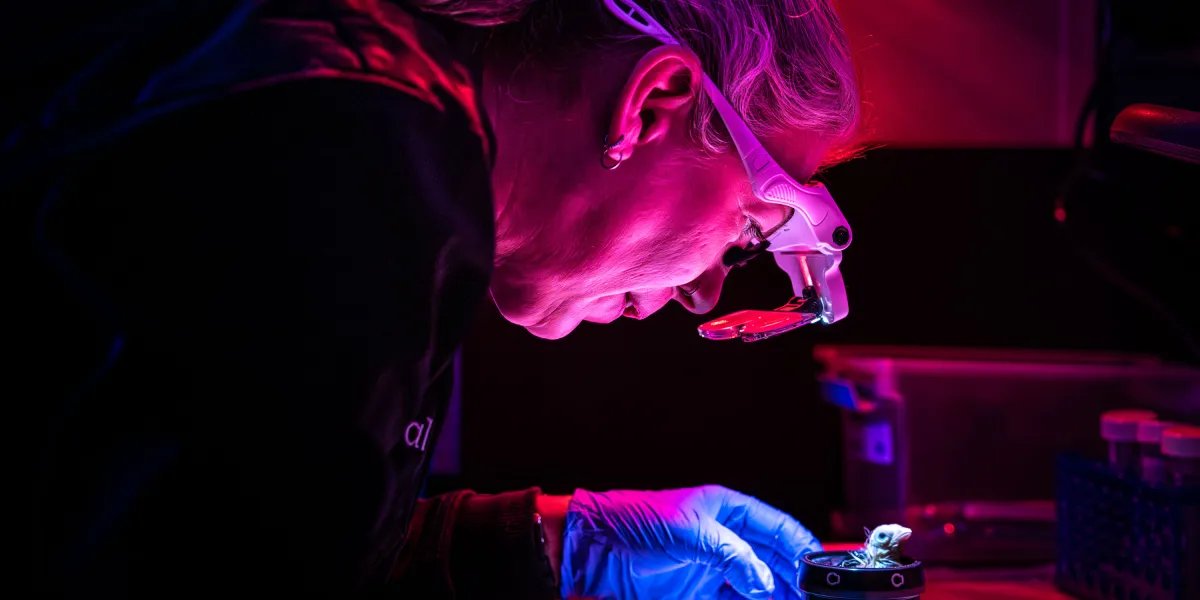
“We’re looking at every single facet of what’s happening during a mammalian pregnancy to unpack exactly how we then go about recapitulating that,” says Pask.
For that team, an artificial eggshell is a relatively quick and easy technical win. That’s because chickens are already an example of ex utero development. After an egg is laid, a small embryo sitting on top of the yolk starts growing, drawing nutrients from the yolk, the white, and even the shell., which provides calcium. (Colossal says it has to add ground-up calcium to the artificial eggs.)

COLOSSAL BIOSCIENCES
In order to create a moa, Colossal will have to genetically alter another type of bird, changing potentially thousands of DNA letters. But so far, chickens are the only bird species that can be genetically engineered. And that’s via a tricky process of editing stem cells that produce egg and sperm. Scientists have to add or delete DNA letters from these cells and then inject them back into an egg. The resulting bird will carry the genetic change in its gonads—and then be able to pass it on.
Pask says Colossal’s idea is that it could modify avian stem cells enough toproduce moa-like sperm or eggs. But then you might have the odd situation of a chicken laying an egg with a moa embryo inside it. “You would have chickens making moa egg and moa sperm. But it’s still a chicken egg,” he says.
Helen Sang, a professor emeritus at the Roslin Institute in the United Kingdom, says she’s not sure a moa embryo could survive on the yolk of a chicken egg, given evolutionary differences. “There are significant challenges to overcome to grow an embryo of a different species in artificial eggs,” says Sang.
Just one of those is the huge size discrepancy. The amount of yolk in a chicken egg would hardly be enough to support the much larger moa chick. Yet Pask says that is exactly where the artificial egg will come in handy.
He says it may be possible to use a fine needle to slowly “put 50 yolks together to make that yolk mass much larger.”
“The chicken egg isn’t going to be big enough to support the growth of the moa through to term, to when it would normally hatch, but that’s when you could then take that egg, put it into the artificial egg environment, and then scale it up in size,” he says.
So far, Pask says, the artificial egg is working well for chickens—almost too well. “We hatched 26 chickens and then [our CEO] asked us to put the brakes on. We have too many chickens running around.”