dailynewsnblog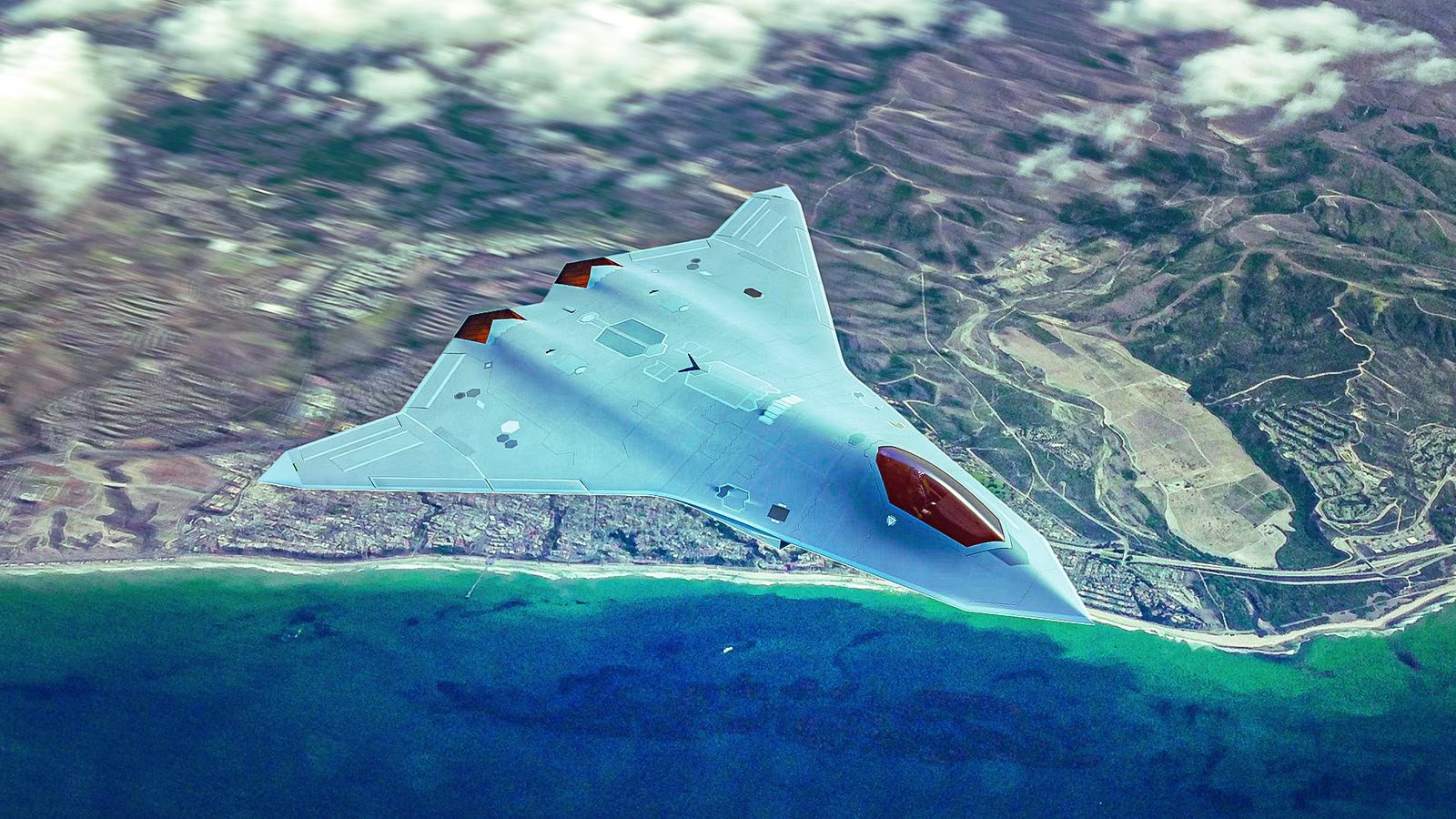
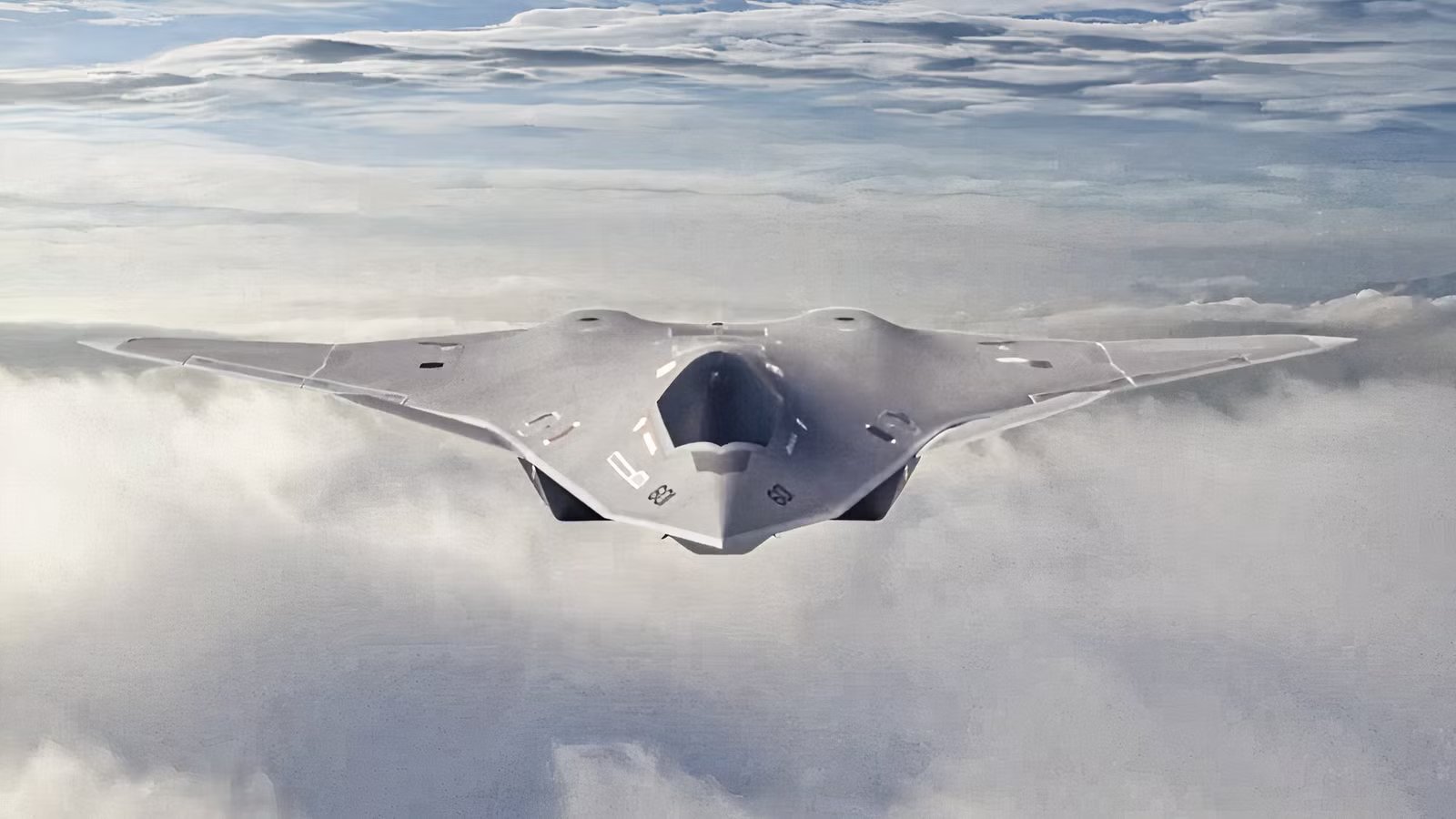
While China has initially leaped ahead in showing physical prototypes via social media leaks on Chinese sites, like Weibo, reaching a production-grade weapon system involves a decade-long maturation process that has not been seen progressing. The People’s Liberation Army shocked the world when it was the first to construct a fully functional technology demonstrator, but that also spurred the great powers in the West.
The United States and Europe are making rapid progress to surpass the gains shown by Chinese defense industrial aerospace, with the first examples expected to take flight in just two years and anticipated service entry by 2030. One of the greatest technological hurdles to producing a true 6th-gen fighter is also one of the key areas in which Chinese aviation companies struggle the most by comparison. By all standards, a true next-gen stealth fighter will require variable cycle engines that can shift between efficient and extremely high-speed flight regimes.
Chinese aircraft have far less powerful and more inefficient engines than Western counterparts, even when considering the most advanced airframes like the Chengdu J-20 Mighty Dragon or Shenyang J-35A Gyrfalcon. At least one prototype was shown with three engines, but the capability of this design is purely speculative. If China follows its J-20 timeline, experts anticipate serial production starting by 2031, with full combat squadrons not ready until 2035.
Head To Head: 6th-Gen Programs Around The World

The US Air Force and Navy are pushing rapidly to bring the Boeing F-47 and F/A-XX to production in the next few years. Following a $20 billion contract award in March 2025, Boeing has even said it began building the first production-representative F-47 at its St. Louis facility. Similarly, the Future Combat Air System and Global Combat Air Program in Europe are advancing in light of the progress made by China.
Although Northrop Grumman is still in the competition for the Navy’s 6th-Gen fighter jet, it is speculated that the Boeing aircraft could be adapted as a naval variant. Going into 2026, the program was expected to be essentially put on pause to make funding available, but that changed after a review on Capitol Hill. The program was recently revived by Congress with a $1.69 billion funding boost, and a selection is anticipated to be announced later this summer.
Program Name | Partner Forces | Current Stage | Planned Entry | Key Companies |
|---|---|---|---|---|
NGAD (F-47) | US Air Force | Early Production; First flight expected 2028 | 2029–2030s | Key Partners Boeing (Lead), Pratt & Whitney |
GCAP (Tempest) | UK, Italy, Japan | Formal Development; Demonstrator fly-off by 2027 | 2035 | Edgewing (BAE, Leonardo, MHI) |
FCAS / SCAF | France, Germany, Spain | Conceptual / Pre-Prototype; Demonstrator delayed | 2040+ | Dassault Aviation, Airbus, Indra |
F/A-XX | US Navy | Design Selection; Decision expected Aug 2026 | 2030s | Northrop Grumman, Boeing |
J-36 / J-50 | China | Flight Testing; Multiple prototypes observed | 2030–2035 | Chengdu, Shenyang |
The Italian Air Force, the Japanese Air Self-Defense Force, and the Royal Air Force of the United Kingdom are working together to create GCAP. Early in 2026, Canada also expressed interest in joining as an observer, which is thought to be a step toward full partnership. Although Japan’s Mitsubishi Heavy Industries F-X concept fighter and the UK’s BAE Systems Tempest concept were developed separately, their ideas are being combined to produce the GCAP program’s eventual aircraft.
The Tempest is envisioned as a system of systems. The stealth fighter will be equipped with a wide range of weapons, including conventional kinetic munitions and directed energy weapons, as well as offensive and defensive electronic warfare capabilities and an unrivaled sensor suite. The GCAP program is planned to have key tasks such as artificial intelligence and integration with uncrewed systems, making it one of the most innovative and controversial design aspects.
Unfortunately, unlike the other Western programs developing next-generation stealth Fighters, FCAS has hit major roadblocks over political and economic aspects in the multinational developmental framework. Industrial partners Dassault Aviation and Airbus Defence and Space remain locked in an impasse over design authority and work sharing. The design principles are similar to NGAD and GCAP, but with the delays, entering the service is not expected to be until 2040 or 2045.
America Takes The Lead: Next Generation Air Dominance

The Boeing F-47 is the central crewed platform of the USAF NGAD program that will also see the development of ‘ loyal wingman’ drones with the F-47 at the top of a new system of systems. Awarded to Boeing in March 2025 under a $20 billion contract, the program is on track for a first flight in 2028. Boeing’s Phantom Works is designing the new fighter jet from the outset to command a semi-autonomous swarm of Collaborative Combat Aircraft.
First and foremost, the F-47’s next-generation, all-aspect, broadband stealth capabilities will be far more sophisticated than those of existing fighters like the F-35. The F-47 will be a tailless jet with multi-spectral stealth, also known as stealth++. The all aspect low observability will conceal it from the entire electromagnetic spectrum, infrared, acoustic, and even visual detection. The F-47 will penetrate deep into enemy territory without a trace.
Variable cycle engines will be a crucial part of this new stealth fighter, with Pratt and Whitney and General Electric currently competing to be the supplier of the revolutionary new power plants. Both contractors are currently building full-scale prototype engines, the GE XA102 and the P&W XA103. Not only do these engines offer the ability to dynamically switch between fuel-efficient cruising and supersonic afterburner power, but they also produce massive amounts of electricity for systems that control drones or even power directed energy weapons or lasers.
The F-47’s avionics will operate with an artificial intelligence co-pilot for danger prioritization and tactical advice in the cockpit. CCAs will be used to take on high-risk tasking and preserve the manned aircraft. The extremely high-level of flexibility paired with never-before-seen live data analysis onboard, which empowers decisions in the cockpit.
Air Force Secretary Frank Kendall revealed plans in 2023 for a possible fleet of about 1,000 sophisticated drones and 200 next-generation jets that would be used for support and ammunition transportation. The Air Force intends to acquire at least 185 of these new aircraft, and the F-47 is scheduled to be developed between 2025 and 2029.

25 Years From Now, This Is The Future Of Military Aviation
A glimpse into the next era of air warfare.
F/A-XX: The Air Wing Of The Future

In July 2025, USNI News reported that the Navy’s annual wishlist of programs for 2026 only requested $74 million to sustain activities already underway on the F/A-XX development. The US Senate ultimately pushed ahead with the F/A-XX, partially owing to testimony from the Navy’s top aviation officer, the ‘Air Boss,’ that stressed the program’s unique difference and the importance of designing a plane with carrier capability from the outset.
Vice Admiral Daniel Cheever, Commander of Naval Air Forces, or the Air Boss, was quoted by the Aviationist:
“ I’m looking forward to [the F/A-XX] because that sixth-generation means air superiority in that timeframe in the future, which means sea control. And as long as you have air superiority, you have sea control around the globe.”
According to Aviation Week, the Air Force has said that the F-47 will have a maximum speed of more than Mach two and a fighting radius of more than 1,000 nautical miles (1,852 km). That’s along with its stealth features, drone compatibility, and perhaps even optionally manned capabilities. That would put the Boeing F/A-XX at roughly 25% more range than the current aircraft, even if the Navy opts out of the variable cycle engine that the Air Force expects.
The challenges of flying from a ship are more than simply the corrosive power of saltwater. An offshoot of the F-47 may still become the basis of the F/A-XX, but it will require extensive design modifications from its USAF cousin if it does win.
Here’s Why Air Forces Are Expanding Their Stealth Fighter Programs
The global race for the ultimate stealth jet.
Chengdu J-36: China’s Diamond-Double-Delta Fighter

Since 2024, at least four different J-36 prototypes have been seen flying close to Chengdu, demonstrating the aircraft’s progress through an accelerated flight testing phase. Although China has accomplished the milestone of flying numerous airframes, military analysts contend that a crucial gap in engine technology and system-of-systems integration makes it improbable that it would reach mature mass production before Western competitors like the Boeing F-47.
The 14-month period between the first flight and the introduction of the fourth prototype was a shockingly aggressive iterative prototyping strategy that drew attention to the relatively slow pace of the US and European next-generation fighter programs. The first example is thought to have taken off in December 2024, followed by a second in October 2025 with revised two-dimensional thrust vectoring nozzles and a third in late 2025 without the original’s noticeable pitot tube.
It is thought to be a type of heavy tactical jet. The aircraft, which has a unique trijet arrangement and a novel tailless Double Diamond Delta aerodynamic shape, is thought to have the top-tier WS-15 engine located deep within the fuselage, just like the most recent and advanced J-20 models. Both single and side-by-side tandem cockpits have been observed in prototypes; the latter were designed to allow a dedicated “mission coordinator” to oversee devoted swarms of wingman drones.

Why The Pentagon Is Worried About International Stealth Fighter Development
The new 5th-generation arms race.
Shenyang J-50: The Tailless Lambda-Wing Jet

Swiveling wingtips are thought to be used as control surfaces in the J-50, a smaller twin-engine lambda-wing aircraft. From late December 2024 until early 2026, it was observed performing flight tests close to Shenyang facilities. The J-36 is thought to be far more advanced than this program, despite the fact that a few images and videos of the jet performing sorties have surfaced.
There are thought to be at least two different prototypes. A second prototype without a nose air data sensor was seen taxiing in late 2025, while the first was seen in December 2024. The aircraft is seen executing high-speed maneuvers in high-resolution footage from early 2026, which is a significant improvement over short experimental hops.
The J-50 is speculated to be a prospective carrier-based sixth-generation fighter for the Type 003 Fujian aircraft carrier. While China is flight-testing the WS-15 engine, it lacks the variable-cycle technology found in the P&W XA103, which is essential for 6th-generation efficiency. The Combat Cloud and AI-teaming with drones are other valuable features of a 6th-generation fighter. Analysts believe that while China can build the jet, it is still years away from having the steady, high-bandwidth data lines needed to handle faithful wingman swarms in a real-world combat scenario.