dailynewsnblog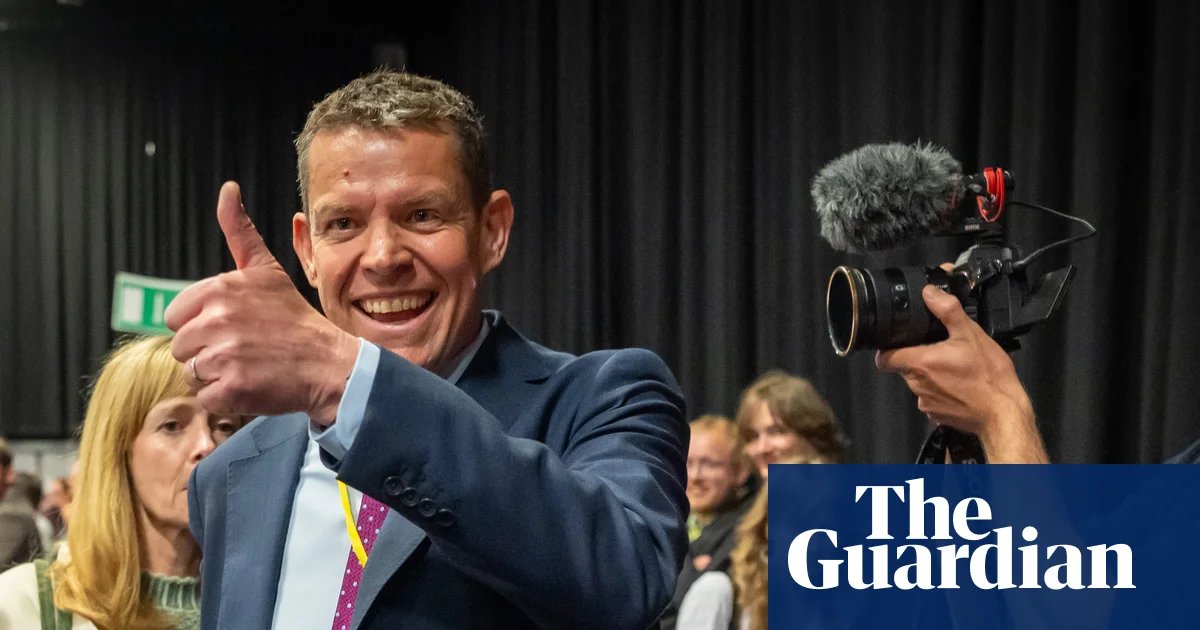
Good morning. While Westminster-watchers were obsessed with Labour’s leadership shenanigans, a new chapter in the relationship between Cardiff and the UK government opened.
After claiming power in this month’s elections, Plaid Cymru has wasted no time in testing Keir Starmer’s “openness” to reform. In London, the party tabled an amendment to the king’s speech, calling for a number of justice, infrastructure and welfare powers to be devolved to the Senedd.
First minister Rhun ap Iorwerth and his nationalist party narrowly failed to secure an absolute majority in the newly expanded Cardiff chamber, with Reform UK running into second place. Labour’s miserable result saw them ousted from government with a vote share of about 11% in a country where they have been the dominant party for a century.
For today’s newsletter, I spoke to Bethan McKernan, the Guardian’s Wales correspondent, about how this historic shift of power came about, what it tells us about Welsh Labour, and how, going forward, Plaid are likely to settle into government and its relationship to London. First, the headlines.
Five big stories
UK news | A rescue deal for Thames Water is under threat because of a potential change in prime minister, government insiders have said.
UK politics | Andy Burnham drew the battle lines for the future of the Labour party on Monday as the Greater Manchester mayor promised he would “change Labour” and win back the voters the party had lost.
US news | Five people, including two suspects, were killed in a shooting at the Islamic Center of San Diego, California, in what authorities said was being investigated as a hate crime.
Middle East | Iran has made a new proposal for a deal to definitively end the war, officials in the region said, with Donald Trump claiming he had postponed new military strikes so talks could continue.
Technology | A jury ruled in favour of Sam Altman in the culmination of a long and bitter legal battle that pitted the richest person in the world against a leader of the AI boom.
In depth: ‘We are heading into uncharted waters’
On the Saturday after the 7 May election, Bethan tells me, she was in the centre of Cardiff, where Plaid leader, Rhun ap Iorwerth, was giving an impromptu victory speech.
“There were easily a couple of thousand people there,” she tells me. “It was this sunny day, and everybody had Welsh flags. We, the media, were asking him questions, and we had to stop just because suddenly people singing the national anthem started drowning everything out.”
“Nothing like this has ever happened in Welsh politics before,” says Bethan. “It was really quite moving.”
Why did Labour suffer such a bad defeat?
Alun Davies, a long-serving Labour grandee who lost his Senedd seat, said this was a “defeat manufactured in Downing Street”, but, as Bethan explains, the seeds had been sown for some time.
The party had been in power in Cardiff for 27 years, and the “incumbency problem” was starting to show. Despite channelling significant funding into the NHS, waiting lists remained high compared to the rest of the UK. There was, Bethan says, a feeling that public services in Wales had not recovered post-pandemic in the way they had in the other UK nations.
Then there was the perceived indifference from London. “When Keir Starmer came in, there was talk of a ‘partnership in power’ between Cardiff and London, but that’s not what happened,” she says. From the HS2 funding controversy (in 2015, David Cameron’s government defined it as an “England and Wales” infrastructure project, despite not an inch of track being destined for Wales) to the refusal to devolve the crown estates or enact police reform, the Welsh electorate began to feel that Labour in Westminster simply wasn’t interested in them.
In the past, Welsh Labour could always “blame the minister” in London for everything – austerity, Brexit, Covid. They could say their hands were tied. That line of defence is gone now. There is no one else to blame for their shortcomings, Bethan says. Her piece on Sunday after visiting Tredegar’s post-industrial valleys constituency of Blaenau Gwent Caerffili Rhymni laid bare how people there felt.
How did Plaid Cymru capitalise on Labour’s weakness?
Plaid were able to position themselves as the only authentic voice for a nation that Bethan describes as “waking up”. They also had a massive, if inadvertent, helping hand from Labour themselves. In a move Bethan calls a “massive unforced error”, Welsh Labour had pushed for the D’Hondt electoral system, believing it would help them maintain a hierarchical grip on candidate lists. The system is proportional, but not as proportional as some others, as it tend to reward larger parties, and is designed to balance proportionality with delivering stable parliaments.
Labour, Bethan says, never imagined they would be one of the smaller parties disadvantaged by its lack of proportionality. “The irony is that if they’d gone for actual STV [single transferable vote], they would have done better,” Bethan says. Plaid, meanwhile, vacuumed up the protest vote and presented a progressive alternative that felt distinct from the “blandness” associated with the London leadership.
Plaid Cymru’s Westminster leader, Liz Saville Roberts, has positioned the election result as a permanent rearrangement of Welsh politics, saying “the growth in support for Plaid Cymru in every region of Wales shows a fundamental shift in people’s hope and aspirations for our nation. This isn’t as good as it gets for Wales. People can also see that Wales doesn’t get the fair treatment that we deserve. We now have a clear mandate to fight for these powers.”
In a column on Sunday, Rhiannon Lucy Cosslett suggested that that Roberts’ party has moved from one that “catered to white native Welsh speakers” to one that, in the last decade, has embraced “a broader civic nationalism, one which includes a fight for social justice and self-determination for anyone who calls Wales home”.
What are the prospects for the new Senedd?
With the chamber expanding from 60 to 96 seats, we are entering a period of significant unpredictability. Plaid intend to run a sole minority government, but they will be operating in a very different environment. “It’s really a whole new batch of politicians,” Bethan says, pointing out that even Labour’s much-reduced representation included newcomers.
The massive influx of Plaid and Reform members have no prior experience in the Senedd. While Reform will be the official opposition, the expectation among observers is one of “chaos” and potential infighting. Bethan points to the 2016 Ukip intake as a precedent: “They imploded really quickly and a few of them were left as independents – it was a flash in the pan.”
The big unknown for ap Iorwerth is whether this new, populist opposition will be constructive or purely combative as he tries to push through his agenda.
How will this be seen from London?
“I don’t know if Westminster’s Labour party has realised quite how different it’s going to be with Plaid in charge now,” Bethan says. “We are heading into uncharted waters.”
In the first official call between ap Iorwerth and No 10 last Thursday, Starmer confirmed he would be open to a “conversation” on future powers.
On the one side, she points out, Sinn Féin, the SNP and Plaid Cymru are natural “progressive” allies with significant power bases in the devolved nations. Labour, nationally, have offered only a tepid unionism with any grand vision. And then there is the rise of Reform UK in devolved parliaments, when, as Bethan notes, “Nigel Farage is a standard-bearer for British nationalism. It’s very polarised.”
Bethan expects it to be testy. “Ap Iorwerth has been very clear about holding Westminster to account and demanding things Starmer didn’t deign to give to his own Labour colleagues during his administration. If Westminster didn’t give any quarter to Eluned Morgan, why would they give it to Plaid Cymru? That just pushes Labour’s problem with the Welsh electorate further down the road toward the next general election.”
What else we’ve been reading
In a chilling update from the frontline of drone warfare, Harriet Barber reports on the beginnings of a dangerous new chapter in Colombia’s decades-long conflict. Yassin El-Moudden, newsletters team
“My objective is to be surprised by what I’m doing,” says artist Sanya Kantarovsky in this intriguing interview about his eerie and supernatural-infused work. Martin
Is the UK seeing a quiet revival of Christianity? From the presence of crosses at far-right rallies to the use of wrestling to narrate biblical stories, the latest video in Richard Sprenger’s On the Ground series is an arresting look at the changing ways in which religion manifests in politics and society. Yassin
I was invited out to the Eurovision song contest final in Vienna and had an absolute blast. The UK entry? Not so much. Michael Hogan counts down the UK’s 10 biggest Eurovision flops of all time. Martin
The winner of this year’s International Booker prize will be announced today. Shortlisted titles include an intergenerational novel covering 30 years since the Islamic revolution in Iran and an inventive use of prose poetry to depict life in rural Albania, as John Self previews. Yassin
Sport
Football | Pep Guardiola is expected to leave Manchester City this summer after 10 trophy-filled years as the manager.
Football | The Champions League final will not be available to watch for free in the UK for the first time since the competition’s modern rebrand 34 years ago when Arsenal face Paris Saint-Germain in Budapest.
Premier League | A first-half header from Kai Havertz gave Arsenal a 1-0 win over Burnley and three precious points in the title race.
The front pages
“Burnham: Labour must change to regain trust”, is the Guardian’s front page. The Times says “Burnham ‘far ahead of Starmer’ in Labour vote” and the Telegraph runs with “Starmer sabotages Burnham on Brexit”.
Still on the same theme, the FT writes “Burnham tries to ease markets while vowing to reverse sell-offs”, the Daily Mail says “Slippery Burnham’s two U-turns in one day” and the Mirror leads with a quote from Starmer saying “I won’t walk away”.
Elsewhere, the i Paper says “HS2 will cost more than Nasa’s Artemis moon mission”, the Express states “Britons want to keep pension triple lock”. And Metro goes with “See-hole surgery!”
Today in Focus
Farage’s undisclosed £5m gift
The Guardian’s City editor Anna Isaac on Nigel Farage’s response to the Guardian revelation that he was given an undisclosed £5m gift from a crypto billionaire in 2024.
Cartoon of the day | Pete Songi
The Upside
A bit of good news to remind you that the world’s not all bad
She may look like a wolf, but Nya’s demeanour remains as sweet as when he got her as a puppy, says Stephen O’Callaghan, who is a safeguarding and crime prevention lead for TransPennine Express (TPE). The German shepherd was registered as a therapy pet at five and helps passengers with anxiety or low mood. As O’Callaghan says: “Nya puts a smile on people’s faces … [and] people always tell me, ‘That made my day a lot better.’”
When she isn’t attending events to raise awareness of mental health support on the rail network, Nya can sometimes be found performing a few tricks and drawing applause from Mancunian schoolchildren.
Sign up here for a weekly roundup of The Upside, sent to you every Sunday
Bored at work?
And finally, the Guardian’s puzzles are here to keep you entertained throughout the day. Until tomorrow.