dailynewsnblog
The pursuit of ultra-long-haul flight has reached its final frontier as the Australian flag carrier Qantas prepares to launch the longest nonstop flights in the world, with the help of the incredible engineering capabilities of Airbus. This marathon program is far more than just a marketing campaign and cements a legacy of continual development that the aviation industry has desired to achieve for decades.
Connecting Sydney to London and New York nonstop has been the dream of the Kangaroo Route since the first piston-engine airliners made the journey with several stops in the 1940s. Previous attempts required at least one layover, and now the arrival of advanced composite materials and high-efficiency engines has finally made a 22-hour flight a physical reality. To really put into perspective just how great an achievement this is, it is important to look beyond the massive fuel tanks and into the psychological and economic hurdles that have historically kept these two hemispheres separated by time and distance.
Engineering Behind The Range

The engineering behind the ULR variant of the Airbus A350-1000 is a masterclass in weight management and fuel optimization. In April 2026, the first airframe, carrying the test registration F-WZNK, rolled out of the final assembly line in Toulouse, showcasing the structural modifications required for such extreme endurance to the world. To achieve a 22-hour flight time, the manufacturer has integrated a permanent rear-center tank capable of holding an additional 5,283 gallons (20,000 liters) of fuel without compromising the existing cargo space.
The extra capacity brings the total fuel weight to approximately 288,144 lbs (130,700 kg), pushing the maximum takeoff weight to a staggering 709,888 lbs (322 tonnes). To handle this immense load, the Airbus reinforced the landing gear and modified the wing aerodynamics with taller, more efficient winglets. These changes ensure the jet can climb quickly to its initial cruising altitude, even when it is heavy enough to weigh more than three fully loaded blue whales.
Powering this record-breaking machine are two Rolls-Royce Trent XWB-97 engines, which were officially fitted to the first Qantas airframe in April 2026. These turbines provide 97,000 lbs (431 kN) of thrust each, offering a 25% reduction in fuel burn compared to the previous generation of long-range aircraft. The efficiency of these engines is the linchpin of the entire operation, as every drop of fuel saved during the first ten hours of flight is essentially profit that can be used to reach the final destination.
Almost A Day In The Sky

Distinguishing between the absolute endurance of an airframe and its daily operational profile is the commercial reality of Project Sunrise. On paper, the A350-1000ULR possesses a theoretical range of around 10,000 nautical miles (18,520 km), a distance that would allow it to fly for over 22 hours under perfect conditions. However, this is more of a safety buffer than a standard operating procedure, as the variables of modern aviation rarely align with laboratory settings. Achieving this duration demands a delicate balance of weight, speed, and atmospheric cooperation.
Real-world constraints, specifically the powerful headwinds encountered over the Pacific and Indian Oceans, can strip hundreds of miles from the effective reach of a jet. For instance, a flight from Sydney to London must contend with varying jet streams that can either push the aircraft forward or force the engines to work significantly harder against a wall of air. International aviation laws mandate that every aircraft carry enough reserve fuel to reach a secondary airport and orbit for 30 minutes. These legal requirements mean that while the jet could technically stay aloft for 22 hours, the scheduled flight time for the longest routes will likely be capped at 20 or 21 hours.
Feature | A350-1000 (Standard) | A350-1000ULR (Project Sunrise) |
Maximum Range | 8,700 nautical miles (16,112 km) | ~10,000 nautical miles (18,520 km) |
Fuel Capacity | 41,200 gallons (156,000 liters) | 46,500 gallons (176,000 liters) |
Maximum Endurance | Approx. 18 hours | Approx. 22 hours |
Seating Capacity | 350–410 seats | 238 seats |
Weight serves as the ultimate arbiter of distance in this extreme category of aviation. To maintain the ability to fly 9,200 nautical miles (17,038 km) on the Sydney to London sector, Qantas has intentionally limited the passenger count to ensure the airframe is not overburdened. This choice reflects a strategic decision to prioritize range over volume, ensuring that even with severe weather diversions, the plane can land safely with its required reserves intact. It is a mathematical puzzle where every additional traveler or suitcase represents a reduction in the total distance the aircraft can cover before the tanks run dry.
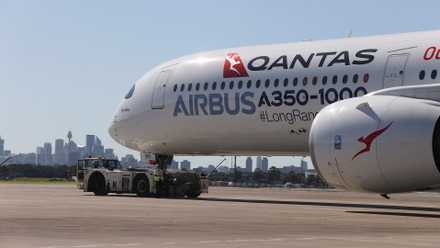
Progress: Qantas’ 1st Airbus A350-1000ULR Rolls Out With New Rolls-Royce Engines
The first Qantas A350-1000ULR, a game-changer for ultra-long-haul flights, has been spotted with its new Rolls-Royce engines in Toulouse.
Ensuring Passengers Can Thrive

Providing an environment where humans can thrive for nearly an entire day is perhaps the greatest challenge of Project Sunrise. In collaboration with the Charles Perkins Centre, the airline has reimagined the interior of the A350-1000ULR to combat the physical toll of prolonged immobility. The most significant addition is the wellbeing zone, a dedicated open area located between the premium economy and economy cabins. Qantas decided on a scientifically designed communal space featuring sculpted handholds for stretching, integrated exercise screens, and a self-service hydration station.
Critically, engineers have pushed the technical boundaries of cabin pressure and humidity to improve the biological experience of long-haul travel. Traditionally, airliners maintain a cabin altitude of 8,000 feet (2,438 meters), which can lead to fatigue and dehydration over ten hours. The A350-1000ULR utilizes its composite fuselage to maintain a much lower cabin altitude of approximately 6,000 feet (1,828 meters). This increased air pressure allows the blood to absorb more oxygen, significantly reducing the symptoms of jet lag and the physical exhaustion associated with crossing multiple time zones in a single sitting.
Lighting plays a critical role in synchronizing the internal clocks of passengers during these trans-meridian journeys. The aircraft features an advanced LED system capable of simulating 16 million colors, specifically programmed to transition through sunrise and sunset phases that align with the destination time zone. By slowly adjusting the light temperature from warm ambers to cool blues, the cabin helps regulate melatonin production. These subtle environmental cues are essential for helping the body prepare for a new day, even when the sun has remained visible through the windows for 15 hours straight.
Is Now The Wrong Time?

Operating a flight that spans ten time zones requires a total rethink of airline economics and cabin density. To make the A350-1000ULR project viable, Qantas has removed approximately 115 seats compared to a standard international configuration, resulting in a low-density layout of just 238 passengers. This reduction is a mechanical necessity because carrying less human weight allows the aircraft to carry more fuel. Consequently, the airline must charge a premium of roughly 20% to 30% over one-stop fares to ensure each flight generates sufficient revenue to cover the massive fuel burn.
During the initial hours of a 22-hour flight, a significant portion of the thrust generated by the Rolls-Royce engines is dedicated solely to transporting the heavy fuel required for the final quarter of the journey. In May 2026, jet fuel prices doubled due to conflict in the Middle East, putting the economic viability of such a fuel-heavy flight at real risk. The inefficiency here makes the direct flight significantly more expensive to operate than a traditional one-stop service through a hub like Singapore, even if the A350 is a global efficiency leader.
Cabin Class | Qantas Project Sunrise | Standard A350-1000 | Revenue Focus |
First Class | 6 Suites | 0–8 Seats | Ultra-Premium |
Business Class | 52 Suites | 30–48 Seats | Corporate Yield |
Premium Economy | 40 Seats | 24–32 Seats | High Margin |
Economy Class | 140 Seats | 250–300 Seats | Reduced Volume |
High-yield corporate travelers are the target demographic for this premium-heavy strategy. For a business executive, saving four hours of travel time and avoiding a midnight transit through a crowded terminal is worth the extra cost. Dedicating nearly half of the aircraft footprint to first and business class suites, the airline can offset the high operational costs with fewer, higher-paying passengers. With this model, it transforms the aircraft into a lucrative business opportunity, where the value of time saved justifies the steep price of admission.
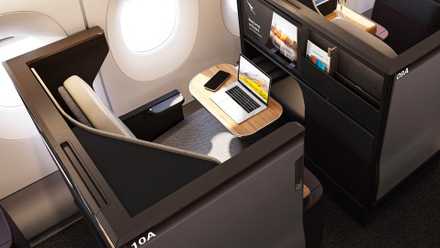
Only 238 Seats: What Qantas Sacrificed To Make 22-Hour Nonstop Flights Possible
Project Sunrise flights are coming soon.
Stopovers Still In Favor

While the appeal of a direct flight is undeniable, a significant portion of the traveling public still views a mid-journey break as a benefit rather than a burden. Data from the first half of 2026 indicates that nearly 35% of leisure travelers prefer a scheduled stopover in a hub like Singapore or Perth. For these passengers, the opportunity to use a full-sized shower, eat a meal on solid ground, and walk through a terminal provides a mental and physical reset that a 22-hour cabin environment does not facilitate.
Price sensitivity remains the most significant barrier to the total dominance of nonstop flying. For a family of four, the 20% price premium for a Project Sunrise ticket could equate to thousands of dollars in additional costs. Many travelers choose to endure a three-hour layover if it means keeping a significant portion of their holiday budget intact. For many travelers, the traditional Kangaroo Route hubs have spent decades perfecting the transit experience, offering rooftop pools, butterfly gardens, and world-class transit hotels that turn a stopover into a secondary vacation.
Hub-based carriers in the Middle East and Southeast Asia are not standing still as Qantas prepares its ultra-long-haul assault. Airlines such as  Emirates and
  Singapore Airlines have doubled down on their transit products, marketing the break as an essential part of wellness. They argue that two ten-hour flights with a restorative gap are biologically superior to a single 20-hour trip. Competition here ensures that even as the A350-1000ULR enters service, the traditional stopover will remain a vital and popular choice for a diverse range of global travelers.
Bringing The World Closer

The official rollout of the Project Sunrise network is scheduled to begin in late 2026 with the first flights taking place in 2027, marking a historic date in Australian aviation. Initial services will focus on the two most prestigious trunk routes of Sydney to London and Sydney to New York. These flights will bypass the traditional stopovers in the United States or Asia, linking these global financial centers in a single hop. If the early flights prove successful, then routes to Paris, Frankfurt, and potentially Rio de Janeiro may serve as the next destinations for the ultra-long-range fleet.
Winning back the Kangaroo Route from the dominant Middle Eastern carriers is a primary strategic goal for the Australian flag carrier. For decades, a large share of the traffic between Australia and Europe has been captured by airlines that funnel passengers through massive hubs in the desert. Offering a direct alternative now, the airline hopes to reclaim its most loyal high-value customers who have previously been forced to fly with competitors to save time, turning the geographic isolation of Australia into a unique selling point.
The success of the A350-1000ULR will likely inspire other carriers to explore extreme distances. We are entering an era where the concept of a global hub may begin to erode as more city pairs become reachable without transit. The technical and physical challenges are immense, no doubt, but the ability to fly 22 hours nonstop is a testament to the relentless pace of aerospace innovation. For the passengers of the future, the world has never been smaller, even if the flights have never been longer.