dailynewsnblog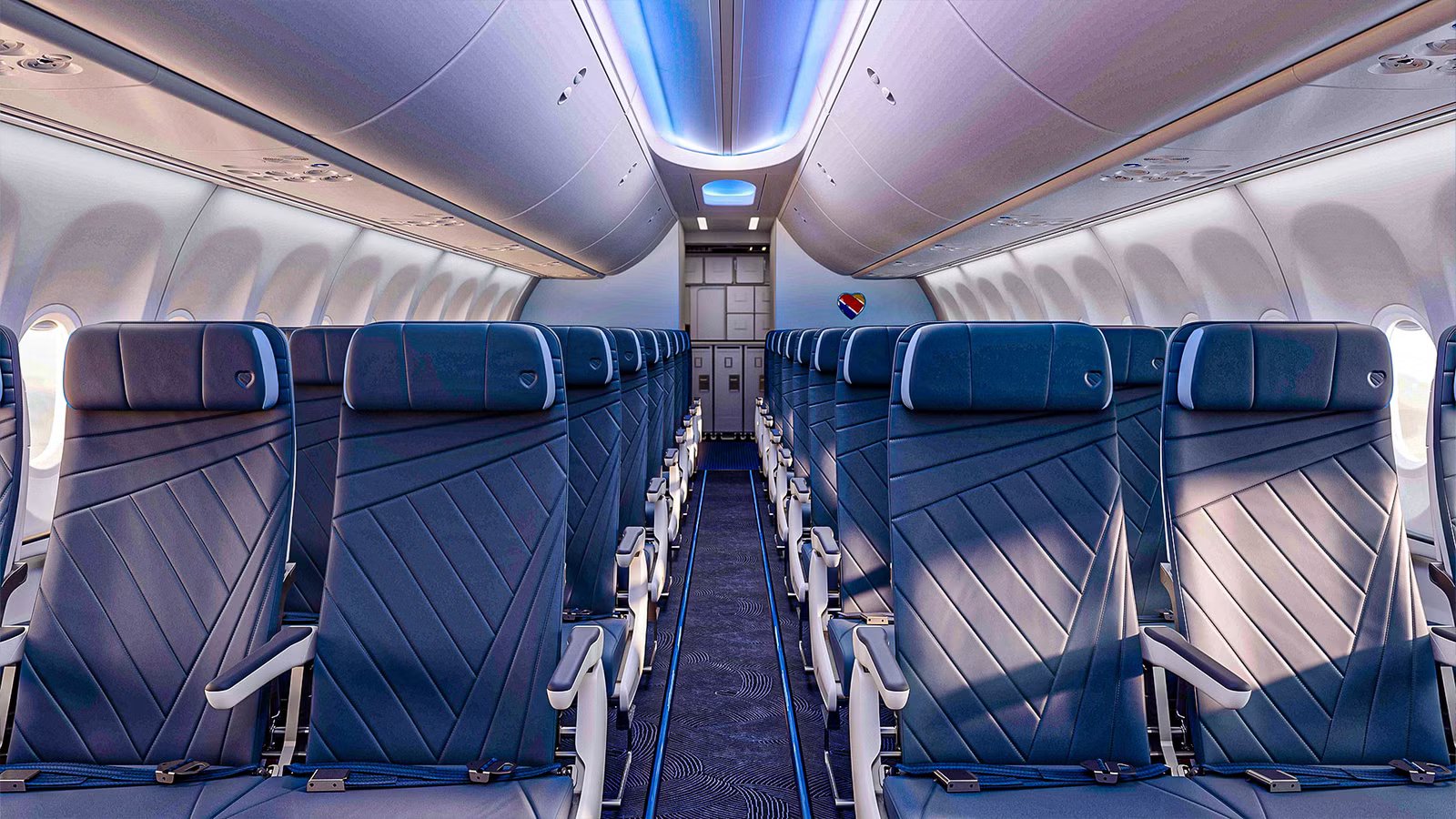
 Southwest Airlines spent decades cultivating a reputation unlike any other carrier in the US. While the rest of the airline industry aggressively pursued premium cabins, loyalty tiers, baggage fees, and increasingly segmented customer experiences, Southwest positioned itself as the simpler, more democratic alternative. Passengers boarded through the airline’s signature open-seating process, checked bags without additional fees, and generally encountered fewer visible distinctions between budget travelers and frequent flyers. That formula helped transform Southwest from a regional low-cost carrier into one of the largest airlines in North America.
That long-standing identity is now undergoing one of the most dramatic transformations in the company’s history. Southwest’s February 2026 announcement that it will install SpaceX’s Starlink WiFi on more than 300 aircraft by the end of the year initially sounded like a straightforward technology modernization effort. However, the company’s decision to reserve complimentary access exclusively for members of its Rapid Rewards loyalty program immediately reframed the announcement as something much larger.
Starlink Partnership Represents Massive Technological Upgrade

Southwest’s partnership with SpaceX marks one of the airline’s most ambitious onboard technology initiatives in years. The company announced plans to install Starlink internet on more than 300 aircraft by the end of this year, with the first equipped planes entering service during the summer travel season. That scale matters because Southwest operates the largest all-Boeing 737 fleet in the world, over 800 in total, meaning the rollout involves a major logistical and financial commitment rather than a limited trial program.
The technological improvements associated with Starlink are substantial compared to older inflight internet systems. Traditional airline WiFi providers often rely on geostationary satellites positioned far above Earth, which creates higher latency and inconsistent speeds. Starlink’s low-Earth-orbit satellite network dramatically reduces latency, often delivering response times of 20-40 milliseconds while supporting download speeds exceeding 100 Mbps per aircraft. In practical terms, this means passengers could realistically stream video content, participate in live video meetings, play cloud-based games, and use bandwidth-intensive applications in ways that were previously unreliable or impossible on many domestic flights.
The partnership also reflects changing passenger expectations across the airline industry. Travelers increasingly view inflight connectivity as an essential utility rather than a luxury add-on, especially as remote work and hybrid employment models continue reshaping travel behavior. Business travelers expect uninterrupted productivity, while leisure travelers increasingly want streaming-quality entertainment and constant social media access during flights. Airlines that fail to offer reliable high-speed internet risk appearing technologically outdated, particularly as carriers like Delta, United, and Hawaiian Airlines aggressively promote next-generation onboard connectivity systems.
Loyalty Program Restriction Reveals Southwest’s New Priorities

The most revealing aspect of Southwest’s Starlink announcement was not the technology itself, but the conditions attached to free access. Complimentary high-speed WiFi will only be available to members of the airline’s Rapid Rewards loyalty program, creating a direct incentive for passengers to enroll. While joining the program costs nothing, the decision fundamentally changes how Southwest distributes customer benefits. Instead of presenting inflight connectivity as a universal service enhancement available equally to all passengers, the airline is tying access to participation within its broader loyalty ecosystem.
This strategy reflects a wider transformation occurring across the airline industry, where loyalty programs have become extraordinarily valuable financial assets. Airlines increasingly earn billions of dollars annually through co-branded credit card partnerships, targeted customer marketing, and data-driven personalization tied to frequent flyer accounts. In some cases, loyalty divisions generate profits that rival or even exceed those of flight operations. By requiring Rapid Rewards enrollment for complimentary WiFi, Southwest gains access to more customer data, deeper engagement metrics, and additional opportunities to market premium products and future travel offers.
The policy also marks a philosophical departure from Southwest’s historic approach to customer treatment. For decades, the airline minimized visible distinctions between passengers and largely avoided the tiered access systems common among legacy carriers. That approach helped reinforce Southwest’s image as a more accessible and less status-driven airline. The Starlink policy, however, embraces the logic of customer segmentation. Even if enrollment is free, the message is clear: benefits increasingly belong to customers who formally participate in the airline’s loyalty structure.

A-List Preferred Behind Priority? Southwest Airlines Launches Updated Boarding Process
The new changes were implemented on Thursday.
Assigned Seating May Be The Biggest Cultural Shift Of All

Few policies were more closely associated with Southwest’s identity than its open-seating boarding system. Instead of assigning seats at booking, the airline traditionally allowed passengers to choose seats after boarding, in boarding-group order. The process became one of Southwest’s most recognizable features and was frequently defended by loyal customers as faster, simpler, and more flexible than traditional assigned seating systems. For decades, open seating symbolized the airline’s unconventional approach to air travel and helped reinforce its image as an operationally efficient carrier focused on simplicity.
That system is now being phased out in favor of assigned seating and premium seating categories. The new structure became bookable for travel beginning January 27. The change is enormously significant because it dismantles one of the last remaining pillars of Southwest’s traditional operating model. Assigned seating opens the door for the airline to monetize seat selection more aggressively, particularly through extra-legroom sections and preferred seating zones located near the front of the aircraft.
The transition also alters the psychological experience of flying Southwest. Open seating created a sense, whether fully accurate or not, that passengers occupied a relatively equal playing field once onboard. Assigned seating introduces clearer status distinctions, especially once premium rows and upgraded seating categories become visible throughout the cabin. Frequent flyers, higher-paying customers, and elite loyalty members will increasingly receive differentiated experiences, bringing Southwest’s cabin structure closer to the segmentation models already dominant among major US airlines.
Is Southwest Moving Toward A More Premium Experience?

Southwest’s transformation extends far beyond seating arrangements and inflight internet access. The airline is simultaneously introducing premium extra-legroom options and expanding into red-eye operations, both of which reflect a broader attempt to attract customers willing to pay for enhanced convenience and comfort. Historically, Southwest focused heavily on point-to-point domestic travel with simplified scheduling and minimal onboard differentiation. The new strategy suggests the airline believes future growth depends on capturing a wider range of traveler spending behaviors rather than competing primarily on operational simplicity and fare transparency.
The introduction of premium seating is particularly important because it creates entirely new revenue streams. Legacy carriers have spent years demonstrating how upgraded economy products, including extra-legroom rows, preferred boarding, and priority services, can significantly increase per-passenger profitability without requiring fully separate business class cabins. Southwest largely avoided those strategies in the past because they conflicted with the airline’s egalitarian branding. The decision to embrace them now signals that maximizing ancillary revenue has become a higher strategic priority than preserving historical brand identity.
Red-eye flights represent another meaningful shift. Southwest traditionally avoided large-scale overnight flying, preferring schedules optimized for daytime utilization and quick operational turnarounds. Expanding into red-eye operations allows the airline to increase aircraft productivity and compete more directly in transcontinental markets where overnight service is common. However, it also demonstrates Southwest’s growing willingness to adopt practices once associated primarily with traditional network carriers.
Why Southwest Airlines Had To Rewrite Its New Boarding System Weeks After Launch
The carrier’s assigned-seating rollout exposed bin-space battles, loyalty tensions, and the cost of abandoning old habits.
Is Southwest Late To The Party?

Southwest’s changes may feel dramatic because they conflict with the airline’s historical image, but the broader industry has been moving toward loyalty-driven segmentation for years.  Delta Air Lines helped accelerate the trend by tying free onboard WiFi access to membership in its SkyMiles loyalty program, effectively turning internet access into a customer-acquisition tool. American Airlines and United Airlines have also expanded their use of loyalty-linked perks and differentiated onboard experiences as airlines search for more stable revenue streams beyond ticket sales alone.
The economics behind these decisions are compelling. Modern airlines generate enormous value from customer data, co-branded credit cards, premium seating upgrades, and ancillary purchases. In many cases, airlines can earn higher margins from selling loyalty points to financial institutions than from transporting passengers. That financial reality has transformed frequent flyer programs from marketing tools into central pillars of airline business strategy. Every additional customer enrolled in a loyalty ecosystem represents a potential source of recurring revenue, behavioral insights, and long-term retention opportunities.
Southwest resisted these industry trends longer than most competitors because its brand depended heavily on simplicity and broad customer accessibility. However, investor pressure, rising operational costs, and evolving consumer expectations appear to have made that resistance increasingly difficult to sustain. Travelers now expect onboard connectivity, personalized benefits, flexible seating choices, and premium upgrade opportunities as standard features of modern air travel. Southwest’s recent decisions suggest the airline no longer believes its traditional model can fully compete in that environment without significant adaptation.
Southwest’s Identity Is Being Rebuilt In Real Time

Perhaps the most striking aspect of Southwest’s transformation is how openly company leadership has acknowledged it. Executives have publicly stated that these changes are intended to signal that this is no longer the “Southwest of old.” Airlines rarely describe brand reinventions in such direct terms, especially when the previous identity was deeply beloved by long-time customers. The comments indicate that Southwest understands the scale of the cultural shift underway within the company and is actively repositioning itself for a different era of competition.
That repositioning involves balancing two potentially conflicting goals. On one hand, Southwest wants to modernize its product offering and increase profitability through premium services, loyalty engagement, and operational expansion. On the other hand, the airline must avoid alienating the loyal customer base that embraced Southwest precisely because it resisted many of those industry trends. Assigned seating, loyalty-gated perks, and premium cabin distinctions may improve revenue opportunities, but they also risk eroding the brand differentiation that helped Southwest stand apart for decades.
The Starlink announcement, therefore, functions as more than a technology upgrade story. It serves as a highly visible symbol of Southwest’s broader strategic reinvention. The airline is no longer centered primarily around universal simplicity and operational egalitarianism. Instead, it is evolving into a more segmented, data-driven, and premium-oriented carrier that increasingly resembles the legacy airlines it once positioned itself against. Whether that transformation strengthens Southwest’s long-term competitiveness or weakens the distinct identity that made it successful remains one of the most important questions facing the airline industry in 2026.