dailynewsnblog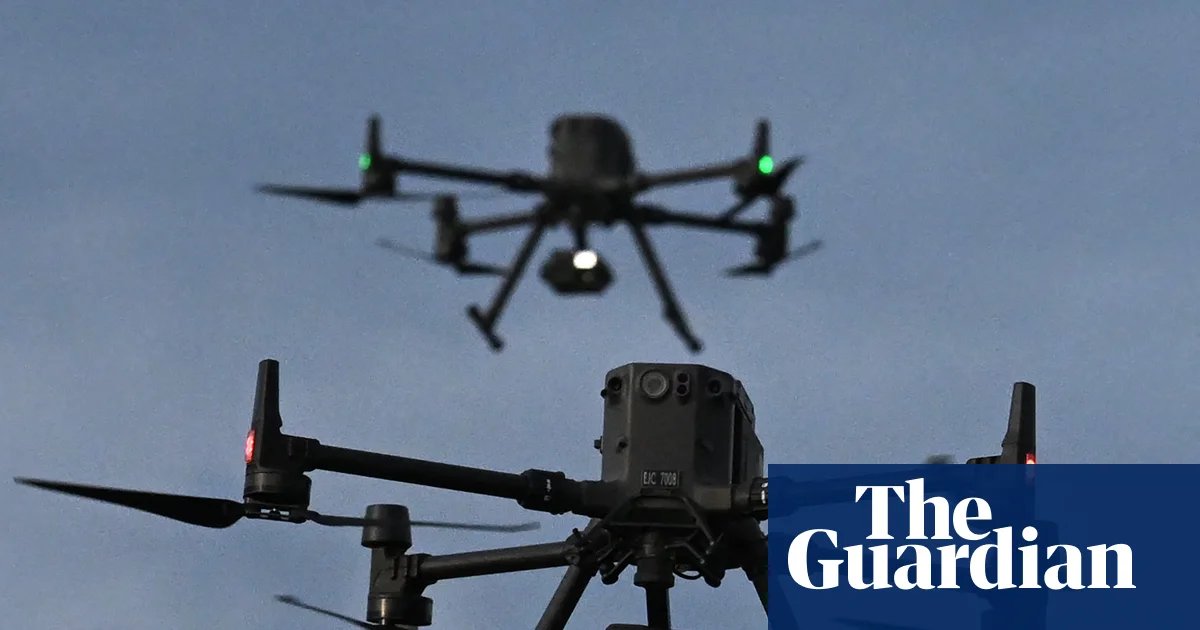
As night fell over southern Colombia, and a group of children began their weekly Tuesday football match, a drone appeared overhead.
The children looked up, and the drone dropped a grenade, its blast killing a 10-year-old boy and injuring 12 more civilians. The child’s death, in southern Cauca in 2024, marked the first known time a person in the country had been killed in a weaponised drone attack.
He would not be the last.
In February 2025, also in Cauca, a drone dropped an explosive near a temporary Médecins Sans Frontières hospital, injuring several health workers. That August in Antioquia, an attack brought down a police helicopter, killing at least eight officers. In October, the house of the mayor of Calamar was hit.
In December, a strike on a military base killed seven soldiers and injured 30 more. In February 2026, in the mining town of Segovia, a drone dropped a mortar shell on a house, killing a mother and her two sons inside.
Earlier this month, a drone packed with explosives was found near Bogotá’s international airport and an adjacent military base.
Drone strikes by armed groups have surged across Colombia since 2023, opening a dangerous new front in the country’s decades-long conflict. Hospitals, schools, police stations, electricity grids and homes have all been struck, and injuries now number in the hundreds.
Only one such attack was recorded in 2023, according to Armed Conflict Location and Event Data (ACLED), a leading monitoring organisation. But that figure jumped to 38 in 2024 and 149 in 2025. Colombia’s ministry of defence reported an even steeper rise, recording no attacks in 2023, 61 in 2024 and 333 in 2025.
Colombia’s conflict has ravaged villages, towns and cities for more than six decades. Fought between guerrillas, paramilitary groups, drug traffickers and state forces, it has left more than 450,000 people dead and displaced millions more.
While a 2016 peace deal tempered the fighting and ushered in fragile stability, violence is once again on the rise. Armed groups have expanded their ranks, tightened their grip on drug routes and illegal mining, and sought to fill power vacuums left by demobilised forces. They are also now investing in more sophisticated weaponry – such as drones – a shift experts said was driving a dangerous escalation in the conflict.
“The old guerrillas tried a thousand times to get missiles and never succeeded,” said Humberto de la Calle, Colombia’s former vice-president, after a wave of drone attacks last summer. “With drones, I think strategically we are at a point where we must stop the ways we are being attacked from the air. This has never happened before in Colombia.”
Dissident factions of the Revolutionary Armed Forces of Colombia (Farc) were the first to adopt the technology, analysts said, followed quickly by rival groups like the National Liberation Army (ELN). Fighters typically modify off-the-shelf commercial drones – often costing just a few hundred dollars from China – to carry explosives, with many attacks taking a “kamikaze” form in which the drone itself becomes the weapon.
By 2025, it is believed that almost all major armed groups were using militarised drones, with attacks spreading far beyond traditional conflict zones. “What is concerning is not only the very rapid escalation and frequency of their use, but also the geographical spread,” said Tiziano Breda, an ACLED senior analyst. He noted that drones were used in 12 municipalities in 2024 and 41 in 2025.
Most drone attacks have targeted police, army patrols and rival armed groups, data shows. In December 2025 alone, ACLED recorded at least four attacks on police stations in Cauca andon the military base in Cesar. Seven further attacks against police and military units were recorded in January 2026, all claimed by ELN and Farc fighters.
But their use has increasingly expanded beyond combatants. Between 2024 and 2025, ACLED also recorded a sharp rise in drone attacks affecting civilians.
In some cases, civilians were caught in the crossfire. During the December attacks on police stations and the military base, at least five civilians were injured. “They drop the explosives on targets with little precision but terrifying effect,” Breda said.
In others, civilians appear to have been the targets. When the 10-year-old boy was killed in 2024, army commander Gen Federico Mejia accused fighters from a Farc dissident group of targeting civilians to pressure them “to reject the presence of state military”.
The sound of their buzzing has become a source of terror in many communities. In Putumayo, Indigenous leaders have said that armed actors used drones not only to launch attacks but to intimidate residents, hovering above villages to assert control, according to Human Rights Watch.
On a recent reporting trip for the Guardian in Barrancabermeja, a drone followed and monitored this reporter while an interview about illegal armed groups was under way, forcing it to be cut short.
Analysts link the spread of drone warfare in Colombia to global conflicts, particularly Ukraine, where the mass use of drones – alongside online footage and returning foreign fighters – has accelerated the circulation of tactics, technical knowledge and supply chains.
“This war in Ukraine and the massive use of drones in that context, coupled with the participation of a lot of foreigners in the foreign region, particularly Colombians, sort of helped spread the use of these devices,” Breda said.
The device found last Wednesday near Bogotá airport was a fibre optic drone, which is resistant to jamming and has become a feature in Russia’s war against Ukraine.
Colombian armed groups’ transnational criminal ties, including links to Mexican and Balkan cartels, have further eased access to equipment and training.
Experts said there was also a growing number of reports that children, considered more adept with the technology, were being recruited to operate drones.
Armed groups are also formalising drone units. A commander with one group told news outlet La Silla Vacía last year that it had formed a dedicated unit of drone operators, known as droneros. “Our drone unit is the one we protect most,” he said.
The shift is not merely tactical but technological. In July, a Farc faction struck a navy patrol boat with a first-person-view (FPV) drone, which the operator flew directly into the vessel before detonating it. FPV drones are manually guided in real time, enabling precision strikes on moving targets – a development analysts said marked a worrying escalation.
The Colombian government has been scrambling to respond, unveiling a multibillion anti-drone “shield”, tightening restrictions on drone imports and creating specialised military units.
However, officials have also acknowledged the difficulty in countering drone strikes across a fragmented battlefield.
“You can understand that this is arduous, difficult, and costly work. The national army alone has 3,000 platoons deployed nationwide, and being able to equip all our personnel [with anti-drone systems] is complicated,” said army commander Maj Gen Luis Emilio Cardozo last year.
The president, Gustavo Petro, admitted to troops that “narco-traffickers have the aerial advantage”.
Experts caution that armed groups are moving faster than the state can adapt. “There are reports of armed groups having anti-drone technology already, which would show they are adapting really fast,” said Martina Rapido Ragozzino, a researcher at Human Rights Watch.
As drones reshape Colombia’s conflict from above, analysts said that the balance was shifting faster than institutions could respond – leaving civilians increasingly exposed in a war where the frontlines were no longer fixed to the ground.