dailynewsnblog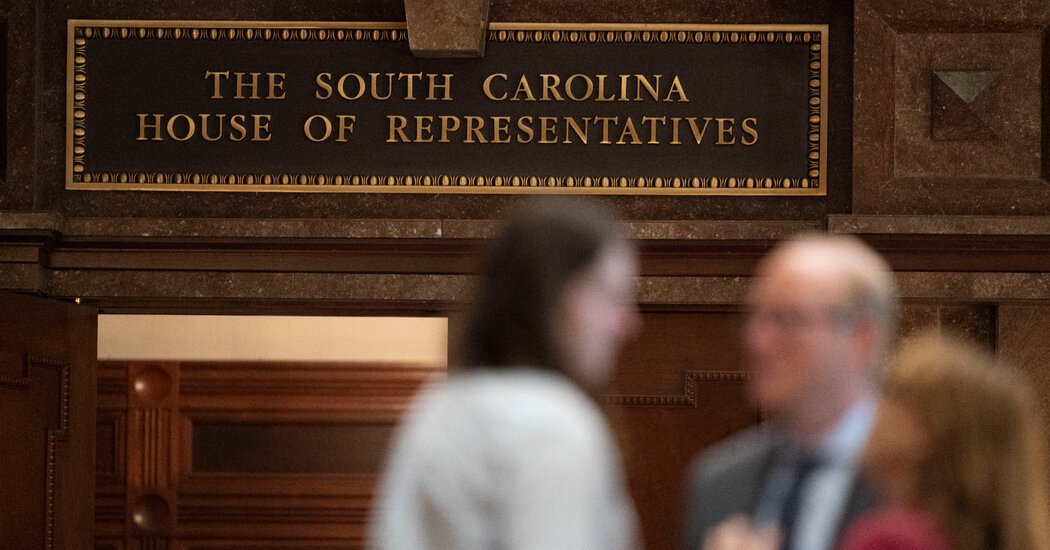
This week, South Carolina’s legislature will begin debating whether to redraw congressional districts to help Republicans win all seven of the state’s House seats and displace its only Democratic House member.
For Republican lawmakers, the answer isn’t an easy yes.
Although President Trump has been lobbying hard for the Republican-dominated legislature to tilt the playing field after the Supreme Court weakened the Voting Rights Act last month, the special session is expected to be contentious.
Some South Carolina Republicans have been reluctant to charge into the national redistricting wars for reasons both practical and philosophical.
Representative James E. Clyburn, a powerful Black Democrat who has funneled vast resources into the state over the years, is tremendously popular. Republicans worry that he would win even in a district redrawn to exclude some of his supporters. Those supporters, currently packed together into Mr. Clyburn’s district, could vote for other Democrats once they are spread out, increasing the risk that Republicans would lose a seat.
Some Republican state senators say the effort is a bad idea for other reasons: Early voting starts on May 26, so there is not enough time to sufficiently consider new districts. Overseas ballots have already been cast. It would cost millions of dollars to push congressional primaries to August. And the redistricting fight might boost Democratic turnout and hurt down-ballot Republican candidates.
Five Republicans in the State Senate, most notably Shane Massey, the leader of the chamber, voted with Democrats last week to block a resolution that would have brought lawmakers back to the capital, Columbia, to consider redistricting. They argued that their congressional map was already constitutional.
But on Friday, Gov. Henry McMaster, a Republican, ordered lawmakers back for a special legislative session to address redistricting and the state budget. Mr. McMaster was the first statewide elected official to endorse Mr. Trump in 2016, during his first presidential bid, but he has faced pressure from the Republican base to do more about redistricting.
If Republican lawmakers want to pass a map, they essentially have to do it this week.
Looming large in the background is Mr. Trump. It did not go unnoticed in Columbia that many of the Republican state senators in Indiana who voted down Mr. Trump’s plan on redistricting lost their primaries this month to challengers he had endorsed.
Among the most vocal about partisan gerrymandering in South Carolina are the leading Republican candidates for governor, all of whom are eager for the president’s endorsement.
Lt. Gov. Pamela Evette, who is Mr. McMaster’s preferred candidate, said in an interview that if Democrats really believed the new districts would gain them a seat, they would vote for it. Republicans, she added, needed to move to redistrict at full speed.
For some conservative voters, though, it is not so clear cut.
A poll conducted by Winthrop University in November gauged South Carolinians’ attitudes around mid-decade redistricting and found that about half of respondents said neither party should be allowed to do it to gain an advantage.
Redistricting surfaced as an issue at a Republican candidate forum on Saturday in Aiken, S.C.
Sam Gibbons, a social studies teacher and former Marine running a long-shot campaign for Congress, said Republicans should welcome competition in elections. “This is the difference between being essentially loyal to a party and being a patriot for all Americans,” he said.
Chuck Calvert, 74, a Republican, agreed with Mr. Gibbons, saying he opposed gerrymandering. “I don’t really think that should be legal in the first place, for either party,” he said.
Bonnie Wiggin, a conservative who recently moved to Aiken County from Chicago, said she was sorry to see the country become more polarized. Still, she added, she supported redistricting in South Carolina.
“As much as I hate the term ‘the ends justify the means,’ that’s kind of what it looks like,” Ms. Wiggin said.
Those attending the candidate forum had just listened to Alan Wilson, South Carolina’s attorney general and one of the leading Republican candidates for governor, exhort onstage, “I will fight for the president, redistricting, and I will fight for you in Aiken County as your next governor.”
In an interview, Mr. Wilson’s father, Representative Joe Wilson, who represents Aiken County in Congress, argued that the state had gotten more conservative as right-leaning transplants moved there from liberal strongholds in recent years.
“Because of the rapid growth in our state, we can have seven Republican districts, legitimately,” he said.
But about 40 percent of South Carolina votes Democratic, and roughly one-quarter of the state’s population is Black.
Mr. Gibbons, who is trying to unseat Mr. Wilson in the primary, implored his party to have some dignity. “It does not benefit us as people to continue to push others down so that our team can win,” he said at the forum. “We have to do better.”
Claude O’Donovan, who was moderating the gathering in an Uncle Sam suit, said that he would be fine with whatever happened in Columbia this week. Besides, he added, Mr. Clyburn would probably win no matter what.