dailynewsnblog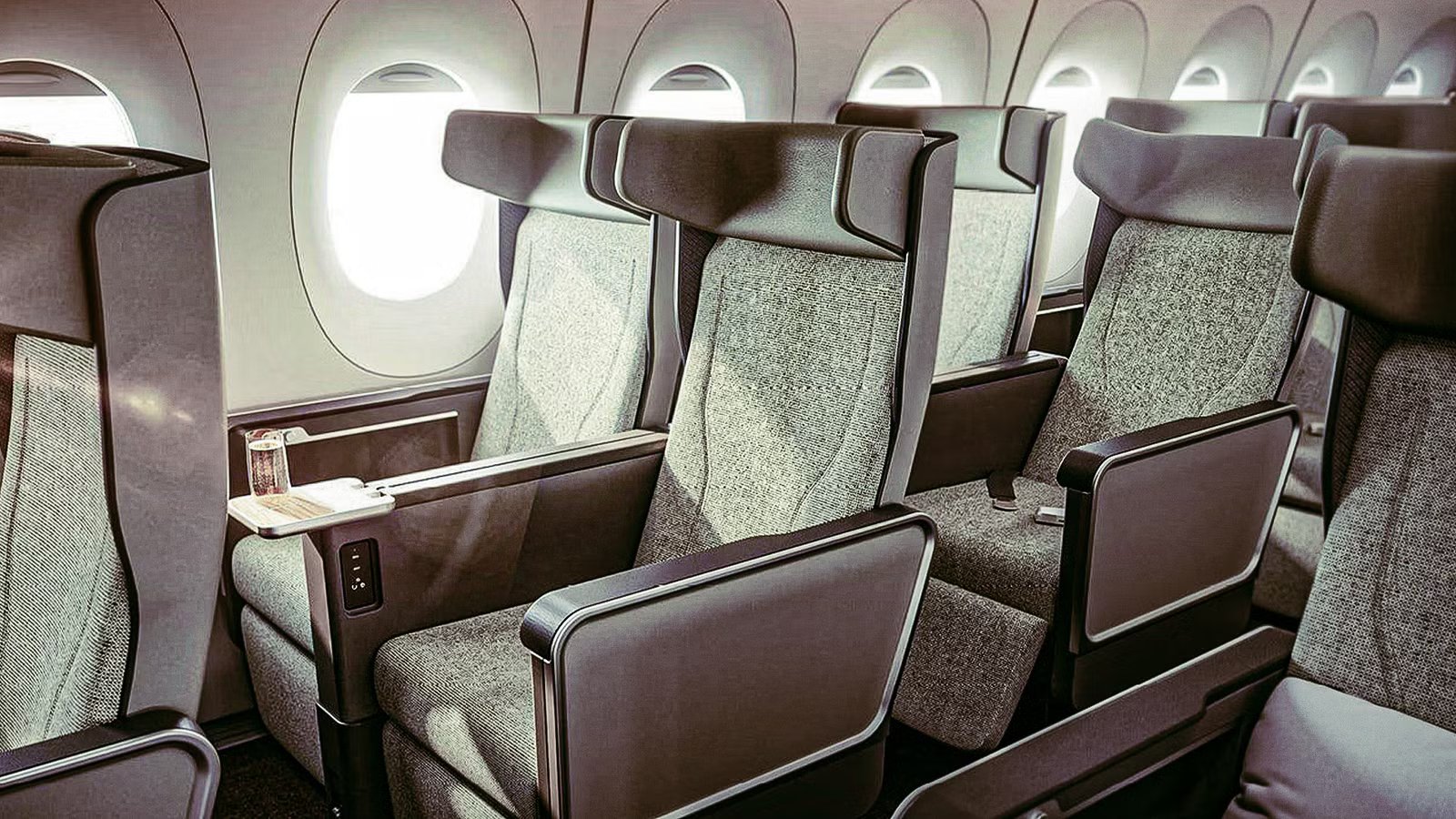
With Australian carrier Qantas set to receive its first Airbus A350-1000ULR aircraft later this year, for the airline’s Project Sunrise operations, it is worth looking at how these flights will be operated in a profitable manner. Despite configuring its cabins in a less dense manner, the airline aims to receive between 20 to 30% revenue premiums on the seats available on this aircraft, because of the multiple unique selling points the carrier offers on these flights.
From being the only nonstop option on these routes to equipping its jets with the most modern products and amenities that make even a flight over 20 hours comfortable, this guide explains how Qantas can charge a premium to operate the world’s longest flights profitably.
What Is Project Sunrise?

The “Project Sunrise” is the name given to Qantas’ planned operations, which will see the carrier offer nonstop flights from its hub in  Sydney Kingsford Smith Airport (SYD) in Eastern Australia, to destinations such as London
  London Heathrow Airport (LHR) in Western Europe, and
  John F. Kennedy International Airport (JFK) on the US East Coast. These direct services are set to complement the airline’s existing one-stop services to Europe.
For example, the airline’s current services to London include an A380 flight from Sydney to London and a Boeing 787-9 Dreamliner flight from Perth to London, both of which have a stopover in Singapore Changi Airport (SIN). European manufacturer Airbus has developed an Ultra Long Range (ULR) version of its A350-1000 aircraft, which Qantas will be utilizing to operate these flights.
Considering the airline is looking to launch the world’s longest nonstop flights, the carrier has been careful about how these incoming specialized aircraft will be configured to ensure maximum passenger comfort during flights that can exceed 20 hours, while also ensuring these services remain profitable. The airline aims to achieve this through its aircraft choice, cabin configuration, unique selling point of direct flights, and strategic pricing.
The A350-1000ULR Built For The Job

Much like how Airbus built the A350-9000ULR specifically for  Singapore Airlines to operate direct flights to JFK and Newark Liberty International Airport (EWR), the -1000ULR version will be designed to boost the already staggering operational range of 9,000 nautical miles (16,668 km) found on the standard A350-1000 aircraft. This would mean that Qantas will not only be able to operate its flights to London and New York directly, but that the aircraft will also be able to carry extra fuel, as required by regulations for safe operations.
According to Qantas, seat data from aeroLOPA, and other manufacturer specifications, here are the comparisons among the four variants.
Aircraft Specifications | Airbus A350-1000 | Airbus A350-900 | ||
|---|---|---|---|---|
Manufacturer Specification | Qantas ULR Specification | Singapore Airlines Specification | Singapore Airlines ULR Specification | |
Capacity (F/J/W/Y) | 350 – 400 seats in four-class configuration | 238 | 253 | 161 |
(6/52/40/140) | (0/42/24/187) | (0/67/94/0) | ||
Range | 9,000 nautical miles (16,668 km) | TBA | 8,500 nautical miles (15,740 km) | 9,700 nautical miles (18,000 km) |
As seen above, Singapore Airlines sacrificed a considerable portion of its capacity to focus on premium travel and comfort for its ULR flights, which typically have flight durations of 17 to 19 hours, depending on the direction of travel.
Qantas appears to have used Singapore as a case study for its upcoming ultra-long-haul flights and has also decided to reduce capacity on the larger A350-1000. That said, the airline has still decided to allocate over half its capacity to the economy cabin, but Qantas is introducing new concepts onboard to enhance passenger wellness. With the additional space available onboard, the carrier has chosen to be creative in how the space is used.
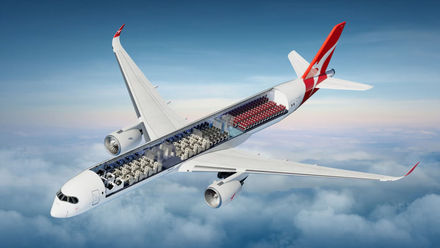
Only 238 Seats On A 350-Seat Airframe: The Hidden Trade-Offs Behind Qantas’ Project Sunrise A350-1000ULR
The true story of the A350-1000ULR is not found in the luxury of its first class suites but in the brutal mathematics of its weight and balance.
New Products, Refreshment Stations & Wellness Zone

As stated above, the airline has opted to reduce seating capacity on board these upcoming aircraft while being creative about how the leftover space is used. Firstly, on the passenger comfort front, the airline is introducing brand-new, next-generation suite-style products in both its first class and business class cabins. These two travel classes will also have a self-serve refreshment station in the middle of the aircraft, between the two business class cabins.
Premium economy and economy cabins are also getting a makeover, with new comfortable products to ensure passengers traveling in these cabins also remain comfortable throughout these ultra-long-haul flights. Between the two cabins is another self-serve refreshment station where passengers can get inflight snacks, drinks, and socialize.
Next to the refreshment station, Qantas has also set up a dedicated wellness zone, where passengers can stretch their legs and do some exercises to maintain healthy movement throughout the flight. There are also large screens in these zones that display various exercises and movements for passengers to follow. The wellness zone is accessible to all passengers flying onboard the aircraft, regardless of class of travel.
Making Project Sunrise Profitable

So the question remains: how will Qantas turn a profit on a route that sees heavy competition while using fewer seats onboard its aircraft? To understand this, the market has to be evaluated, and for a route such as SYD-LHR, apart from Qantas’ own one-stop service, passengers at the moment have five other (major) airline options, also offering one-stop services. This allows Qantas to charge a premium on its non-stop Project Sunrise flights because the “direct” service is a unique selling point it can use to gain a competitive advantage.
When searching for one-stop itineraries between Sydney and Heathrow for the six major carriers on the same day, the total travel time, including layovers, exceeds 24 hours for many.
Airline | Total Duration | Stopover Duration | Flight(s) |
|---|---|---|---|
Qantas | 24 hours, 5 minutes | 1 hour, 20 minutes | QF255 and QF219 via Singapore |
Singapore Airlines | 23 hours | 50 minutes | SQ242 and SQ306 via Singapore |
Emirates | 23 hours, 15 minutes | 1 hour, 35 minutes | EK405 and EK005 via Dubai |
British Airways | 24 hours | 1 hour, 40 minutes | BA016 via Singapore (fifth freedom service) |
Etihad Airways | 24 hours, 20 minutes | 2 hours, 15 minutes | EY451 and EY61 via Abu Dhabi |
Qatar Airways | 26 hours, 20 minutes | 3 hours, 15 minutes | QR909 and QR109 via Doha |
Therefore, the proposition of flying between the two cities (and other such routes) faster, without having to stop in another city for several hours, can be enticing to certain segments of travelers, such as business travelers. As such, Qantas will be able to command an additional 20-30% premium on these routes for direct flights, especially in the premium cabins.
Qantas’ Project Sunrise Is Rewriting The Rules Of Ultra-Long-Haul Travel
An in-depth look at what we can expect from Project Sunrise, and why it will likely be a success.
Reducing Operational Costs & Focusing On Premium Cabins

Apart from charging higher fares for shorter travel times, Qantas has taken steps to reduce its own operational costs. One being the selection of the A350-1000 aircraft for Project Sunrise. The A350 is one of the most fuel-efficient widebody jets in the world, which balances fuel economics and operational range better than most other widebody jets currently in the market.
Furthermore, removing a stopover eliminates the airport and ground costs associated with it, further reducing the flight’s operational cost. Apart from the A350’s fuel economics and the elimination of stopover costs, the airline is also introducing new luxury products in the aircraft’s premium cabins, in a highly competitive market with other premium carriers such as Singapore Airlines and Emirates. This will allow the airline to further boost revenue within its own premium cabins.
Given that Qantas will deploy these aircraft on high-yield markets such as London and New York, it becomes viable for the airline to charge an additional premium, as no other carrier currently offers nonstop service on these routes. Additionally, the airline serves as an alternative, offering direct flights, to a portion of passengers who might not be comfortable transiting through the Middle East due to regional tensions and conflict.
Eying Early 2027 For Project Sunrise Launch

Qantas aims to launch Project Sunrise early next year, with the first two A350-1000ULRs already assembled at Airbus’ Toulouse facility, which is expected to be delivered later this year. The airline has ordered 12 of these ULR aircraft, which will be delivered throughout the coming years, as Qantas develops its Project Sunrise network.
According to Australian Aviation and Aerospace Global News, Qantas expects Project Sunrise to add over $289 million (AUD 400 million) in profits before tax in its first full year ofthe aircraft in service. This is indicative of the revenue the airline expects the new aircraft to generate from operating these ultra-long-haul routes. For an airline operating out of a hub, launching a new service can, if done right, significantly boost other routes from the hub, and vice versa.
Therefore, the launch of direct flights to Western Europe and to the East of the US will boost connectivity for passengers across Australia, leveraging the networks of Qantas and its subsidiaries, Qantas Link and Jetstar. Ultimately, it will only be possible to gauge whether Project Sunrise is profitable for Qantas once the nonstop services are launched next year and to evaluate how passengers respond in the market.