dailynewsnblog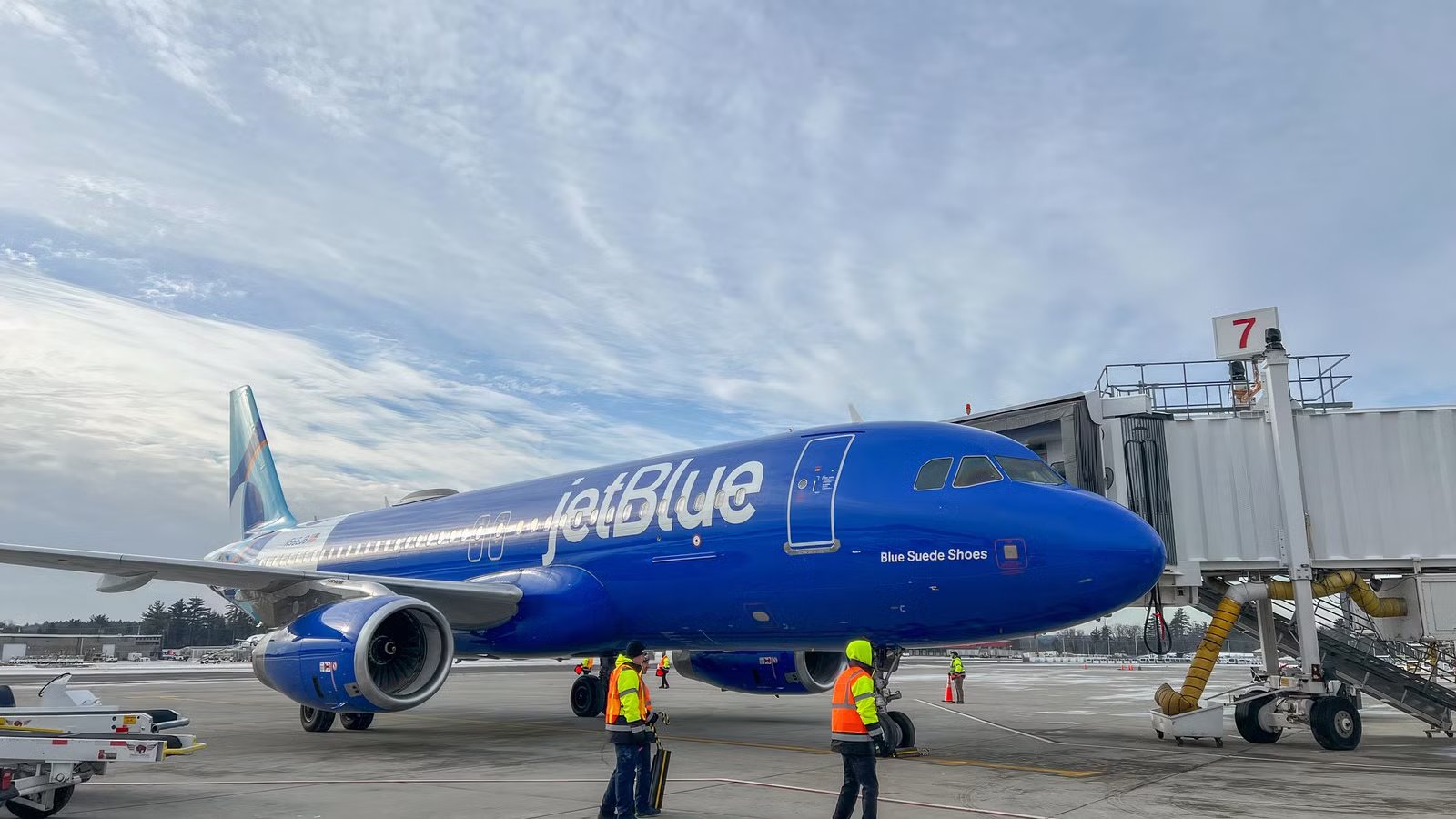
JetBlue will end all service at Manchester-Boston Regional Airport(MHT) on July 8, marking another setback for regional air service in northern New England as the carrier reallocates aircraft to more profitable markets. The decision comes less than two years after the airline launched operations at the New Hampshire airport, and follows mounting financial and operational pressures across the aviation sector. The airline has historically had strong ties to the New England area, and continues to hold a large presence at  Boston Logan International AirportBOS).
Airport officials said JetBlue informed them it needed to “support national connectivity in a time of capacity crisis,” a phrase that has since drawn attention across the airline industry. The company cited underperforming routes and a need to shift aircraft toward stronger demand centers, particularly in South Florida after the collapse of Spirit Airlines left gaps in capacity at Fort Lauderdale-Hollywood International Airport (FLL).
JetBlue Pulls Back From Smaller Markets

JetBlue confirmed the move in statements to regional media outlets, describing the withdrawal as part of broader schedule adjustments affecting a “small number” of markets. Customers with affected bookings will either be rebooked on alternative flights or offered full refunds. While the airline emphasized its continued commitment to New England, including its major Boston operation, the Manchester exit illustrates the growing challenges smaller airports face in retaining service from large carriers.
The airline’s departure is significant for Manchester because JetBlue represented one of the airport’s few low-cost competitors on Florida leisure routes. According to airport traffic data, JetBlue accounted for more than ten percent of the passenger share at Manchester over the past year, operating flights primarily to Orlando and Fort Myers. The airport, which serves as New Hampshire’s busiest commercial aviation hub, has struggled to fully recover passenger volume lost during the pandemic and from years of increasing competition with nearby BOS, which is about an hour’s drive away.
“Manchester-Boston Regional Airport is very disappointed to share that JetBlue will be terminating service at MHT, with their last flight scheduled for July 8, 2026. JetBlue shared that they have to ‘make a tough call as to how to best support national connectivity in a time of capacity crisis.’ MHT has worked diligently to promote JetBlue service at MHT, providing air service incentives, a substantial marketing budget, and conducting various promotional activities to create awareness. Unfortunately, those efforts were not enough to overcome their ongoing business challenges, which have only been exacerbated by the recent spike in jet fuel prices. We know the community will also be disappointed to hear this news. However, we will continue to seek new carriers and routes and hope to welcome JetBlue back to MHT in the future.”
– Manchester-Boston Regional Airport
Industry Pressures Reshape Airline Networks

Airport officials said they had invested heavily in keeping the service viable, including marketing campaigns, promotional efforts, and air service incentives aimed at building passenger demand. In a public statement, the airport acknowledged those measures ultimately failed to offset broader economic pressures facing the airline industry, particularly rising fuel prices and constrained aircraft availability. Industry analysts have increasingly pointed to fleet shortages, delivery delays from manufacturers, and elevated operating costs as factors forcing airlines to concentrate resources on their strongest-performing routes.
The phrase “capacity crisis” has become a recurring theme among carriers in 2026 as airlines manage limited aircraft supply alongside strong travel demand. JetBlue, in particular, has spent the past year restructuring portions of its network after financial losses and failed expansion efforts. Reports earlier this year indicated the airline was exploring strategic alternatives while attempting to stabilize profitability amid rising debt and fuel costs. The collapse of Spirit also reshaped competition patterns in Florida, prompting JetBlue to move quickly into markets where airport slots and passenger demand suddenly became available.
Only 29% Full: JetBlue’s 10 Emptiest Routes Revealed [Full List]
How many can you guess? There are some highly intriguing entries…
Regional Impact And What Comes Next

For travelers in southern New Hampshire, the loss of JetBlue service will likely push passengers to BOS. Logan airport remains one of JetBlue’s largest focus cities and continues to receive expanded domestic and transatlantic service from the airline. That dynamic has long complicated efforts by smaller regional airports in Manchester and Worcester to sustain competing commercial service, particularly when airlines face financial strain and prioritize larger hubs with higher passenger yields. Despite the setback, Manchester airport officials said they will continue pursuing new airline partnerships and replacement routes. The airport has historically experienced cycles of growth and contraction tied to broader airline economics, peaking at more than four million annual passengers in the mid-2000s before entering a prolonged decline. Passenger traffic has recovered modestly in recent years, though still far below historic highs.
JetBlue’s short-lived presence in Manchester may ultimately reflect a wider industry trend rather than a failure unique to one airport. As airlines confront tighter margins and aircraft shortages, secondary airports across the United States are increasingly vulnerable to service reductions when routes fail to deliver immediate profitability. In Manchester’s case, the “capacity crisis” cited by JetBlue appears less about local demand alone and more about an airline industry making difficult decisions in an increasingly constrained operating environment.

![Why American Airlines Flew This Surprising 190-Mile Route From Heathrow [Map]](https://dailynewsnblog.com/wp-content/uploads/2026/08/shutterstock_128109812_cropped.jpg)