dailynewsnblog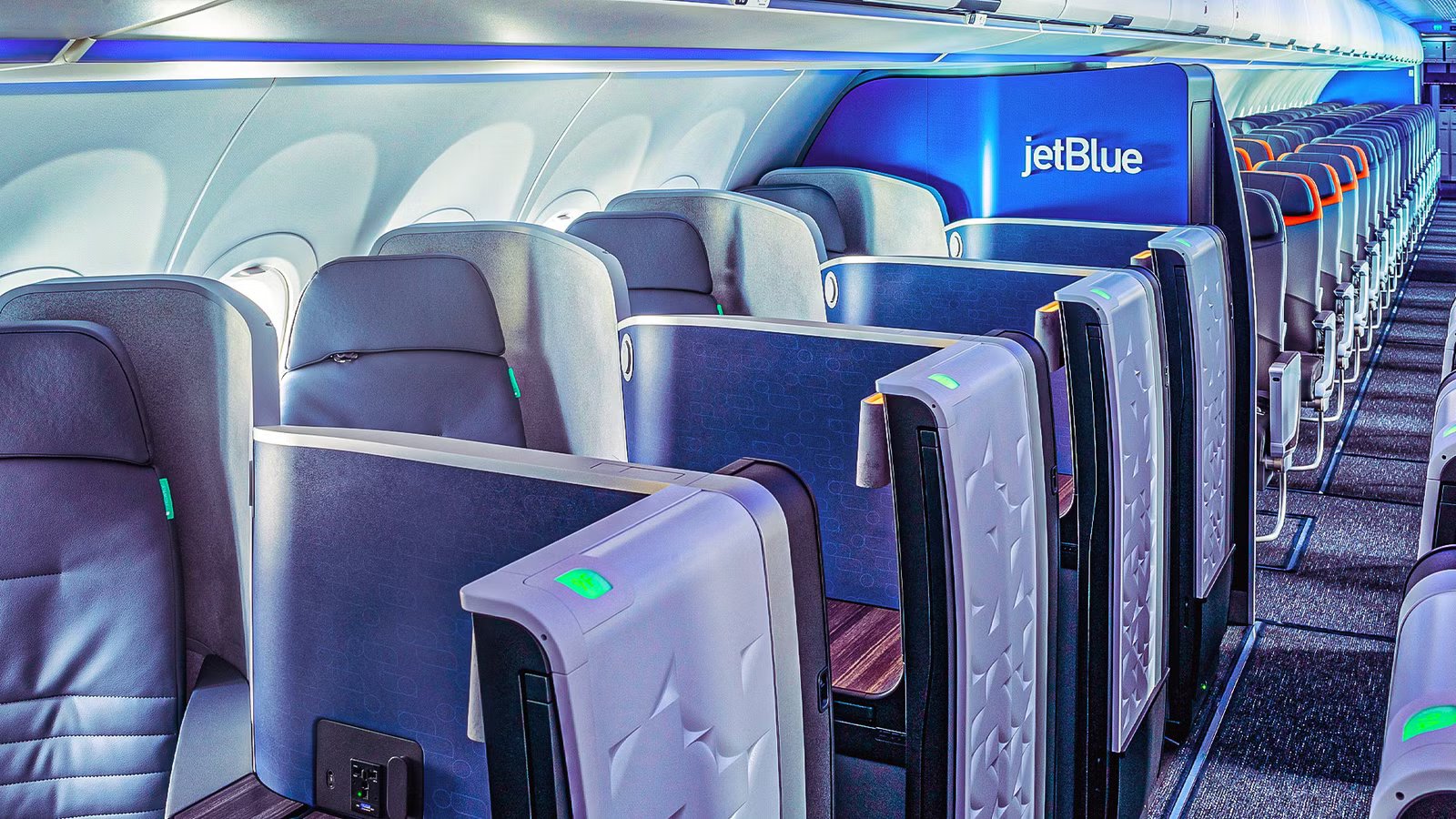
JetBlue Airways’ Mint suites have been well received by critics and reviewers, but does the actual seat-by-seat revenue math show why 24 passengers can bankroll an entire transatlantic flight? As of mid-2026, the carrier has successfully entered its strategy into the high-yield European corridor, recently celebrating its first-ever landing in Milan. This expansion has manifested itself in a clinical exercise of narrowbody economics, where a fraction of the cabin pays for the fuel, crew, and airport fees of the entire aircraft.
The airline is navigating its JetForward turnaround plan following a challenging financial 2024, and with the Airbus A321LR, JetBlue avoids the staggering trip costs of a 300-seat widebody while maintaining the same premium ticket pricing as its legacy competitors. This guide breaks down the financial inner workings behind the Mint cabin, explaining how a single-aisle jet with a minority of premium seats can outperform the profit margins of the industry’s largest international carriers.
The New Narrowbody Revolution

The traditional model for crossing the Atlantic once relied exclusively on massive widebody jets that required hundreds of passengers to break even. Today tells a different tale, as the introduction of the A321LR has enabled JetBlue to operate with just 138 total seats, significantly reducing the risk per departure. These lower seat counts are a core component of the narrowbody revolution, which has seen single-aisle departures across the pond grow by more than 120% between 2019 and 2026.
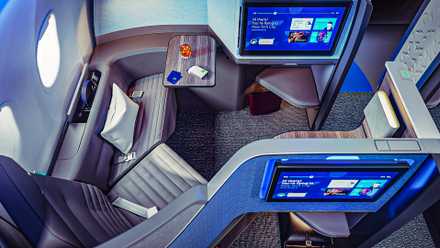
Within this compact airframe, JetBlue has dedicated a significant portion of its floor space to the Mint cabin, featuring 24 individual suites. While this might seem like a small number, these seats occupy the most valuable space on the aircraft, often yielding higher revenue per square inch (6.45 square centimeters) than any other part of the fleet. Flying fewer people on a more fuel-efficient aircraft means that the airline can maintain high load factors even on niche routes like Boston to Barcelona or the newly launched Milan service.
The A321LR’s operational flexibility means JetBlue does not have to worry about filling a 250-seat cabin on off-peak Tuesday or Wednesday flights. Instead, the focus remains on the 24 premium travelers who are willing to pay a significant markup for direct aisle access and a lie-flat bed. This efficiency is the cornerstone of the JetForward strategy, allowing the carrier to report a 6.5% increase in revenue per available seat mile in early 2026, even as it moderates its overall capacity to focus on profitability.
The Math Behind The Success

The financial disparity between the front and back of the aircraft is the engine that drives JetBlue’s long-haul viability. The Mint cabin accounts for only 17.4% of the A321LR’s total seats, yet the revenue it generates is significantly higher than its physical footprint suggests. It is a deliberate strategy to capture high-yield travelers who are less price-sensitive than leisure passengers in the core cabin, something that JetBlue has massively capitalized on.
On a typical flight from Boston to the newly launched Milan destination, a single Mint seat can retail for as much as $2,199 for a one-way ticket. In contrast, introductory fares for the core economy cabin start generally around $399. This means a single premium passenger generates the same top-line revenue as more than five travelers in the back, while consuming far less total aircraft weight and service resources per dollar of revenue.
As demonstrated by the math behind the cabin, the 24 individuals in Mint actually generate more total revenue than the remaining 114 passengers combined. Such a high-margin performance is exactly why JetBlue reported that its premium revenue per available seat mile outperformed the core cabin by roughly nine percentage points in early 2026. By focusing solely on these high-ticket sales, the airline can ensure that even if the economy section is not completely full, the flight remains profitable.
How Much Does It Cost To Upgrade To JetBlue Mint Studio?
The price for the best in the business.
Sitting Firmly In The Red

The aggressive push into premium transatlantic markets is a direct response to the heavy financial headwinds JetBlue faced in previous years. After reporting a $795 million net loss in 2024, the carrier launched its JetForward restructuring plan to stabilize its balance sheet and return to sustainable growth. Getting back on track also involves moving away from low-margin domestic competition and toward high-demand, leisure-premium routes where the Mint product has a distinct competitive advantage.
Losses are still ongoing, as in the first quarter of 2026, JetBlue reported a net loss of $319 million, reflecting the ongoing struggle with volatile fuel prices, which reached over $4.00 per gallon (3.78 liters) in some regions. However, the underlying demand for the Mint experience remains robust, providing a necessary buffer against these rising operational costs. Concentrating its growth in profitable hubs like Boston and Fort Lauderdale enables the airline to recapture its fuel costs through higher-quality revenue streams rather than pure volume.
Management has signaled to the market that the airline is not considering a 2026 bankruptcy, citing over $2.4 billion in available liquidity to fund the JetForward initiatives. The focus is now on disciplined, profitable growth rather than expanding for the sake of market share, and it includes a strict cap on annual capital expenditures to ensure the airline can weather the current high-interest environment while still investing in the premium cabins its most loyal customers demand.
Perfect For The Job

The decision to deploy the A321LR across the Atlantic is JetBlue’s method of slashing the immense trip costs associated with twin-aisle aircraft. A Boeing 787-8 Dreamliner or an A350-900 offers massive cargo capacity and hundreds of seats, but often those features come at the price of a much higher fuel burn. On a 3,500 nautical mile (6,482 kilometer) journey, the A321LR burns significantly less fuel per hour, allowing JetBlue to achieve a break-even load factor that would be impossible for a widebody competitor to match on a secondary route like Boston to Milan.
Choosing a single-aisle jet, the airline avoids the complexity of filling a 250-seat cabin, which often requires heavy discounting in the back to maintain high occupancy. The A321LR is equipped with three additional center tanks that hold roughly 8,700 gallons (32,933 liters) of jet fuel, providing a range of up to 4,500 nautical miles (8,300 km). This allows the aircraft to cruise at Mach 0.78 while consuming approximately 900 to 1,000 gallons (3,407 to 3,785 liters) of fuel per hour, roughly half the consumption of older widebody generations.
This operational efficiency makes secondary European airports, where widebody landing fees would erode any potential profit, an economically viable proposition. By keeping trip costs low, JetBlue can survive on the revenue generated primarily by those 24 Mint passengers, treating the 114 economy seats as high-margin buffers rather than a mandatory requirement for survival. This is a model increasingly seen in the East Asian market, where carriers like ZIPAIR utilize a similar philosophy, though JetBlue has perfected the narrowbody implementation for the North Atlantic.
How Much Does It Cost To Upgrade To JetBlue Mint Studio?
The price for the best in the business.
Plenty Of Space To Grow

The launch of flights from Boston to Barcelona in April 2026 and Milan in May 2026 highlights a focus toward leisure-premium markets. Unlike London or Paris, which are saturated with business-heavy competition from legacy carriers, these Mediterranean destinations attract wealthy vacationers and leisure travelers who prioritize the Mint experience. These routes allow JetBlue to command premium pricing without competing for the corporate contracts that dominate the New York to Heathrow corridor.
In Milan, JetBlue faces virtually no direct narrowbody competition from its primary hub in Boston, though it will compete with  Delta Air Lines on this corridor, giving it a unique monopoly on a product that offers direct aisle access in a business-class suite. The leisure-premium segment here is the fastest-growing part of the transatlantic market, with travelers willing to spend $2,199 for a one-way Mint ticket to arrive refreshed for a summer cruise or a fashion-week event. The airline’s ability to offer a consistent, high-end product in a smaller aircraft makes it the preferred choice for travelers who want to avoid the crowds of a massive 400-seat terminal arrival.
The success of these routes is bolstered by the JetForward plan’s focus on high-yield geographies. Allocating more aircraft to these specific city pairs allows the airline to capture a larger share of the transatlantic pie previously held by European flag carriers. The focus is on quality over quantity, ensuring that every seat, whether a Mint suite or a Core seat with its generous 32 inches (81.28 centimeters) of legroom, contributes to positive revenue per available seat mile.
JetBlue’s Road To Recovery

As JetBlue keeps 2027 in sight, the airline is doubling down on the narrowbody long-haul model as its primary engine for recovery. With over $2.5 billion in liquidity as of early 2026, the carrier has the financial runway to wait for its new A321XLR deliveries, which will further extend its reach into central and eastern Europe. The long-term goal is to transition from a net loss to consistent profitability by maximizing the efficiency of these single-aisle money-makers.
Narrowbody departures across the Atlantic have grown by more than 120% since 2019, and JetBlue is at the forefront of this transformation. The airline still faces challenges from high interest rates and fluctuating fuel prices, but the demand for the Mint product has remained incredibly resilient. JetBlue’s resilience suggests that the 24 people in the front of the plane will remain the most important factor in whether the airline can successfully navigate its JetForward turnaround.
Ultimately, the math of the A321LR proves that you do not need a massive plane to make massive profits. Focusing on a small group of premium travelers and a fuel-efficient operations model, JetBlue is building a more sustainable future for itself and the broader aviation industry. Only time will tell whether JetBlue can recuperate its losses and finally be on the way to economic success.