dailynewsnblog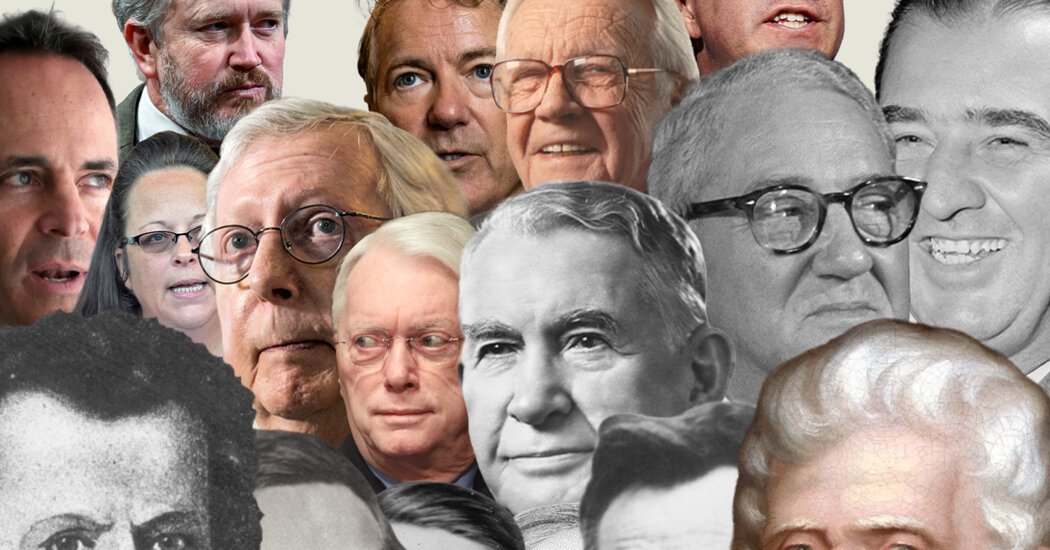
Representative Thomas Massie of Kentucky is no ordinary politician.
An M.I.T.-educated congressman from a rural county, he lives off the grid, drives a Tesla with a “Friends of Coal” label on the license plate and has registered 30 patents for his myriad inventions.
A proud libertarian, he has pushed back against President Trump on the Epstein files and the Iran war, which has left him fighting for his political life against a Trump-backed challenger in a closely watched Republican primary contest on Tuesday.
But Mr. Massie fits neatly into Kentucky’s unpredictable political landscape. Its governor, Andy Beshear, is one of the few Democrats to lead a deep-red state and is the son of a former governor. One of its senators, Mitch McConnell, who is not seeking re-election, was the ultimate Washington insider, serving as majority leader. The other, Senator Rand Paul, was long more of an outsider — a libertarian iconoclast.
Ever since Daniel Boone crossed the Cumberland Gap into what is now Kentucky, the state has served as an incubator for colorful figures who stand out for their quirks, their rejection of party orthodoxy and their national success despite long odds.
The reasons are complicated, and have partly to do with a political culture dominated by the state’s 120 counties — more than any state except Texas and Georgia — as well as a Civil War border-state history and diverse geographic regions. Kentucky politicians “usually start out as smaller characters on the local scene,” said Greg Stumbo, a Democrat who served as the state’s attorney general.
Below is a look at some of Kentucky’s most prominent political leaders — most of whom, in a heavily white Southern state, have been white men.
But first, a poem, written around the turn of the century by a Kentucky politician named James H. Mulligan, who captured the state’s political essence:
Mountains tower proudest
Thunders peal the loudest
The landscape is the grandest —
And politics — the damnedest
In Kentucky.