dailynewsnblog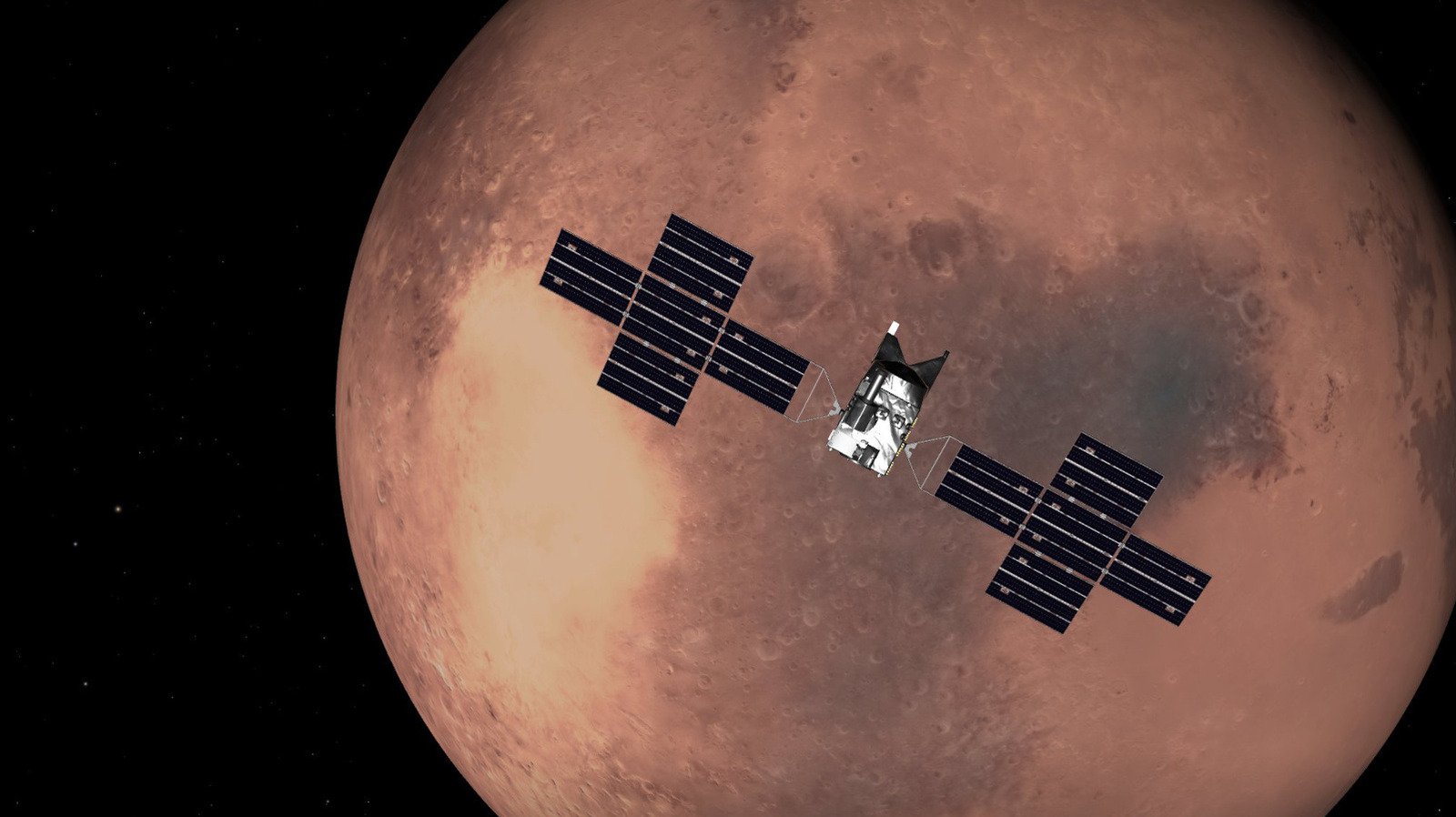
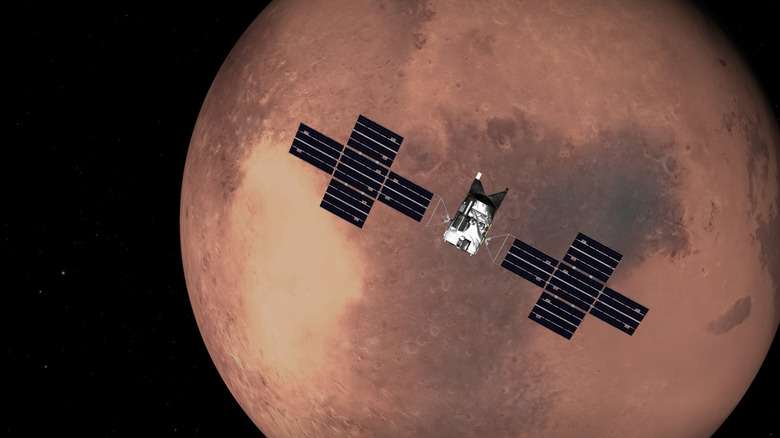
NASA’s Psyche spacecraft has just flown closer to Mars than the planet’s own moons en route to the metallic asteroid 16 Psyche. It was a planned maneuver so that the spacecraft can get gravity assist from the red planet and conserve fuel, specifically the xenon gas propellant its solar-electric ion thruster system uses. The flyby gave Psyche a speed boost and changed its trajectory so that it’s now aligned with its target asteroid’s orbit around the sun.
With a speed of 12,300 mph, Psyche passed within 2,800 miles of the planet in its closest approach at approximately half past 3PM Eastern time on May 15. The Martian moon Phobos orbits the planet from 3,700 miles away, while the moon Deimos is much farther away and is located 12,470 miles above the planet’s surface.
Psyche has been approaching Mars since early May and has been taking photos of the planet. From the angle of its approach, the planet appeared as a bright, thin crescent, as its surface and the dust particles around it reflect light from the sun. Psyche’s cameras took more images during its flyby, and it will beam them back over the coming days and weeks via the giant antennas of NASA’s Deep Space Network. Those images will be uploaded to the mission’s official page.
Psyche started its six-year, 2.2-billion-mile journey towards its namesake asteroid in late 2023. It’s expected to reach its destination in July 2029 and to start working on its objectives the next month. The spacecraft will spend two years orbiting the asteroid “to take pictures, map the surface and collect data to determine Psyche’s composition.”
Scientists think that Psyche, the largest known metallic asteroid in our solar system, could be part of the iron-rich core of a planetesimal. That’s the solid building block of a planet formed in the early days of the solar system. As such, it could offer us insight into the core of our own planet and show us how it formed. “We can’t bore a path to Earth’s metal core — or the cores of the other rocky planets — so visiting Psyche could provide a one-of-a-kind window into the violent history of collisions and accumulation of matter that created planets like our own,” NASA explained.
This “gravity assist” flyby will use the Red Planet’s pull to boost the spacecraft’s speed and refine its trajectory on its way to explore the mysterious, metal-rich asteroid Psyche.
Details: https://t.co/v4t8DRi6XW
Current distance from Mars: 14,450 miles
Speed: 10,710 mph pic.twitter.com/GumPXTSKRI— NASA Solar System (@NASASolarSystem) May 15, 2026