dailynewsnblog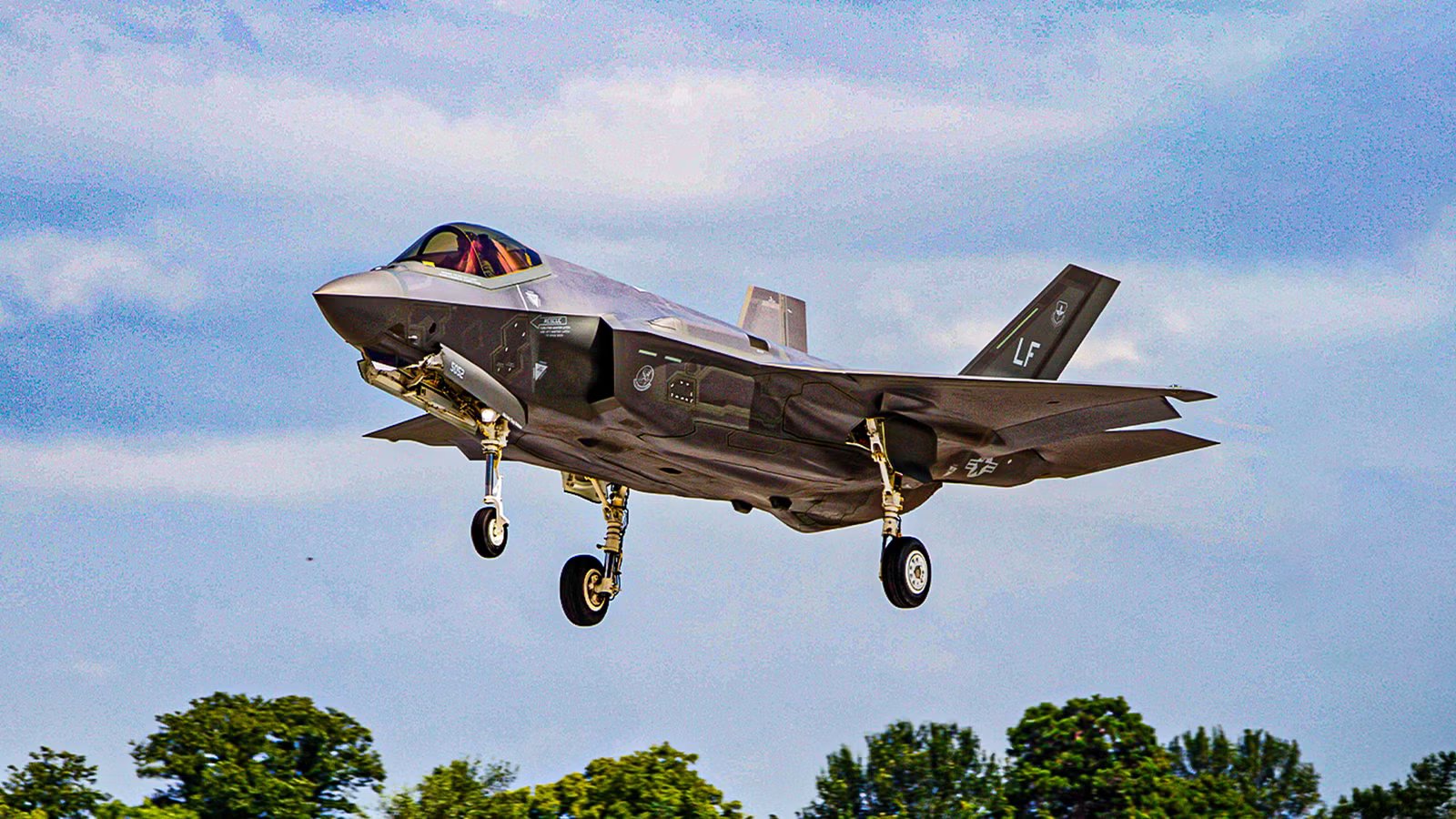
Modern fighter jets are incredibly complicated machines, and multiple, seemingly contradictory things can be true at the same time. The Lockheed Martin F-35 Lightning II is taking its place as the world’s second most common frontline fighter jet. It now takes a leading role and was central in destroying Iran’s air defense in Israeli/US operations in 2024, 2025, and again in 2026. And yet, the F-35 remains an immature platform. The F-35 has yet to realize its full potential over 10 years after entering service.
With the troubled Technology Refresh 3 upgrades now completed, Lockheed can move forward with the hugely significant Block 4 upgrade, which will dramatically increase its capabilities. The F-35 is now the only fighter jet in service with the Norwegian, Dutch, and Danish air forces, and it is the second most common fighter jet in US Air Force service. At the same time, many legacy fighter jets are aging out and being retired and/or being produced in low numbers. Here is how the F-35 is becoming the second most common fighter jet.
The World’s Top Ten Fighter Jet Families

In its 2026 world review of air forces (using Cirium data), FlightGlobal listed the F-16 Fighting Falcon as the most common fighter jet. It was followed by the Flanker series (Su-27/30/33/34/35) with 1,299, the F-15 family at 897, the F-35 family with 883, and the MiG-29 at 728. Rounding out the top ten list are the Chengdu J-/7F-7 (649), Eurofighter (528), Su-24 Fencer (383), and Su-25 (371). However, this listing has multiple issues. Most obviously, it excludes the F/A-18 Hornet/Super Hornet (plus the EA-18G Growler) series, which has around 1,200 active airframes.
Another issue is that the Chinese J-7/F-7 family (derived from the MiG-21) is essentially retired. The remaining Su-24s are rarely now seen on the frontline, while the Su-25 is also a rapidly declining ground attack aircraft heading into obscurity. An adjusted list could replace the last four fighter jet families with the Chengdu J-10 (550+), the Eurofighter Typhoon (528), the Chinese J-16 (450), and the tenth spot being a tie between the Rafale and Chengdu J-20 at 300+, although the J-20 has probably pulled ahead.
Note that for the purposes of this article, the Flanker series will bundle all the Russian Flanker variants (the Su-27, Su-30, Su-33, Su-34, Su-35) and the Indian made Su-30MKI variants. It will exclude the Chinese J-15 and J-16 derivatives, placing them in their own category. If the J-16 and J-15 were added, then the Flanker family would remain the world’s second most common fighter jet.
Over 1,300 F-35s Delivered

In early January 2026, Lockheed Martin stated it had delivered around 1,300 F-35s. By the end of March 2026, Lockheed had delivered some 32 F-35s, below the 2025 first quarter’s deliveries (47). As of the time of writing, May 2026, it is reasonable to estimate Lockheed has delivered around 1,350 F-35s across all variants. Of these, around 13 or more have been lost to accidents; none have been retired.
It’s unclear why the 2025 tally was listed so low at just 883 examples. Perhaps a large number of aircraft used for training were excluded. But the actual fleet of operational F-35s, including those used for training, is now north of 1,300. A good proxy for how many F-35s are being produced is how many critical components key contractors are reporting to have delivered.
Plausible in-service fighter jet rankings by family | Approx. quantity (per Rusi, etc.) |
|---|---|
F-16 (all blocks) | 2,100 |
F-35 (all variants) | 1,300+ |
Su-27 (27/30/33/34/35) | 1,000–1,300+ |
F/A-18 (inc. Growler) | 1,200 (880 by US Navy/Marines) |
In January 2026, Northrop Grumman delivered the 1,500th center fuselage for the F-35. While Lockheed Martin is the overall contractor for the F-35, Northrop Grumman and the UK’s BAE Systems are the two major partners, followed by other contractors like Pratt & Whitney. Northrop Grumman says its assembly line “...delivers one center fuselage every 30 hours and seamlessly produces center fuselages for all three F-35 variants on a single production line.”

6 Aircraft That Represent The Future Of Air Combat
Discover six aircraft redefining modern air warfare, from stealth fighters to missile trucks, shaping the balance of air power in 2026 and beyond.
F-16 Fighting Falcon Series

For now, the F-16 remains the world’s most common fighter jet. General Dynamics and later Lockheed Martin have delivered a total of over 4,600 examples over the program’s lifetime. Of these, more than half appear to have been retired or otherwise written off. The aircraft remains in production for export, although the production numbers are low compared with the F-35.
Well over 100 F-16s remain on order around the world, and production is expected to continue into the 2030s. At the same time, the USAF has significantly downsized its in-service fleet, and some air forces have phased them out in favor of the F-35. Some air forces (like Ukraine and Argentina) are only now upgrading to second-hand versions of the F-16; others (like Bulgaria, Taiwan, and Slovakia) are upgrading to new versions.
Around 2,100 F-16s remain in service around the world, excluding the 354 examples stored at the Davis-Monthan boneyard. Of those in service, 657 were in the US Air Force in 2024. The rate of retirements and losses is likely higher than the rate of new deliveries. Lockheed delivered 16 examples in 2024 and another 16 in 2025. This was much below what Lockheed had planned to deliver. Lockheed wants to ramp deliveries up in 2026, but the first quarter saw no deliveries.
The F/A-18 Hornet Series

The F/A-18 Hornet family is inseparable from the US Navy. The aircraft was developed from the YF-17. The YF-17 lost against the YF-16, which became the F-16. Like the F-16, the F/A-18 has become one of the most successful and prolific 4th-generation fighter jets. It was later upscaled and dramatically redesigned to become the F/A-18 Super Hornet. For the purposes of the family, this list will also include the heavily derived EA-18G Growler electronic warfare variant.
Legacy Hornets are aging out of service around the world, although they remain in service in large numbers with the US Marine Corps. The Marines still have around 140 legacy Hornets in service, although these have been retired from US Navy and Royal Australian Air Force service. The Marines, Canada, Finland, and Switzerland all plan to replace their legacy Hornets with F-35s, while Spain will hold onto them for much longer.
In all, around 350–400 legacy Hornets remain in service, while around 600–650 Super Hornets are in service, mostly with the US Navy (Australia has 24). Around 165 EA-18G Growlers are in service, all are in the US Navy except for 12 Aussie Growlers. Production of the Hornet is coming to an end. The Navy has placed what is likely to be the final order, and no further export orders are expected. The production line is expected to shut down in 2027. Boeing delivered 14 Super Hornets in 2025 and two in the first quarter of 2026; this is not enough to keep pace with retirements.
How The Mass Production Of This Fighter Jet Keeps Its Price Down
With over a thousand F-35s built and thousands more on order, the F-35’s flyaway costs can be lower than some fourth-generation fighter jets.
Russia’s Su-27 Flanker +Derived Series

The fighter jet family that can contend for the status of being the second most common fighter jet is the Su-27 Flanker series. Adding these aircraft is tricky due to uncertainty when estimating production numbers, estimating how many worn-out and rotting airframes are left on the books but will never fly again, and estimating wartime attrition. It also matters which variants are included and excluded. As stated, China’s J-16s are excluded.
Using Rusi’s January 2026 estimate to estimate Russian inventory, Russia has 135-140 Su-35s, 140-145 Su-30s, and 124 Su-34s in service. Not listed by Rusi are small numbers (perhaps fewer than 20) of naval Su-33s and at least 100 aging legacy Su-27s used by the Russian Air Force and Navy. Note that Rusi’s estimate appears to be a calculation based on estimated deliveries minus known losses. It is known that some Su-34s and Su-35s have aged out and appeared in boneyards.
Recent satellite images of Russia’s Lipetsk Air Force Base show more turning up. The Flanker series is the focus of Russia’s fighter jet production. Russia is thought to have received around 18 Flankers in 2024, plus a few exported; this number likely increased in 2025. Assuming Russia has around 600 flyable Flankers, the global fleet may be over 1,000 to around 1,300, depending on the inclusion criteria. India contributes around 260, China 153, Algeria 70ish, Indonesia 18, and other countries. Ukraine has some, but they are highly attrited.
Production Rates Seal The F-35’s Rise

Today, the F-35 family is almost certainly the second or third most common flyable frontline fighter jet, depending on how Flankers are counted. A good case can be made to exclude the 125 Su-34s as that variant is a fighter-bomber, not a fighter jet. However, the F-35 is ranked third; it’s just months or a few short years from becoming second. Production for the Flanker series is around a couple of dozen units a year, a number that is unlikely to offset losses and aircraft aging out of service. Russia’s Su-27 fleet is being phased out and no longer appears in frontline duties.
Meanwhile, Lockheed delivered 191 F-35s in 2025. This is likely more than all other American, European, and Russian fighter jet deliveries combined for 2025. That said, 2025 was an anomaly due to clearing a large number of aircraft produced in other years but held up by the TR-3 Refresh. The stable production rate is stated to be around 156+ per year.
Only China can match these numbers. Rusi estimated that the Chinese industry delivered 0-40 J-10s, 80-100 J-16s, 20-30 J-15s, and 120 J-20s in 2025. The China aircraft OSINT account watcher, Hurin, contended these numbers, saying China’s deliveries were more likely 20-30 J-35s. 12 J-10s, 60 J-16s, 30 J-15s, and 100 J-20s. Regardless, this would put China on par with the US for total fighter jet deliveries in 2025. That said, modern Chinese fighters, like the J-20, are coming from a lower base than the F-35.