dailynewsnblog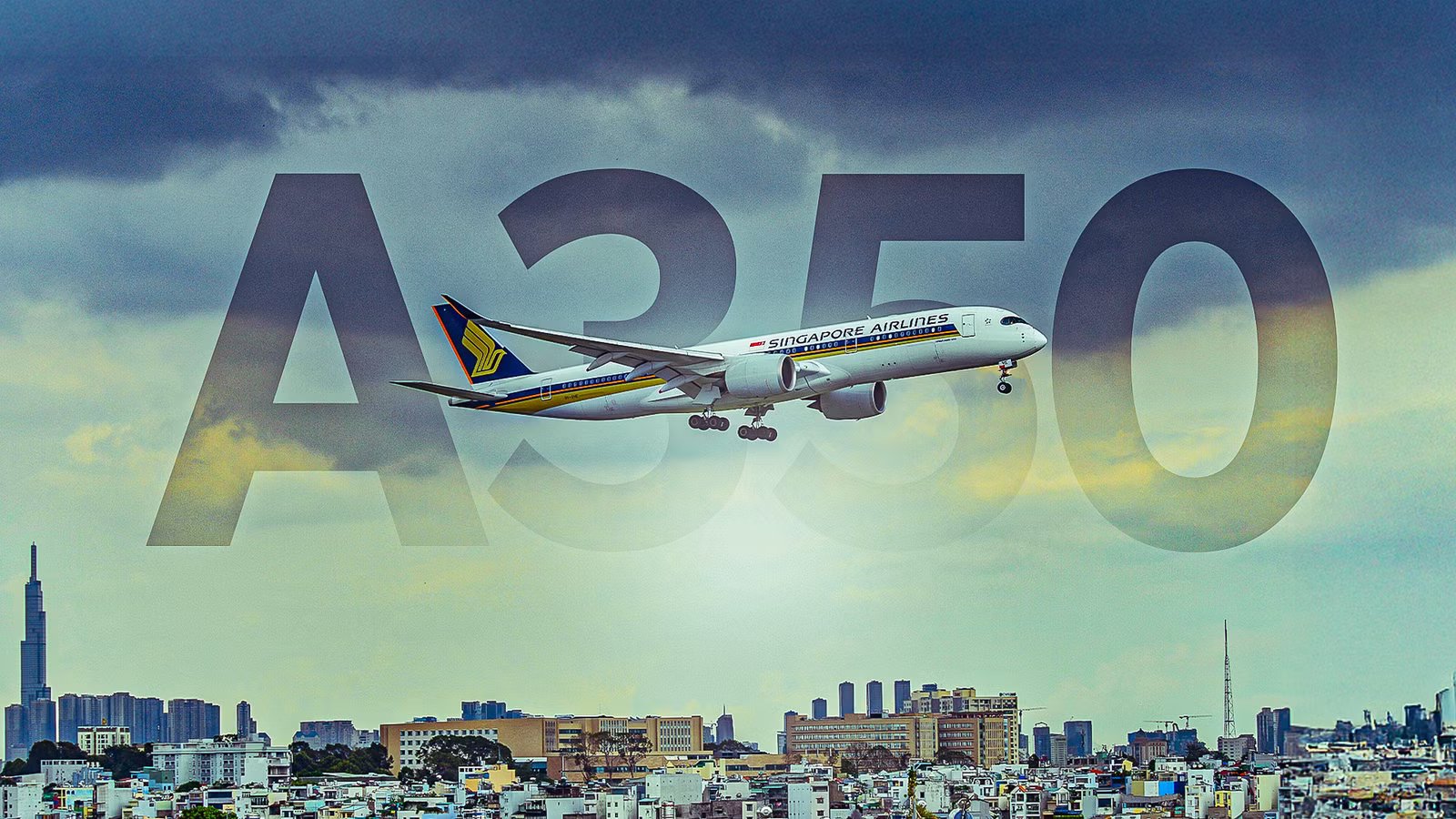
The onset of the 2026 Iran Crisis earlier this year has fundamentally reshaped Asian aviation as we know it. While carriers in and around the Middle East have been hit the hardest and most directly, the knock-on effects have also spilled over to European and Asian airlines that would otherwise be relying on the use of Middle Eastern airspace in order to fly the most direct long-haul routes. With that being said, it isn’t all bad news.
Indeed,  Singapore Airlines has revealed that it has actually been able to win customers off the back of the ongoing conflict in the Middle East. This is because the current geopolitical tensions in the region have rendered its Changi Airport (SIN) hub a more appealing transit point than the likes of Abu Dhabi International Airport (AUH), Doha International Airport (DOH), and Dubai International Airport (DOH). Let’s examine the present situation.
On The Up

Yesterday, Singapore Airlines shared its full-year results for the 2025/26 financial year with the world. As noted by the Financial Times, one of the key headlines on this front was the fact that, in the 12 months from April 1, 2025, to March 31, 2026, its annual passenger total rose by a factor of 7.7% to 42.4 million.
While it is unlikely that this considerable increase was fueled solely by passengers flying with Singapore Airlines instead of via the Middle East, it undoubtedly played a meaningful role in the last month of the financial year. With a net income of close to S$1.2 billion (US$927 million), its share prices also rose by a factor of over 2%. Looking to the future, the carrier is hoping to continue its expansion by diversifying its codeshare offering:
“Singapore Airlines is also deepening partnerships with like-minded carriers to offer more options to customers, strengthen connectivity to our respective hubs, and capture growth opportunities that arise in our respective markets.”
The Disruption Has Aided Passenger Growth, But Jet Fuel Costs Remain A Concern

The aforementioned figure of 42.4 million passengers accounts for both Singapore Airlines’ mainline services and those operated by Scoot, its low-cost subsidiary. Its flights were well filled despite (or perhaps because of) the current disruption, with its load factor in 2025/26 rising by a factor of 1.1% to 87.7%.
Singapore Airlines’ strong performance on the passenger front, and its capitalization on shifting market trends as long-haul flyers look to avoid the frequently disrupted airspace in and around the Middle East, puts it in a strong position to continue to grow over the peak northern summer season. However, this comes with the caveat that the 2026 Iran Crisis has also played havoc with jet fuel prices, often resulting in cuts to airline service.
Despite its strong showing of late, Singapore Airlines may yet bear the brunt of these fuel price hikes, “as the group’s fuel bills are typically priced on a lagged basis.” This means that “the impact is only partially reflected” by its latest results, and its true effects may prove to be worse in the long run. As such, “Singapore Airlines and Scoot have raised air fares across their network,” but “the adjustments do not fully offset the rise in the price of fuel.”
Fuel Costs Cut Singapore Airlines Group 1Q Profit By 38%
In an unwelcome development, rising fuel prices have dented first-quarter profits for the Singapore Airlines Group.
Q3 Will See A Tentative Middle Eastern Restart For Singapore Airlines

Looking ahead to the third quarter of the 2026 calendar year, which will run from July 1 to September 30, this is also currently set to be the period in which Singapore Airlines resumes its operation of scheduled commercial passenger flights to and from the Middle East. According to present scheduling data made available by Cirium, an aviation analytics company, both Dubai and Riyadh (RUH) are set to see Singapore Airlines return.
The carrier has tentatively penciled in a grand total of 59 Dubai-bound departures from its main hub at Singapore Changi Airport this Q3, with this total representing a daily frequency from August 3 onwards. These services will be operated by 264-seat Boeing 777-300ER widebody twinjets, while its aircraft of choice for Riyadh is set to be the 303-seat Airbus A350-900. Starting on September 1, Singapore Airlines will operate four weekly flights.