dailynewsnblog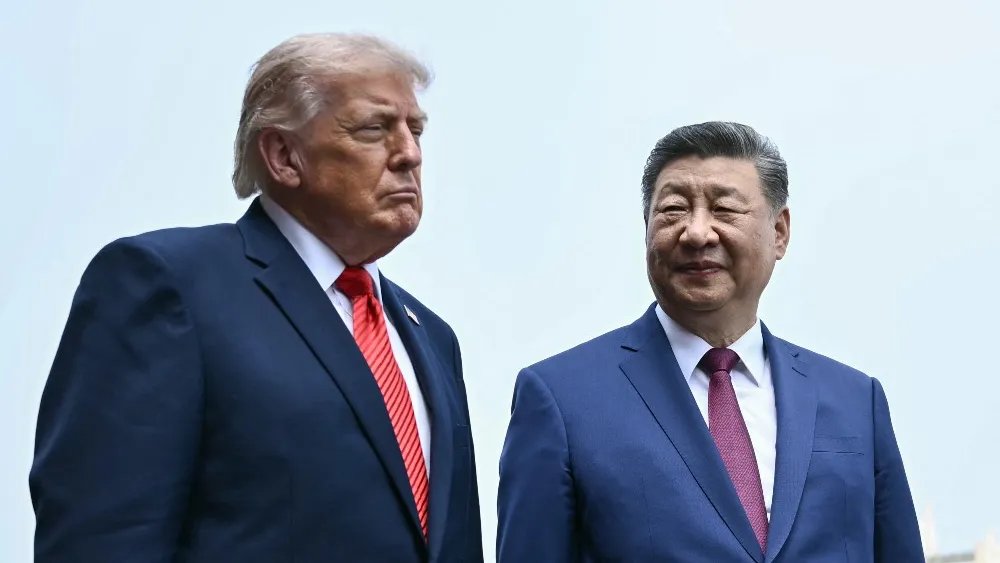
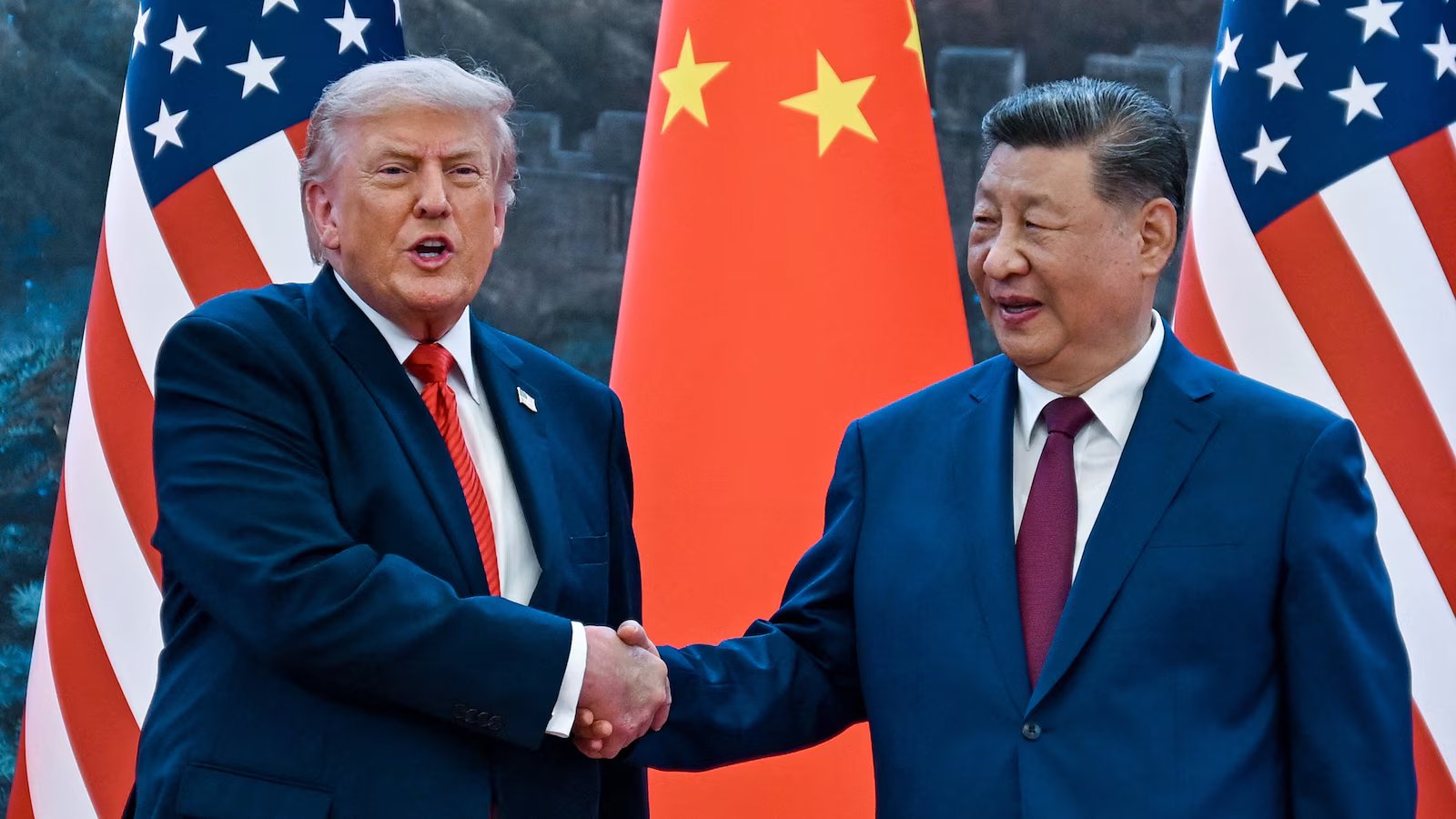
President Donald Trump’s first second-term visit to Beijing to meet with Chinese President Xi Jinping kicked off with a full day of discussions about how the two world superpowers will navigate an increasingly volatile global geopolitical landscape that has thrown trade and diplomatic relations into a state of upheaval.
In Xi’s estimation, the biggest question facing the United States and China amounts to whether they can “transcend the ‘Thucydides Trap’” to “pioneer a new paradigm for major-country relations.”
The Chinese leader was referring to a theory based in the writings of the Greek historian: That the growth and success of a rising power (in this case, China) can appear threatening to an established ruling power (like the U.S.), setting two titans on a path toward war and destruction if such an outcome isn’t thoughtfully thwarted through diligent diplomacy.
Throughout the day, Xi emphasized his preference that the nations “should be partners rather than rivals.”
“Today, President Trump and I had in-depth exchanges on China-U.S. relations and the international and regional dynamics. We both believe that the China-U.S. relationship is the most important bilateral relationship in the world. We must make it work and never mess it up,” Xi said during a lavish state dinner thrown in Trump’s honor, according to a readout from state media outlet Xinhua.
“Both China and the United States stand to gain from cooperation and lose from confrontation,” he added.
The Chinese president said he aims to work with Trump to “steer the giant ship of China-U.S. relations onto the right course” to ensure that 2026 becomes a landmark year ushering in a new chapter of bilateral collaboration.
Over the course of the day’s talks, Xi said the two leaders had agreed to redefine the relationship under a different framework—one that would provide “constructive strategic stability” over the next three years of Trump’s term and beyond.
The leaders surprisingly did not dig into the future of Trump’s tariff regime, which was the central tenet of his first year in office. They are expected to speak more to issues of trade on Friday, the second and final day of the summit.
Xi did, however, stress in no uncertain terms that Taiwan is “the most important issue” impacting U.S.-China relations. In the readout translated by Xinhua, Xi was quoted saying, “If handled properly… bilateral ties can maintain overall stability; if mishandled, the two countries could face confrontation or even conflict, pushing the entire relationship into a highly dangerous situation.”
The issue of Taiwan’s independence has been a point of contention within the U.S.-China relationship for years, with the U.S. recognizing the Beijing-claimed island as an independent democracy and selling its government billions of dollars in weapons to defend itself against China’s aggression. In December, the U.S. announced that it had solidified the sale of a record-setting arms package worth over $11 billion.
Secretary of State Marco Rubio, who joined the president in Beijing, told NBC that the U.S. policy on Taiwan remains unchanged by the meeting. “It was raised,” he said. “They always raise it on their side, we always make clear our position and we move on to the other topics. We know where they stand, and I think they know where we stand.”
Xi’s insistence on the issue’s critical importance—and the U.S. administration’s seeming intractability on the issue—created a thorny backdrop for discussions about an issue deeply important to Trump: the war in Iran and the reopening of the Strait of Hormuz.
Trump, who said in late February that the conflict would be quickly resolved, has faced flagging approval ratings at home as the war rages on.
China, Iran’s biggest trading partner, has particular leverage over the Middle Eastern nation. Xi could choose to use his influence as a point of leverage in China’s relationship with the U.S., as Trump is expected to ask for his help in facilitating the resumption of trade through the strait—a critical thoroughfare for one-fifth of the world’s oil that remains woefully constrained by an Iranian blockade, making the perilous for ocean freight operators to traverse.
Few details about Trump and Xi’s Iran talk have been released thus far, but the White House indicated that both leaders agreed that Iran must not develop a nuclear weapon, and that “the Strait of Hormuz must remain open to support the free flow of energy.”
Perhaps with that goal in mind, Trump was effusive in his remarks about the Chinese leader at the state dinner, calling him “a friend” and “a great leader.”
Characterizing the U.S.-China bond as one of the “most consequential relationships in world history,” he said that collaborative partnership between the nations could foster major and positive developments for the rest of the world.
The president brought with him a delegation of U.S. billionaires and business leaders, from Tesla and SpaceX’s Elon Musk to Tim Cook of Apple. Trump said America’s business and technology sectors deeply respect and value the Chinese market, and he encouraged expanded cooperation.
“This bond of commerce and respect that stretches back 250 years is the foundation for a future that benefits both of our nations,” Trump said.
American and Chinese consumers have come to share common appetites, too, for the bastions of business: food, fashion and entertainment.
“Just as many Chinese now love basketball and blue jeans, Chinese restaurants in America today outnumber the five largest fast food chains in the United States all combined,” Trump said. “That’s a pretty big statement.”