dailynewsnblog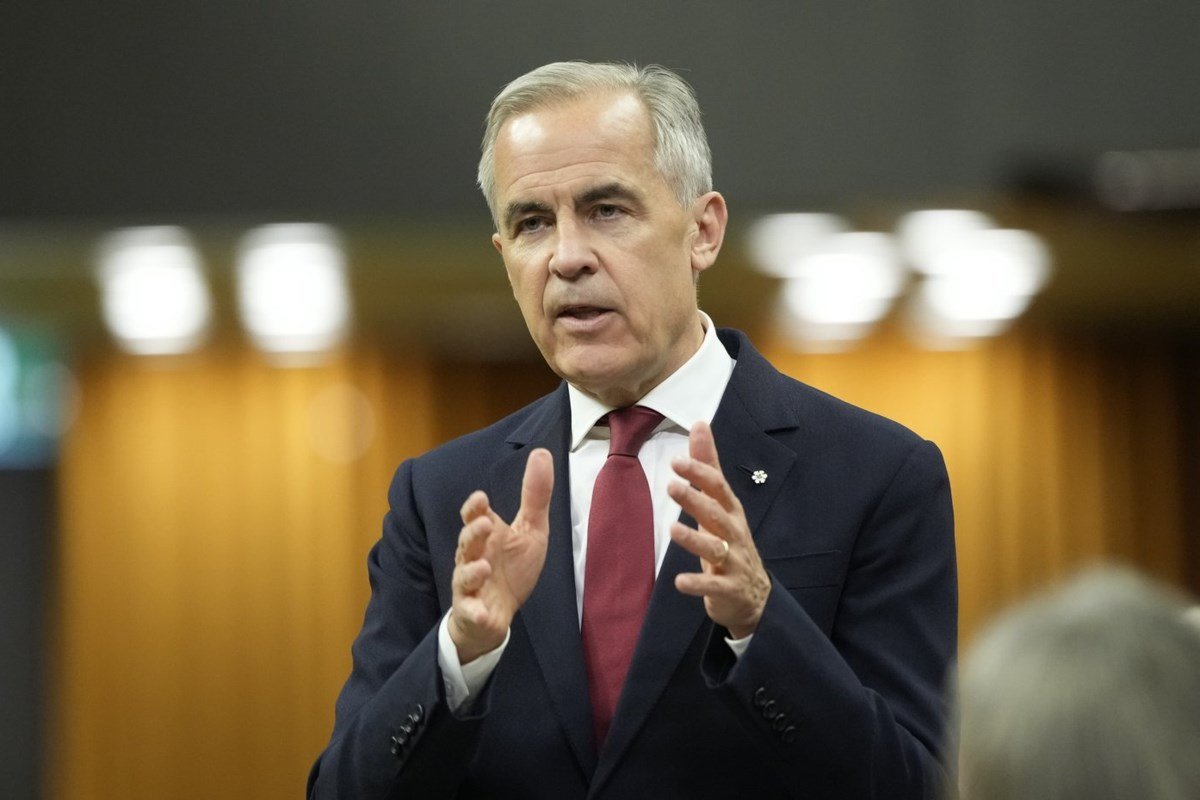

OTTAWA — The federal government is planning to adjust the clean electricity regulations to give more flexibility to LNG power plants and help to double Canada’s electricity grid by 2050.
OTTAWA — The federal government is planning to adjust the clean electricity regulations to give more flexibility to LNG power plants and help to double Canada’s electricity grid by 2050.
Prime Minister Mark Carney on Thursday unveiled Canada’s long-awaited clean electricity strategy, which aims to lower energy costs for 70 per cent of Canadian households.
The strategy says construction will cost more than $1 trillion and public dollars will be used to cover some of the cost.
“Doubling generation in the next few decades will require massive investment,” Carney said Thursday at a news conference on Parliament Hill.
“It requires permitting reform, new partnerships with Indigenous Peoples and a willingness to use a wide range of energy, including hydro, nuclear, wind, solar, some gas, carbon capture and geothermal.”
The strategy signals a shift from the existing clean electricity regulations presented by the former Liberal government under Prime Minister Justin Trudeau. That plan, to decarbonize Canada’s grid by 2050, set limits on carbon dioxide pollution from almost all electricity generation units that use fossil fuels.
Carney said Thursday the aim of the new plan is not to pursue “absolute purity in generation” in reducing emissions through electrification.
Electricity accounts for about seven per cent of Canada’s total greenhouse emissions, an amount that has fallen substantially in the last 15 years as most provinces reduced or phased out the use of coal power.
The strategy doesn’t say how much money the government is willing to spend to achieve the goal, although it mentions offering tax credits and bringing back energy-saving retrofits for up to a million households.
Carney said the government will pay for those retrofits through loans, grants and “complementary measures.”
The government forecasts 130,000 new workers will be needed to double the size of grid. Carney said in his remarks 30,000 jobs will be created by the end of 2028, and 100,000 more by 2050.
“But right now, over 80 per cent of employers in the electricity sector are facing labour shortages.” Carney said.
“Through upcoming consultations, we will build on this momentum to ensure our workforce measures are effectively targeted to the needs of the electricity sector.”
The strategy commits to building electricity capacity in the North but doesn’t say how, other than that Ottawa will work with the territories and Indigenous stakeholders to make it happen.
This report by The Canadian Press was first published May 14, 2026.
Nick Murray, The Canadian Press