dailynewsnblog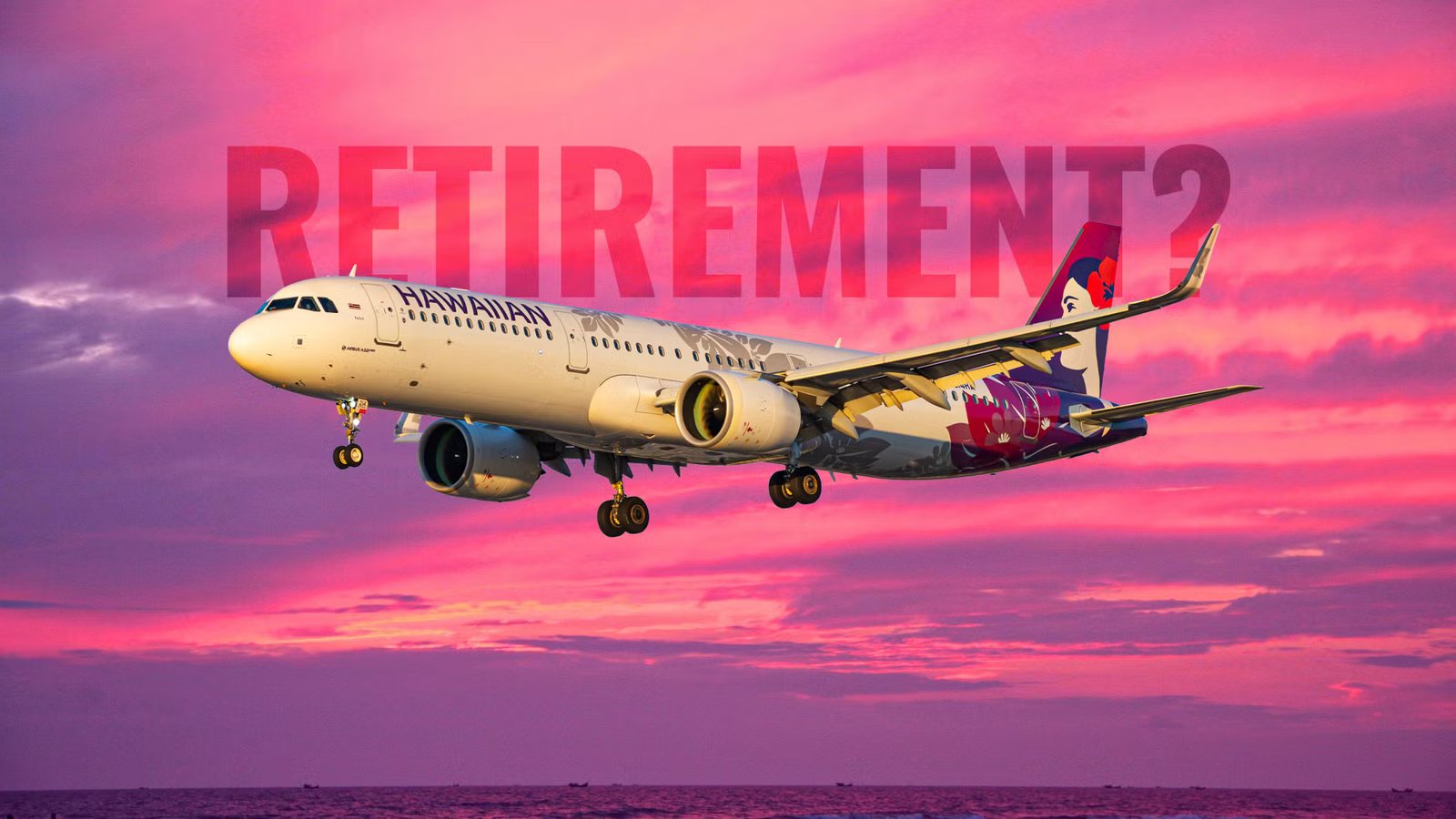
When Alaska Air Group finalized its acquisition of Hawaiian Airlines, it not only inherited a highly recognizable brand, but also a complex fleet that mixes both Boeing and Airbus aircraft. The newly combined carrier now operates the Boeing 717, 737, 787 Dreamliner, Airbus A321neo, A330-200, and Embraer E175, a stark contrast to its sole 737 mainline and E175 regional fleet just two years ago.
As Alaska Airlines moves past its successful acquisition of Hawaiian and considers how to maintain the unique identities of both the Hawaiian and Alaska brands, it too must decide the future of Hawaiian’s A321neo fleet. With just 18 aircraft in service, Alaska’s CFO has stated the company will either double its fleet of A321neos or eliminate it altogether.
The A321neo At Hawaiian Airlines

In 2017, Hawaiian Airlines introduced its first A321neo to its growing fleet. Registered as N202HA and named Maile, a fragrant vine traditionally used to make Hawaiian leis, the A321neo marked a new era of single-aisle flying for the airline. At the time, Hawaiian was searching for a fuel-efficient aircraft capable of serving flights from Hawaii to the US mainland, where a widebody aircraft wouldn’t make sense. The A321neo, with its improved fuel burn and terrific range, fits perfectly. Today, Hawaiian operates a fleet of 18 A321neos with an average age of just 7.4 years.
This makes them the carrier’s youngest aircraft. The aircraft plays an important role in Hawaiian’s fleet, connecting most major Hawaiian airports to secondary West Coast destinations such as Sacramento, Long Beach, Oakland, and Las Vegas. The A321neo has allowed Hawaiian to increase frequencies on existing routes and open new city pairs where its larger A330-200 would make the route difficult to serve profitably. In addition, Hawaiian has increasingly deployed A321neos on high-demand interisland routes.
Onboard, Hawaiian’s A321neos are configured with 16 first class recliner seats and 173 economy class seats, including 43 extra-legroom ones. First class is arranged in a 2-2 configuration, and passengers are treated to traditional Hawaiian service, complete with Mai Tais and island cuisine. In economy, seating is in a standard 3-3 layout. Notably, Hawaiian’s A321neos do not have personal entertainment screens, in contrast to the airline’s A330s, which do. However, all of Hawaiian’s A321neo aircraft feature Starlink WiFi, providing customers with high-speed connectivity in the air.
New Horizons: Inside Hawaiian Airlines’ Transforming 2025 Fleet
Changes are afoot at the US carrier.
Alaska Airlines’ Relationship With Airbus

Hawaiian’s reliance on Airbus aircraft, both the A321neo and the A330-200, stands in sharp contrast to Alaska Airlines’ fleet strategy. Following its 2016 merger with Virgin America for approximately $2.6 billion, Alaska Airlines inherited a substantial fleet of Airbus aircraft. That merger brought nearly 70 A320 family aircraft into Alaska Airlines’ all-Boeing operation, including 10 A319s, 53 A320s, and 4 A321s, according to historical data from Planespotters.net. Shortly after the merger, Alaska Airlines continued operating Virgin’s A320 fleet across its entire route network.
However, Alaska Airlines eventually decided that operating two narrowbody families was not sustainable for its long-term vision. By the early 2020s, Alaska Airlines began its efforts to retire its Airbus fleet and transition again to a solely Boeing operation. Citing higher operating complexity, training, and maintenance costs, Alaska Airlines phased out all the former Virgin America Airbus A320 family aircraft, retiring the final A321 in early 2024, as noted by Airways Magazine.
Aircraft | In Service | Parked | Total |
|---|---|---|---|
Boeing 737-700 | 11 | 3 | 14 |
Boeing 737-800 | 57 | 4 | 61 |
Boeing 737-900ER | 75 | 4 | 79 |
Boeing 737 MAX 8 | 14 | 14 | |
Boeing 737 MAX 9 | 80 | 80 | |
Boeing 787-9 | 5 | 5 |
Today, Alaska Airlines operates an all-Boeing mainline fleet consisting of 249 Boeing 737 aircraft and five 787s with an average age of around 10 years. This is split between the older generation of 737s, like the -700, -800, and -900ER, as well as the 737 MAX 8 and MAX 9 series. Its regional subsidiary, Horizon Air, flies 90 Embraer E175 aircraft with an average age of just 6.9 years. In total, Alaska Airlines has one of the youngest and most streamlined fleets of the major US carriers. The transition to a single narrowbody type simplified pilot training and reduced maintenance costs.
The Case To Phase Out Hawaiian’s A321neos

The argument for eventually retiring Hawaiian’s Airbus A321neos closely mirrors Alaska Airlines’ strategy after the Virgin America integration. Operating two different narrowbody families requires maintaining separate pilot pools and maintenance programs, all of which add cost and complexity to an operation. With Alaska Airlines and Hawaiian now operating under a single operating certificate, the pressure to simplify has only increased. During a December 2025 conference, Alaska’s CFO Shane Tackett made clear he understands the downsides of operating a mixed narrowbody fleet.
According to Aviation Week, Tackett stated that if Alaska Airlines doesn’t see a strong case for keeping the A321neo, which “today we don’t, then we’d probably end up in a place over time that was a single narrowbody fleet.” Many industry analysts interpret this as a signal that Alaska Airlines is seeking a replacement for the A321neo, allowing the airline to retain an all-Boeing narrowbody fleet and maintain the same benefits it experienced after retiring the last ex-Virgin America aircraft.
The Boeing 737 MAX Could Replace Hawaiian’s A321neos

Replacing the A321neo with Boeing aircraft would also align well with Alaska Airlines’ existing fleet and operational expertise. The 737 MAX 9 and MAX 10, if and when they are eventually certified, would become the natural replacements for the A321neo. The 737 MAX family is already integral to Alaska Airlines’ fleet, with the carrier operating 80 MAX 9 airframes and 14 examples of the shorter MAX 8. The 737 MAX 9, an aircraft already in commercial service and flying for Alaska Airlines, could take over many of the routes served by Hawaiian’s A321neos in the short term.
With a range of up to 3,800 nautical miles (7,040 km), the 737 MAX 9 could easily be used on Hawaii-to-US west coast routes, the same missions the A321neo currently operates. In addition, the capacity of the 737 MAX 9 and A321neo is roughly the same, with Alaska Airlines’ MAX 9s seating 178 passengers, compared to Hawaiian’s A321neos, which have a capacity of 188. Additionally, Alaska Airlines currently has orders for the 737 MAX 10, which would more closely match the A321neo’s capacity.
However, certification delays mean the MAX 10 is yet to enter commercial service, limiting its usefulness as a near-term solution. The MAX 10 would also be able to serve all the same routes Hawaiian currently deploys its A321neos on, with a range up to 3,600 nautical miles (6,670 km) and seating for up to 228, although a two-class cabin configuration would likely put that number near 190. Either way, whether the MAX 9 or MAX 10, switching to modern Boeing narrowbodies seems like the logical next step for Alaska Airlines, especially given its historical preference for Boeing.
Alaska Airlines Expects To Beef Up Hawaiian’s Airbus A321neo Utilization
Did the carrier make a mistake by retiring its former Virgin America aircraft?
The Case For More A321neos

Despite Alaska Airlines’ preference for fleet simplicity, Tackett does also see a path forward for keeping and even expanding Hawaiian’s fleet of A321neos. In fact, he stated that “if [Alaska Airlines] saw a line of sight to doubling the size of [the A321neo] fleet, we would pursue the opportunity.” Hawaiian’s Airbus aircraft are deeply integrated into the airline’s route network and serve a purpose that Boeing’s narrow bodies cannot perfectly replicate. The A321neo offers superior range and fuel efficiency on longer overwater routes, particularly between Hawaii and the mainland.
Expanding Hawaiian’s A321neo fleet would also stay consistent with the airline’s A330-200 widebody aircraft, simplifying pilot transition from the Airbus narrowbody to the widebody. If Hawaiian and Alaska Airlines’ operations are kept largely separate as they are today, it could also reduce maintenance costs, as Hawaiian’s facilities already have the materials and staff needed to maintain Airbus aircraft.
There is also the question of sunk costs. Hawaiian’s A321neos are relatively young and well-maintained. In addition, Hawaiian recently upgraded these aircraft with modern improvements like Starlink WiFi. Phasing these aircraft out today could mean forfeiting years of remaining economic life that Hawaiian paid for when it originally purchased the aircraft. It would also mean a need for additional capital to purchase additional Boeing 737 aircraft to replace the hole left by a possible A321neo departure.
Beyond The A321neo: The Boeing 717 Question

The A321neo debate at Hawaiian is closely tied to another fleet challenge: the future of Hawaiian’s 717-200s. The planes are used solely on interisland flights, operating short legs many times a day. It is not unknown that Hawaiian’s 717s need to be retired eventually, with the 717 fleet reaching an average age of 24 years old. With production for the 717 long ended and replacement parts becoming harder to source, an alternative to the aircraft is needed soon. One potential replacement for the 717 is the 737 MAX 7, which would maintain fleet commonality with Alaska Airlines.
While larger than the 717, with space for around 153 passengers compared to the current 128 seats on the 717, the MAX 7 could provide Hawaiian with more capacity per flight and improved fuel-burn economics. Alternatively, Hawaiian could choose to pursue non-Boeing aircraft, such as the Airbus A220 or Embraer E2. Tackett pointed to a likely successor being the 737 of some sort, but noted that the company would also consider alternatives that better suit the short stage, high-cycle island style of Hawaiian’s 717s.