dailynewsnblog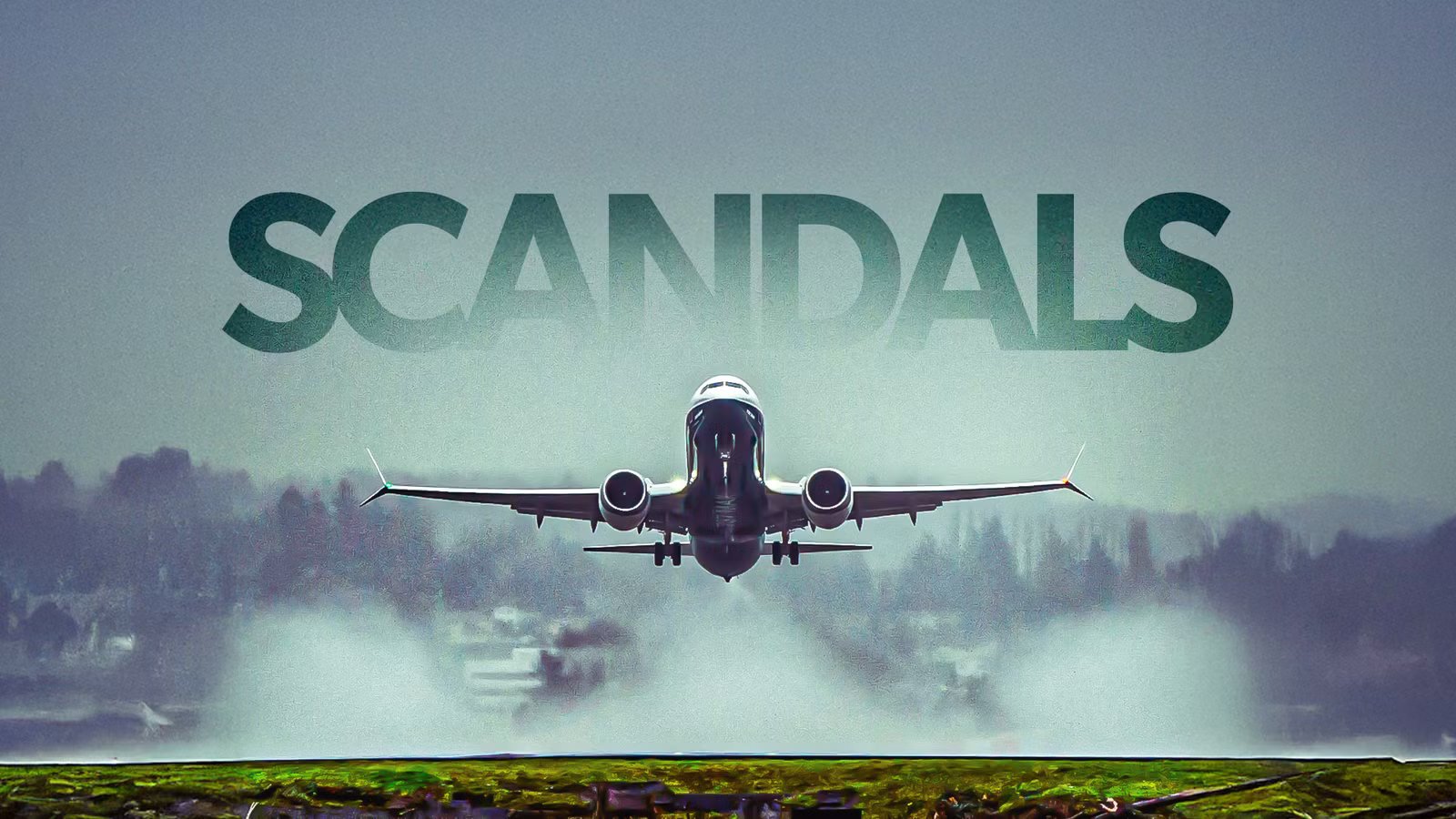
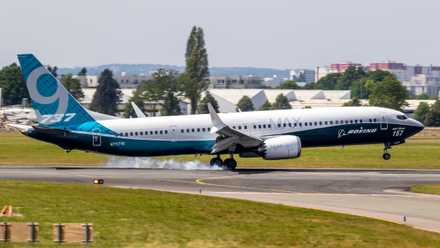
In recent history, one of the largest scandals within the aviation industry was that of the cover-up of the MCAS software by American manufacturer,  Boeing, on its 737 MAX aircraft. While it initially went unnoticed, the spotlight quickly shone on the aircraft and its systems after two crashes of a similar nature occurred within a few months. This then led to a worldwide grounding of the aircraft type for nearly two years, during which extensive investigations were conducted.
While the aircraft type is now considered safe and has been flying for several years, the above-mentioned accidents and several subsequent incidents, along with investigation findings, served as an eye-opening reminder to manufacturers and aviation regulators worldwide that safety should always be a priority.
The MAX Was Grounded For 20 Months

The 737 MAX entered commercial service in 2017 as the next evolution of the manufacturer’s extremely successful aircraft series. While the MAX family was popular and generated significant orders for its various variants, things took a downturn when the entire MAX family was grounded globally for 20 months following two fatal accidents of a similar naturewithin a span of six months.
Lion Air Flight 610 (October 2018)
This first accident occurred just 12 minutes after a 737 MAX 8 departed from Jakarta, Indonesia, when the aircraft performed an unprompted nose-dive, from which the crew could not recover aircraft control, leading to the unfortunate death of 189 people onboard the aircraft.
Ethiopian Airlines Flight 302 (March 2019)
This second accident occurred a mere six minutes after departure from Addis Ababa, when the aircraft, also a MAX 8, experienced unstable vertical speed readings, resulting in a similar aircraft reaction to that of the aircraft involved in the Lion Air accident. This led to the unfortunate death of 157 people onboard the aircraft. After the second crash of a similar nature, the industry was quick to react, with regulators worldwide grounding the aircraft type, including the Federal Aviation Administration (FAA) issuing an Airworthiness Directive (AD) regarding the aircraft family.
MCAS Software And Its Cover-Up

The findings from these two crashes indicated that the MCAS system onboard the aircraft did not operate as intended. It is essentially software incorporated into the aircraft to offset the nose-up moment inherent in the aircraft design, due to newer, larger engines being placed farther forwardon the wing, which affects the aircraft’s moments about its center of gravity.
The software was designed to initiate a “controlled” pitch-down moment and prevent a stall from a significant pitch-up moment caused by engine thrust. Findings from the investigation revealed that the system acted erroneously, forcing the aircraft to pitch down during its take-off climb in both cases. The key issue, however, was that Boeing had concealed the system’s existence from the FAA and other regulators, as well as airlines.
This meant the MCAS was not referenced in any of the aircraft documents or even training manuals, because it was reportedly a concern for Boeing that disclosing a new system could lead to certification delays and might reduce the flight deck commonality of the MAX aircraft compared to previous 737 jets, thus becoming less attractive to airlines due to additional crew-training expenses.
Is MCAS Only Used On The Boeing 737 MAX?
The system had already been featured on another Boeing aircraft before the MAX entered commercial service.
Subsequent Incidents & Other Findings

Although Boeing is back on track, producing aircraft and working towards the certification of the 737 MAX 7, MAX 10, and larger 777X , the following years since the grounding of the MAX aircraft, have proven to be challenging for the manufacturer. According to a comprehensive report published in October 2024 by the US Department of Transportation (DOT), several issues were identified.
This included production quality issues on the Dreamliner jets, which led Boeing to pause deliveries in 2020 and, later in December 2021, to undertake FAA-mandated inspections of specific 787 Dreamliners that had been delivered due to certain requirements not being met during assembly. Furthermore, in early 2024, certain 737 MAX jets were grounded for inspection after a major incident involving door plugs on some aircraft of the type.
This incident involved an Alaska Airlines 737 MAX 9 that suffered a mid-flight door plug blowout in January 2024. While no passengers were injured, the aircraft landed safely. The investigation findings showed that four retaining bolts, which should hold the door plug in place, were not reinstalled by Boeing after a factory repair. This finding then led to certain jets configured with door plugs being grounded for inspection.
Boeing also acknowledged the problems it faced in the aftermath of the crash, according to the DOT’s report.
“For years, we prioritized the movement of the airplane through the factor over getting it done right, and that’s got to change.”
Perhaps A Lack Of Regulatory Oversight

Since the MAX grounding, Boeing, along with its aircraft production process and facilities, has been under more intense scrutiny. Especially considering the findings and incidents that followed. While Boeing has since improved its quality control and thus received authorization from the FAA to gradually increase its 737 MAX and 787 Dreamliner aircraft production rates, it is worth looking deeper into how the manufacturer’s production quality was impacted in the first place.
A contributing factor is that, until 2019, Boeing had an FAA-issued ODA (Organization Designation Authorization), which essentially allowed the manufacturer to produce the aircraft and to issue airworthiness and production certification (on behalf of the FAA) for the aircraftitself. However, the ability to issue these certifications was suspended when the aircraft type was grounded, and for a period of time, the FAA had significantly increased regulatory oversight, while also capping the number of aircraft that could be produced.
Since then, the manufacturer’s quality control has been more stringent, and, according to the FAA, Boeing’s ODA was renewed in June 2025 for a period of three years. The regulator also specifies that this authorization will be limited, allowing FAA inspectors to be present and increasing surveillance during aircraft productionand at critical assembly stages.
FAA Extends Authorization Program That Allows Boeing To Perform Agency-Delegated Tasks
The FAA has announced relaxed oversight measures for Boeing 737 MAX production.
What Can The Industry Take Away?

Despite all this, and a number of unrelated incidents and accidents recorded over the past few years, aviation remains the safest mode of transportation due to the highsafety standards followed across the industry. That said, it is undeniable that during the same period, the number of safety incidents and accidents has increased.
According to the International Air Transport Association (IATA), there were more than 50 accidents last year, which was above the five-year average.
|
Statistics |
2024 |
2025 |
5-year Average (2021 – 2025) |
|---|---|---|---|
|
Number of accidents |
54 |
51 |
44 |
|
Number of fatal accidents |
7 |
8 |
6 |
|
Number of onboard fatalities |
244 |
394 |
198 |
|
Fatalities per million flights |
1.42 |
1.32 |
1.27 |
As seen above, while some metrics prove that 2025 was a safer year than 2024, the two years, when compared to the five-year average, are indicative of the industry’s trend over the past five years. Both 2024 and 2025 recorded more accidents, incidents, and fatalities than the five-year average.
As such, it is important that aircraft manufacturers, OEMs (Original Equipment Manufacturers), and global regulators maintain stringent oversight of every critical aspect, ranging from aircraft or parts production to flight operations. In most incidents or accidents, it is rarely a single point of fault; rather, these events result from a series of faults lining up to create a cascading effect that culminates in an incident or accident, as described in the Swiss Cheese Model.
How Boeing Has Since Rebounded

Despite the troubles of the past few years, Boeing is back, producing aircraft at a growing rate and making considerable progress towards certifying the two remaining MAX variants (the MAX 7 and MAX 10) and the 777-9 aircraft. In fact, the first of Boeing’s next-generation freighter aircraft, the 777-8F, was also spotted at its production facility in Everett recently.
Beyond that, the US-based manufacturer also delivered a record 143 commercial aircraft this quarter, compared with Airbus’ 114 jets, beating the European giant in quarterly deliveries for the first time in seven years. Furthermore, the numbers from 2025 show that the Dreamliners were the best-selling widebody aircraft of the year, which is a sign of strong trust in the aircraft type.
Boeing has a strong backlog of narrowbody and widebody aircraft, including some certification-pending jets. With regard to these, a recent report indicated that Boeing is aiming to have the two remaining MAX variants certified by late 2026 with the intention of having it enter commercial service by early 2027. As for the larger 777-9, the planemaker aims to deliver the first aircraft to the type’s launch customer, Lufthansa, in 2027.