dailynewsnblog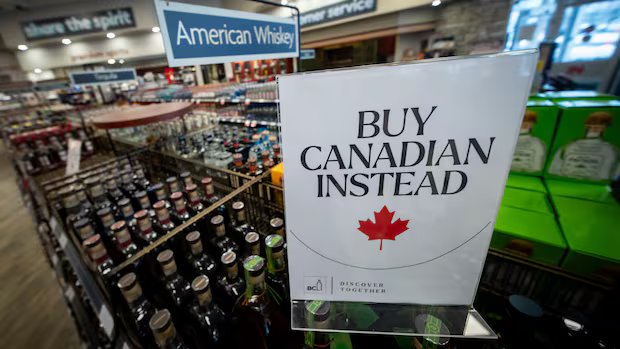

Listen to this article
Estimated 4 minutes
The audio version of this article is generated by AI-based technology. Mispronunciations can occur. We are working with our partners to continually review and improve the results.
Whether at the grocery store or the NSLC, Martha Reynolds pays attention to where products are from.
“I’m doing my very best to not buy American,” she said outside a Halifax location of the province’s Crown-run alcohol retailer.
For alcohol, this means bourbon purchases have been replaced with scotch whisky, but she’s made other changes as well.
“I think we’re making some gorgeous, gorgeous wines here in Nova Scotia and so I wouldn’t hesitate to recommend a Nova Scotia wine,” said Reynolds, who used to work for the provincial wine association in the early 2000s.
“I think some Ontario wines are fabulous and British Columbia wines, if you can get your hands on any of them, are gorgeous, so I don’t think we’re losing much by giving up California wines.”
Between some provinces not selling American alcohol — part of the response to the trade war started by the U.S. — and consumers like Reynolds choosing not to buy it, actions like these continue to hurt American alcohol producers.
“We are suffering,” Chris Swonger, president and CEO of the Distilled Spirits Council of the United States, told the CBC’s Power and Politics last week. “We are making our case to the Trump administration strongly in hopes that some common ground can be found.”
The council says exports to Canada fell 63 per cent last year.
“It has been devastating,” said Swonger.
Globally, American exports declined 3.8 per cent for the year, primarily because of the boycott of U.S. alcohol in many Canadian provinces.
Some whisky producers also “front-loaded shipments in late 2024” to the European Union “amid the threat of retaliatory tariffs,” the council cited as the second major reason.
The council says that if Canada is excluded from the numbers, spirit exports actually increased 2.5 per cent for the year.
While the NSLC removed American alcohol from the shelves in March 2025 as part of the Canadian response to the trade war with the U.S., the corporation resumed selling what it had on hand late last year and has not ordered additional product.

The NSLC says that while there was strong demand for the American product at first — with the corporation selling about 40 per cent of the almost 590,000 units of product in the third quarter — sales have since tapered off.
The American products are defined as goods made, manufactured and/or produced in the U.S.
This excludes some alcohol people may perceive as American, such as Budweiser. The Oland Brewery on Halifax’s Agricola Street is part of the global beer company Anheuser-Busch InBev. Beers like Budweiser and Bud Light are brewed there.
Southern Comfort is another example. While it might conjure up visions of the Big Easy as it’s labelled “The spirit of New Orleans,” it’s actually produced and bottled in Montreal.

NSLC spokesperson Terah McKinnon said in an email that the corporation would provide more details about what product remained when its year-end financial results are released in June.
Swonger said he recognized “the great emotions” in play over the political divide between the American and Canadian governments.
“On behalf of the distilled spirits industry, we wish that wasn’t the case and we apologize,” said Swonger. “And, you know, at some point, we hope things will get better.”
MORE TOP STORIES