dailynewsnblog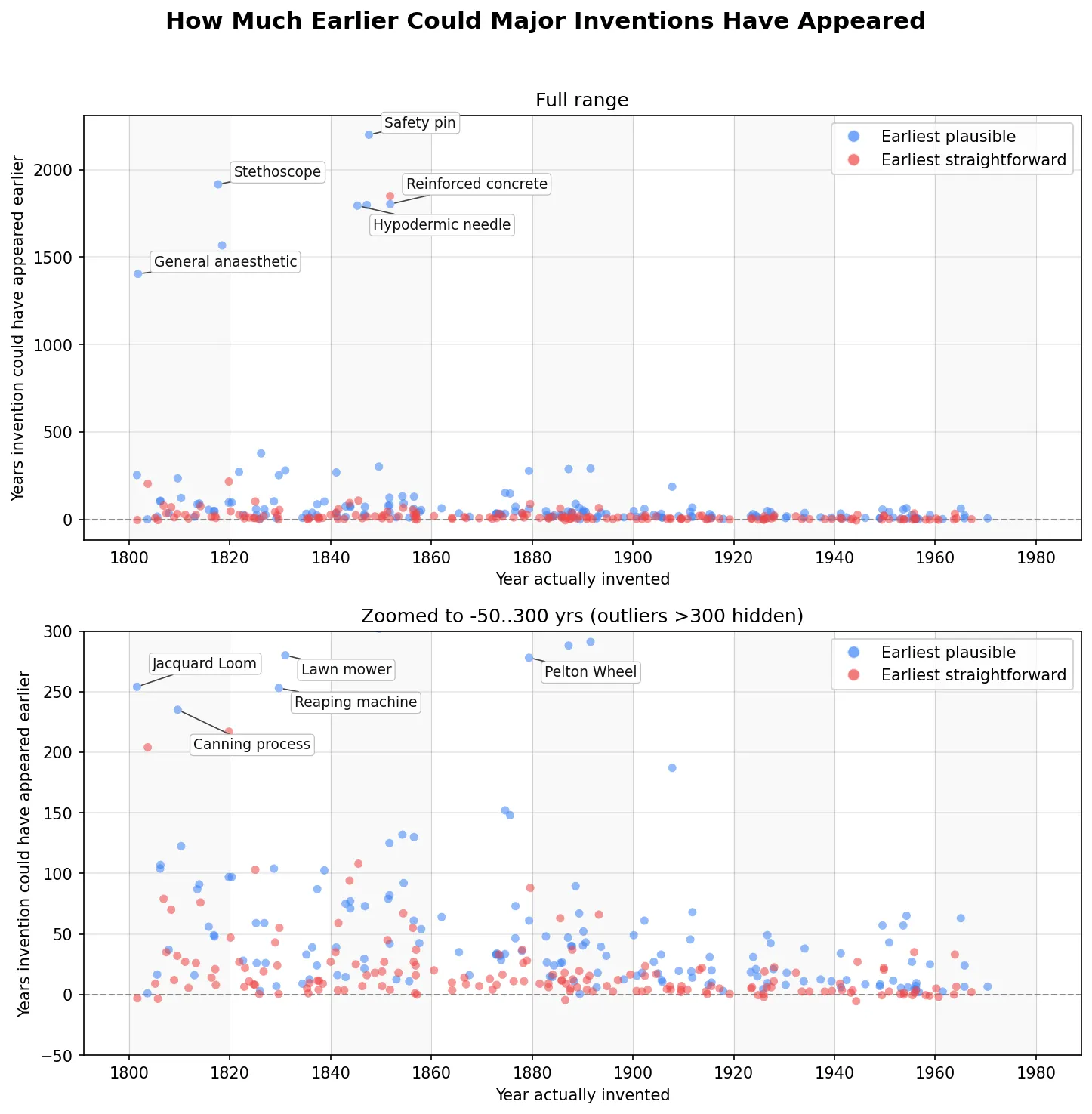
In 2010 I wrote about Ideas Behind Their Time:
We are all familiar with ideas said to be ahead of their time, Babbage’s analytical engine and da Vinci’s helicopter are classic examples. We are also familiar with ideas “of their time,” ideas that were “in the air” and thus were often simultaneously discovered such as the telephone, calculus, evolution, and color photography. What is less commented on is the third possibility, ideas that could have been discovered much earlier but which were not, ideas behind their time.
I gave experimental economics, random clinical trials and view morphing (“bullet time”) as examples. Jason Crawford has a list discussing the wheel, the steam engine and bicycles among other possibilities. In some cases, further exploration indicates that an idea required precursors and so was not as behind its times as first suspected, in rare cases, however, good ideas really could have been invented much earlier.
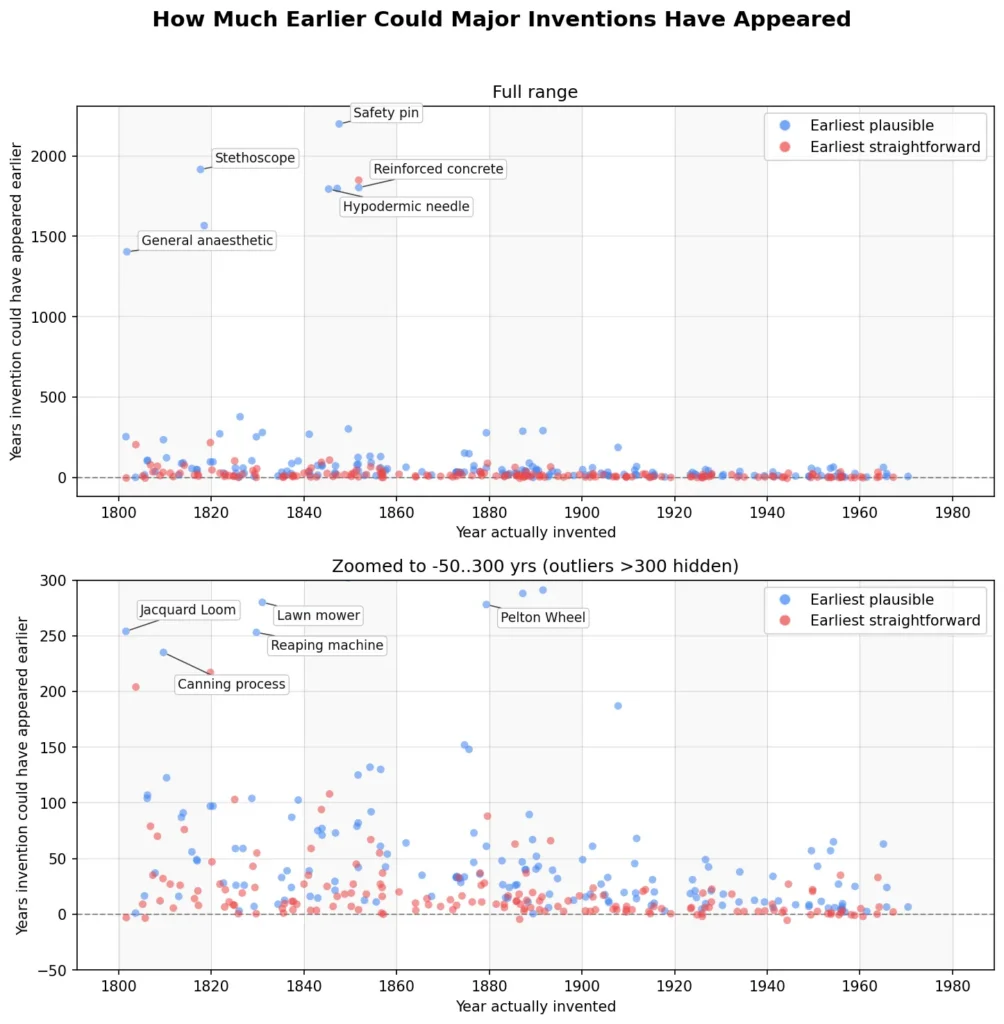
Using Claude, Brian Potter has significantly expanded the list by looking systematically across a wide range of inventions and asking could they have been invented earlier? Most could not. Put the other way, most useful technologies tend to be invented quite quickly once they are possible–this is reassuring. The airplane, for example, could not have been invented before a high power-to-weight engine, which happened circa 1880 making the late 1880s the earliest feasible date for powered flight. Thus, the Wright Brothers (1903) were only just behind the earliest feasible date–and that is true for many inventions.
The ideas very far behind their time include the stethoscope, general anesthesia and reinforced concrete and quite far behind are the Jacquard loom and canning. Is there a pattern here?