dailynewsnblog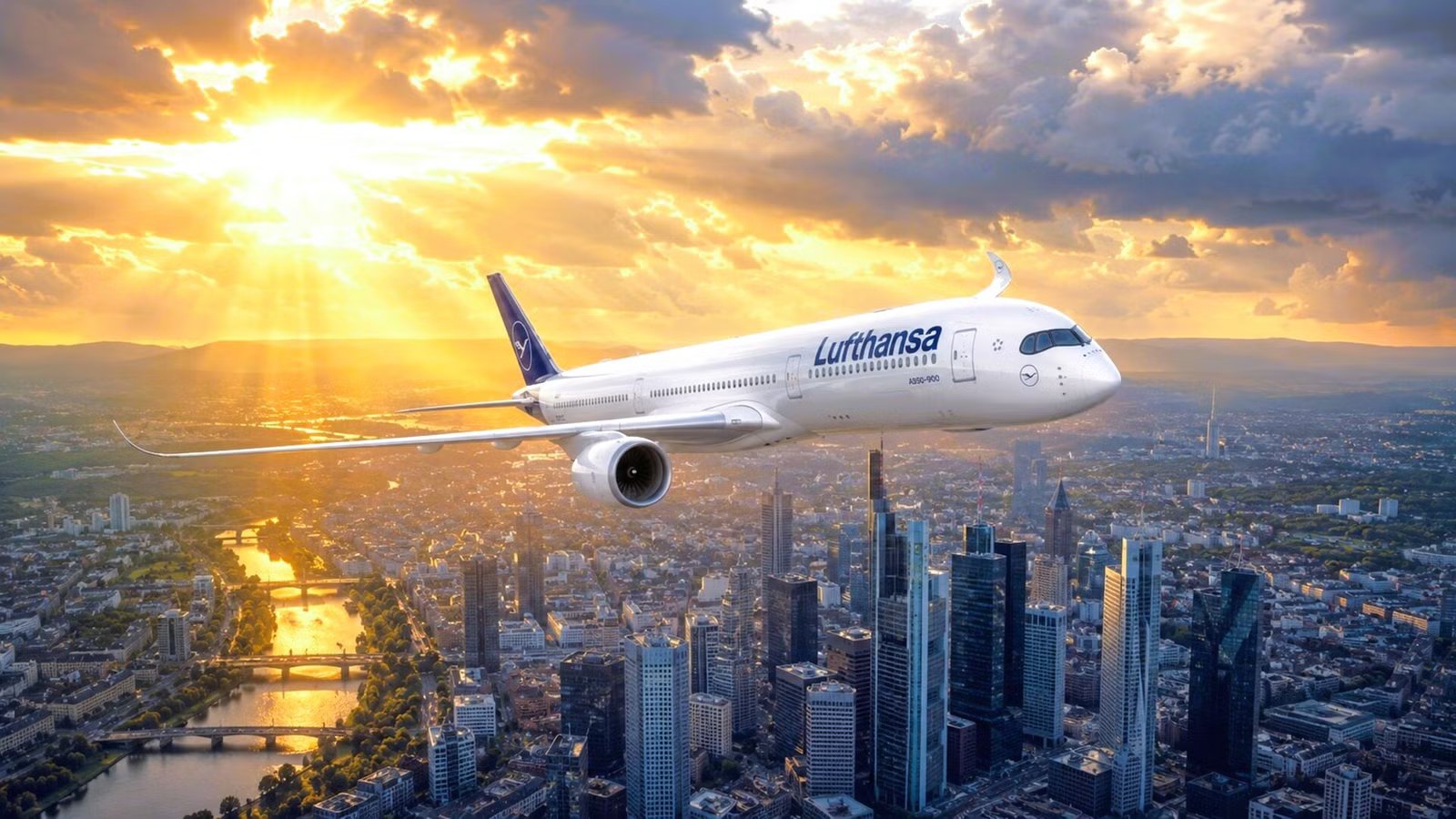
Lufthansa Group has added another major piece to one of Europe’s most important long-haul fleet renewals. The Supervisory Board of Deutsche Lufthansa AG has approved an order for 20 additional widebody aircraft, split evenly between ten Airbus A350-900s and ten Boeing 787-9s. The combined list price of the order is approximately $7.7 billion, with deliveries scheduled between 2032 and 2034.
The order also confirms something larger about Lufthansa’s direction. The group is not choosing between Airbus and Boeing for its next-generation long-haul fleet. It is building around both. The A350 and 787 are already core parts of Lufthansa Group’s modernization program, and the latest order extends that strategy further into the 2030s.
Just as importantly, Lufthansa has not yet said which airline or hub will receive the new aircraft, leaving open the possibility that they could go to  Lufthansa itself, SWISS, Austrian Airlines, or another group carrier.
Lufthansa Places Another Big Widebody Bet

The latest order is a group-level decision by Deutsche Lufthansa AG, rather than a confirmed aircraft allocation for Lufthansa Airlines alone. Lufthansa Group said the A350-900s and 787-9s will replace older, less efficient aircraft from 2032, with the final decision on airline and hub deployment to be made later. However, given that Lufthansa itself already operates a large fleet of both types, it seems likely that it will be the final destination for some or all of the new order.
Carsten Spohr, Chair of the Executive Board and CEO of Deutsche Lufthansa AG, framed the order as both a fleet and sustainability decision. He said:
“By ordering 20 additional long-haul aircraft, we are making a sustainable investment in the future of the Lufthansa Group. It is a clear commitment to a modern fleet, to premium quality, and to further reducing CO2 emissions.”
Lufthansa also pointed out that “the largest fleet modernization” in the Group’s history will reduce complexity and increase efficiency, operational flexibility and operational stability. At the same time, maintenance and operating costs will be reduced, while further synergies will arise in areas of cockpit and cabin crew licensing and spare parts management.
The timing is also important. Airlines are increasingly trying to secure delivery positions years in advance, especially for high-demand long-haul aircraft. Lufthansa’s new delivery window of 2032 to 2034 shows how far ahead major carriers now need to plan. The order gives Lufthansa Group more certainty over long-haul capacity, helps smooth the retirement of its older aircraft, and preserves flexibility at a time when aircraft availability remains one of the biggest constraints on global airline growth.
Lufthansa’s Long-Haul Fleet Is Being Rebuilt

The latest order is significant because Lufthansa Group is adding aircraft types that are already flying successfully in Lufthansa colors. The carrier currently has 31 A350-900s and 16 787-9s in operation, so this latest news shows a deepening commitment to two aircraft families that are already reshaping its long-haul network. The order book for widebodies, including the Boeing 777-8F freighters, is now approaching 100 aircraft.
Lufthansa New Widebody Orders | ||
|---|---|---|
Widebody Type | In Operation | Fixed Orders |
Airbus A350-900 | 31 | 24 |
Airbus A350-1000 | 15 | |
Boeing 787-9 | 16 | 29 |
Boeing 777-9 | 20 | |
Boeing 777-8F | 7 | |
Total | 47 | 95 |
That matters because Lufthansa still has one of the most diverse widebody fleets of any major airline. The carrier currently has A330-300s, A340-300s, A340-600s, A350s, A380s, 747-400s, 747-8s, and 787-9s all having roles in its long-haul operations. That complexity adds considerable inefficiency and increases maintenance and operating costs, but it has not happened by accident. The extensive delays to the Boeing 777X program, and earlier delays to 787-9 deliveries, have forced Lufthansa to keep older aircraft flying for longer than planned, turning aircraft such as the A340 and 747-400 into capacity bridges rather than long-term solutions.
Lufthansa’s Older Widebody Fleet | |||
|---|---|---|---|
Widebody Type | First Operated | In Operation | Retirement Details |
Boeing 747-400 | 1989 | 8 | Full phaseout by 2027 |
Airbus A340-300 | 1993 | 14 | All 14 to be retired by 2028 |
Airbus A340-600 | 2003 | 4 | Final four aircraft to retire in October |
Airbus A330-300 | 2004 | 7 | Transferred out in 2026 |
Airbus A380-800 | 2010 | 8 | 6 already retired / sold back to Airbus |
Boeing 747-8 | 2012 | 18 | Set to operate into the 2030s |
However, things are starting to change more rapidly. Boeing 787-9 deliveries have accelerated, the first Airbus A350-1000s are expected to join the fleet later this year, and the Boeing 777X is now expected from 2027, assuming certification and delivery timelines hold. As those aircraft arrive, Lufthansa will be able to move more decisively against the older end of its long-haul fleet.
The A340-600 is due to disappear by the end of the 2026 summer season, while the Boeing 747-400 is expected to follow in stages, with some aircraft grounded in late 2026 and the final phaseout planned for 2027. The A340-300 is being kept as a backup if 777X timing slips again, but the direction is clear: Lufthansa’s next long-haul decade will be built around the A350, 787, and 777X rather than its older four-engine workhorses.
Lufthansa CEO Reveals ‘Plan B’ If Boeing 777X Is Delayed Again
There are a lot of moving parts at the German flag carrier.
The A340-600 Exit Marks A Turning Point

The clearest symbol of Lufthansa’s changing fleet is the Airbus A340-600. For more than two decades, the stretched four-engine aircraft has been one of Lufthansa’s most distinctive long-haul jets. Its length, four engines, premium-heavy configuration and lower-deck lavatories made it a standout aircraft in the fleet, and Lufthansa became one of the type’s defining operators. But its economics now belong to another era.
Lufthansa has just four of its original 24 A340-600s still in service, and these now operate solely on two premium-heavy transatlantic routes from  Frankfurt Airport (FRA) where the aircraft’s large Business Class cabin and First Class product still make operational sense. Current schedules show the aircraft remaining active between Frankfurt and both Washington Dulles International Airport (IAD) and John F. Kennedy International Airport (JFK) until October 18, after which the type will be permanently withdrawn from service.
Route | Frequency | Aircraft | Final Scheduled Departure |
|---|---|---|---|
Frankfurt–Washington Dulles | 10 weekly to 2x daily | A340-600 | October 18, 2026 |
Frankfurt–New York-JFK | Daily | A340-600 | October 18, 2026 |
The replacement is already taking shape. Lufthansa’s first Airbus A350-1000s are due to arrive this year, giving the airline a larger A350 variant that can take over many of the roles once associated with big four-engine aircraft. Lufthansa says that like the A340-600, the A350-1000s will “be equipped with First Class and will primarily serve premium-strong markets.” The first example is scheduled to arrive in October and will be painted in Lufthansa’s special 100th-anniversary livery.