dailynewsnblog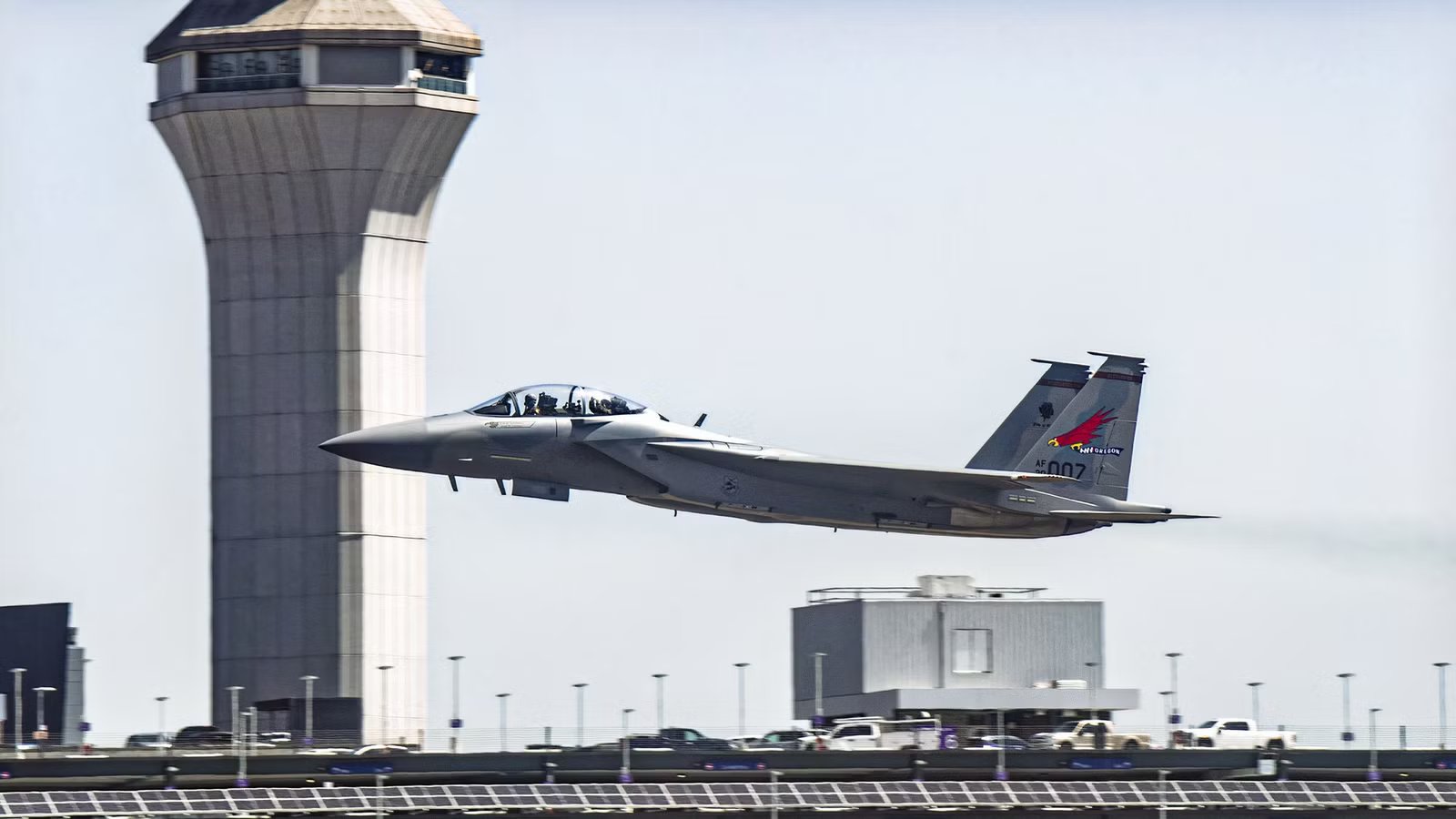
The F-15EX is an enhanced variant that keeps the platform competitive, lethal, and cost-effective at a time when the USAF is pivoting toward fifth-generation aircraft such as the Lockheed Martin F-35 Lightning II.
Procuring additional F-15EX aircraft will allow the United States Air Force (USAF) to expand its inventory of combat-capable platforms while maintaining fiscal discipline. For these reasons, the USAF has decided to significantly increase the number of F-15EX aircraft in its inventory, ensuring the platform remains in service for the foreseeable future.
For military planners focused on the Indo-Pacific, this is a positive development, as the F-15EX can carry a substantial payload, enhance deterrence, and reassure US security partners in the region.
Detailing The Deal, What There Is To Know About The Additional F-15EXs

Presently, the USAF is going to more than double the size of its F-15EX fleet, with the planned procurement program increasing from 129 aircraft to 267. Currently, there are about 25 EXs in the USAF’s inventory, and the FY27 budget request seeks to add 24 additional airframes at a cost of $3 billion (£2.4 billion).
This increase in the EX fleet is due to the USAF expecting its overall budget to increase approximately 25 percent to $267.7 billion (£214.2 billion) according to information shared at a Pentagon press briefing, held in late April 2026. With this expected revenue increase, the USAF plans to raise its procurement to about 30% and its research and development by 27%.
The EX program is likely to run into the 2030s, with about two dozen new deliveries per year, which will aid the USAF in its goal of purchasing a total of 72 new fighters each year (this figure includes inductions of the F-35A). Officials state that this number of new aircraft entering its squadrons per year is needed to reverse the long-term trend of its fighter fleet aging and shrinking.
This issue certainly must be addressed if the air service seeks to challenge the Chinese air force, which is similarly churning out fighters and other assorted aircraft per year at an alarming rate.
To this point, the Chengdu J-20 alone is expected to have a fleet size of over 1000 aircraft by 2030 and 1,500 by 2035. With five production lines, the industrial output for this fighter is one new aircraft every eight days, which comes to roughly 30 to 100 annually.
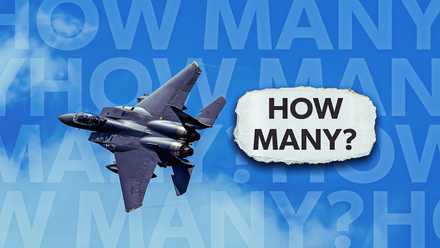
How Many F-15s Has Boeing Delivered Over The Last 5 Years?
Boeing has been delivering around a dozen updated F-15s annually in recent years.
Why Is The US Air Force Interested In The F-15EX Eagle II?

“It’s old, right? And you do have the F-35 now.” That is the question and observation that will immediately spring to mind for some when looking at the USAF’s decision to continue to purchase the F-15EX. An aircraft that has been in service since the Cold War and has seen generations of pilots come and go from the cockpit. Yet there are two primary reasons why the air service has doubled down on this aircraft.
The primary reason the F-15EX is in production is that it is an airpower juggernaut, with a payload and tactical flexibility that cannot immediately be replaced by current stealth platforms. The EX is intended to operate in partially degraded environments or from standoff ranges and add depth to strike packages initiated by aircraft such as the F-35 Lightning II and B-2 Spirit through wide-ranging follow-on missions.
The EX can fulfill this role due to its large payload, which, according to  Boeing, is 29,500 pounds (13,381 kilograms), making this aircraft the fighter with the largest payload capacity currently in service.
|
F-15EX Eagle II Specifications |
Related Data |
|---|---|
|
Length |
63.8 feet (19.4 meters) |
|
Height |
18.5 feet (5.6 meters) |
|
Width |
42.8 feet (13 meters) |
|
Maximum Takeoff Weight |
81,000 pounds (36,741 kilograms) |
|
Maximum Speed |
Mach 2.5 |
|
Ceiling |
50,000 feet (15,240 meters) |
|
Payload |
29,500 pounds (13,381 kilograms) |
|
Service Life |
20,000+ hours |
The second primary reason that the F-15EX Eagle II has been selected for continued service—likely for decades to come—is that the F-15C Eagle and F-15D Eagle fleets are aging and, in many cases, approaching or exceeding their intended service lives. These aircraft face increasing structural concerns, including fatigue-related issues, wiring degradation, and parts obsolescence.
A US Department of Defense Modernized Selected Acquisition Report notes that readiness goals for the F-15C/D are difficult to achieve “due to continuous structural inspections, time-consuming repairs, and ongoing modernization efforts.” It further states that the average F-15C/D is approximately 38 years old, with a majority of the fleet exceeding its 9,000-hour certified service life.
As a result, the F-15EX represents a low-risk, rapidly deployable replacement for these aging aircraft, while also complementing the capabilities of platforms such as the F-35A Lightning II, B-1B Lancer, and the B-2 Spirit.
The F-15EX In The Indo-Pacific Strategy

A hallmark of US military strategy abroad has been that of reassurance and deterrence. This policy is alive and well in the Indo-Pacific as the US military and its regional partners contend with what has been described as an ambitious and assertive China. For its part, China seeks to advance its influence in the region, and some say Beijing would like to gain outright dominance in the South China Sea region altogether.
This is evidenced by policies and activities such as its island-building campaign in the South China Sea, increased naval and air patrols—particularly around Taiwan—and growing operations in waters near Japan, as well as a 2025 circumnavigation of Australia. This deployment was conducted by a Chinese naval task group composed of a Type 055 destroyer, a Type 054A frigate, and a Type 903A replenishment ship.
During the transit, the group conducted live-fire exercises in the Tasman Sea, disrupting commercial air traffic.
These activities are widely interpreted by regional states as a demonstration of expanding Chinese military reach in the Indo-Pacific, contributing to heightened concern and increased defense preparedness among several countries in the region.
For its part, the US, which has since the Cold War been a security guarantor in the region, is retooling, redirecting, and restrategizing for a potential military conflict in the region.
In 2025, the USAF sent two F-15EXs to Kadena Air Base for familiarization and exercises as part of a test/integration deployment. The presence of these aircraft is intended to prepare for the future transition of the base to the F-15EX. It is expected that 36 of these aircraft will be stationed at Kadena and they are due to start arriving this Spring.
The significance of the deployment to Kadena is that the base, located on Okinawa, serves as a major US airpower hub within the First Island Chain. It is widely regarded as a crucial link in US Indo-Pacific strategy, contributing to efforts to constrain the range and freedom of action of Chinese military forces in the Western Pacific.
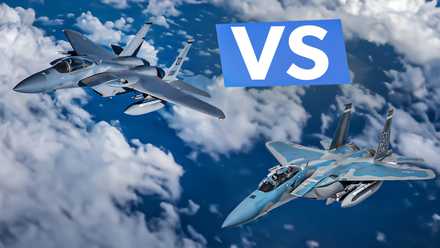
What Are The Main Differences Between The F-15C And The F-15EX?
The short answer: the Eagle II is much newer and has double the seating capacity.
The AGM-158C-1 Long Range Anti Ship Missile (LRASM)

With the intended deployment of the F-15EX to Kadena Air Force Base, the aircraft has been selected to carry the AGM-158C-1 anti-ship missile. This weapon set clearly reflects the increasing operational focus of the F-15EX as an effective tool, integrated into the operational framework of the Indo-Pacific strategy.
Developed by Lockheed Martin, the AGM-158C LRASM has an estimated range of around 200 nautical miles (370 km) and carries a 1,000 lb (453.6 kg) class warhead. The missile is designed to enhance survivability in contested environments, utilizing autonomous guidance and sensor input to adjust its flight path in response to threats and changing conditions. It also employs target recognition algorithms to identify and engage naval vessels, selecting pre-programmed aim points to maximize the damage that it can inflict on a surface combatant.
A group of F-15EXs equipped with conformal fuel tanks and armed with the LRASM will be able to widely patrol and engage in combat missions across large swaths of a potential South China Sea battle space. The fact that they have a high payload capacity and enhanced weapons standoff capability will enable the F-15EX to more actively contribute to anti-ship missions.
This aspect of the F-15EX will enable other stealth platforms to focus on other critical objectives and complicate the operational tempo of the Chinese Navy.
The Utility Of The F-15EX

The F-15C/D are highly effective combat aircraft, and their retirement will likely create a capability gap in the USAF’s offensive airpower posture, given that it can carry an immense amount of ordnance. Were this aircraft to be retired altogether, the Air Force’s fleet of F-35A’s and other stealth platforms would likely be overly burdened within certain mission-sets.
The F-15EX offers the USAF the ability to lessen the combat load of its stealth platforms while maintaining a cost-effective aircraft that can deliver immense follow-on damage on a battlefield. Similarly, in its role as a maritime strike aircraft, the F-15EX will also deliver, as it is equipped with the LRASM anti-ship missile, adding to the overall deterrence strategy in the Indo-Pacific. The aircraft will reassure regional allies and add to the consternation of Chinese military planners in the region.