dailynewsnblog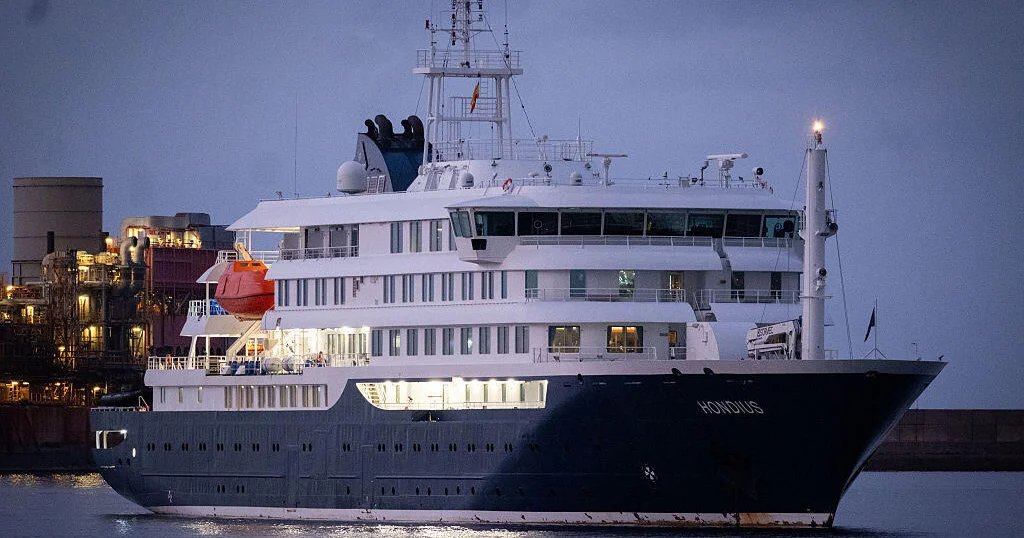
The deadly cruise ship outbreak of hantavirus, a rare, rodent-borne illness, may have evoked some memories of the early days of COVID-19 — but infectious disease specialists and public health officials say there are clear differences in this case that make the risk to the public extremely low.
“This is not another COVID,” World Health Organization Director-General Dr. Tedros Adhanom Ghebreyesus told CBS News on Sunday.
Asked about his message to concerned Americans, he said, “Based on scientific assessment and based on evidence … the risk is low. So they shouldn’t— they shouldn’t worry.”
There have been at least 10 confirmed or suspected cases tied to the Dutch-flagged MV Hondius to date, including three fatalities. A group of 18 American passengers who returned to the U.S. early Monday are being monitoring at specialized medical facilities.
According to infectious disease experts, there are a few key characteristics that set this virus apart from the one that triggered a global pandemic in 2020. Here’s what to know.
“Wildfire” vs. “a wet log”
CBS News medical correspondent Dr. Céline Gounder, an infectious disease specialist, likened the properties of COVID-19, when it first surfaced, to conditions that create a favorable environment for wildfires to spread — whereas hantavirus is more like “a wet log in a stone fireplace.”
“If you’re a fire chief and you see dry forest, no rain in days, 40 mph winds, and a small fire — that’s going to turn into a wildfire,” Gounder said. “If you see a wet log in a stone fireplace, that’s going to smolder a little bit and then it’s going to die out. It’s sort of a similar thing. Infectious disease specialists, kind of like the fire chief, have seen these things before.”
While COVID was caused by “a brand new virus, where we were all learning in real time,” she noted that hantavirus has been studied for decades and scientists are much more familiar with how it spreads.
“This is not infectious in the way COVID was, or is. The incubation periods are different, and that’s actually helpful for us in containing it,” Gounder said.
Hantavirus “infects deep inside the lungs, not the upper respiratory tract, so it’s much harder to cough or breathe out enough virus into the air” for it to be easily transmissible.
Transmission requires prolonged contact
Hantavirus is rare and is typically spread by rodents in dry climates. The the Andes virus strain involved in the cruise ship outbreak is found in South America and is the only strain known to spread from person to person.
It has been found in areas where a Dutch couple had traveled before boarding the cruise ship in Ushuaia, Argentina, in April. The husband initially fell ill and died several weeks before his wife.
“This is not COVID. This is not influenza. It spreads, very, very differently,” said Maria Van Kerkhove, the World Health Organization’s director of epidemic and pandemic preparedness and prevention, at a briefing on May 7.
“I want to be unequivocal here,” she continued. “This is not SARS-CoV-2 [the virus that causes COVID]. This is not the start of a COVID pandemic. This is an outbreak that we see on a ship. This is a confined area.”
Unlike COVID, which can spread through the air, this virus requires “prolonged” physical contact in order to spread from one individual to another, Van Kerkhove said.
In a new webpage addressing questions about Andes virus, the U.S. Centers for Disease Control and Prevention said the “risk of a pandemic caused by this outbreak and the overall risk to the American public and travelers remains extremely low.” It says transmission is “usually limited to people who have close contact with a person with symptoms,” such as “prolonged direct physical contact,” “prolonged time spent in close or enclosed spaces” and “exposure to the infected person’s saliva, respiratory secretions, or other bodily fluids.”
Former FDA Commissioner Scott Gottlieb said on “Face the Nation with Margaret Brennan” that the hantavirus outbreak is “not going to spread like a pandemic virus, like COVID” because “it spreads far less efficiently.”
Admiral Brian Christine, assistant secretary for health at the Department of Health and Human Services, stressed the same point at a briefing Monday at the University of Nebraska Medical Center, where the National Quarantine Unit is located. Sixteen U.S. passengers are being monitored there, while two others were taken to a facility in Atlanta.
“Let me be crystal clear: The risk of hantavirus to the general public remains very, very low,” Christine said. “The Andes variant of this virus does not spread easily, and it requires prolonged close contact with someone who is already symptomatic. Even so, we have taken this situation very seriously from the very start.”
Lengthier incubation period
Multiple health officials have noted that the incubation period for Andes virus can be anywhere from around two to six weeks, meaning it may take that much time for someone to begin to show symptoms of the disease after they were exposed to it.
Gounder says the longer incubation period has given health officials an advantage of more time to develop their response to the outbreak. With COVID-19, the incubation period is much shorter, meaning the virus spreads more quickly.
“The good news here is, because of that long incubation period, that gave us more time,” said Gounder.
Passengers repatriated over the last day or so will likely reach the peak of the virus’ incubation cycle this week, according to Gottlieb, who said Sunday that people exposed during this outbreak are “nearing the end of the transmission window.”