dailynewsnblog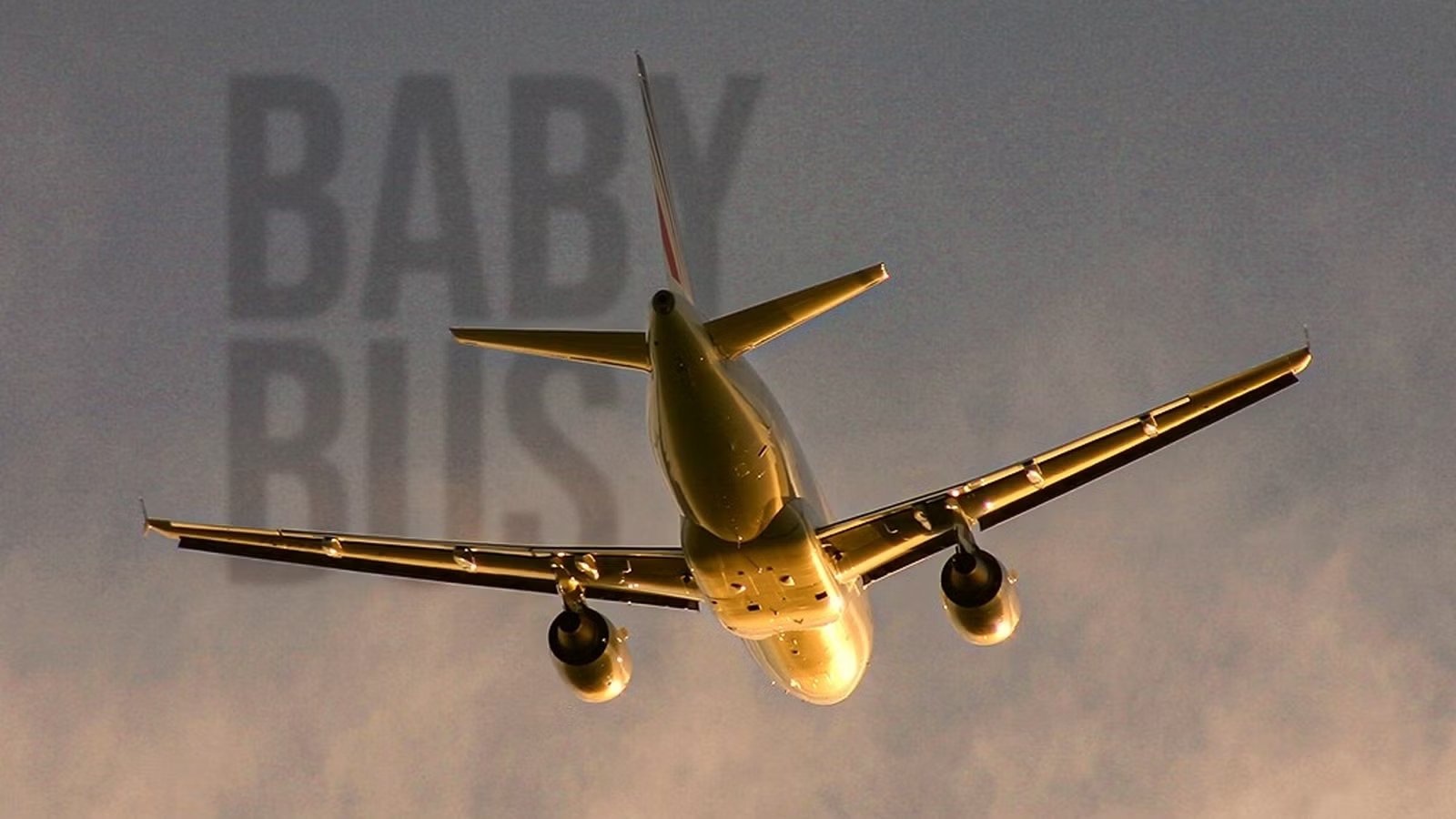
When designing an aircraft, you typically start out with a baseline design, like the Airbus A320-200. You can then stretch it, such as creating the A321-100, or incorporate further improvements to boost gross weights, performance, and/or fuel capacity, like with the A321-200. Alternatively, you can shrink the aircraft, either just by removing fuselage frames ahead and behind the wings, or by altering the aircraft’s structure to reduce weight and optimize it for this smaller size, like with the A319-100.
Airbus developed the second shrink of the A320-200, the A318-100, in much the same way as the A319-100, by attempting to optimize the aircraft’s structure for its smaller size, but this did little to boost its sales. While the A319, A320, and A321 collectively sold thousands of units, Airbus only delivered 80 examples of the tiny A318-100. With the A318’s final operator, Air France, now looking to retire the type by the end of 2026 in favor of the A220, enthusiasts are now urgently looking to catch a flight on the quirky ‘Baby Bus.’
Why You Rarely Saw An A318 In Person

Airbus sold 80 A318-100s since the variant first went on sale in the late 1990s, but 20 of these orders were for the ACJ variant. The remaining 60 examples went to just five customers: Air France, LAN, GECAS, Frontier, TAROM, and British Airways. LAN’s A318’s eventually ended up with Avianca Brasil, and some of GECAS’s A318s were leased to Mexicana, while Titan Airways operated one in the late 2010s.
However, it was an incredibly rare aircraft, with only Air France, LAN, and Frontier ever operating more than ten.  Air France, the largest A318 customer, only ever flew 18. Altering the size of an aircraft comes with benefits and drawbacks. The benefit of a stretch is improved per-seat costs, at the expense of capability and performance. Likewise, the opposite holds for a shrink, in that it offers superior performance and range than the base aircraft, but has higher per-seat costs.
This is because an A319, A320, and A321 all burn a similar amount of fuel, while their passenger capacities vary drastically. The drawbacks can be mitigated by altering the new variant to optimize the structure for its size, but this mitigates some of the inherent benefits. Airbus attempted to optimize the A318-100 by cutting down the aircraft’s structural weight, offering less powerful engines, and rating the aircraft with lower gross weights, but the A318 still proved a step too far.
The A318 retained a six-abreast fuselage originally designed for a 150-180 seat aircraft, along with an oversized wing and landing gear. This contributed to the A318 only burning slightly less fuel than the A319, while seating significantly fewer passengers, and the type was fuel-thirsty compared to planes like the Embraer E190 due to its high weight.
The Issues With Operating Small Narrowbodies

When approaching 100 seats, fixed costs and semi-fixed costs (such as labor) become far higher in relation to variable costs, like fuel. While Airbus marketed the A318 as a large regional jet, the plane was treated as a mainline aircraft by labor unions and subject to higher airport fees than an E190 or Bombardier CRJ1000. These planes are economical because of lower fees and the fact that they’re usually flown by regional airlines in many parts of the world, paying staff lower salaries.
To reduce fuel burn, the A318 was lighter with less powerful engines than its larger siblings, but this also meant that its range was significantly reduced compared to the A319. The A318 has superior runway performance, but the A319 was already strong on this front. This meant that the A318 only had a true performance advantage in specific niche cases, such as its steep approach capability to serve London City Airport (BA acquired two to fly between LCY and New York JFK) or to serve a large number of hot & high airports.
Part of the benefit of flying small aircraft is to right-size capacity, which preserves yields, and this, combined with the A318’s qualities, did establish a market for the tiny jet. However, it turned out to be an equally tiny one, since airlines could use an Embraer E190 flown by a low-cost regional partner to right-size capacity or fly an A319 with far higher revenue potential. These same market challenges are also why sales of the Airbus A220 have been relatively modest.
How Much Does The Airbus A320neo Cost In 2026?
This is how much an A320neo costs in 2026.
Bad Luck & Timing

The CFM56-5B and IAE V2500 engines found on the rest of the Airbus A320 family were large, heavy, and powerful engines that were oversized for the A318’s intended purpose. While Air France notably requested that Airbus offer a variant of the CFM56-5B on the type, Airbus’s intention was to launch the aircraft with a bespoke engine that would be smaller, fuel-efficient, and cheaper to maintain in the form of the Pratt & Whitney PW6000. Pratt & Whitney, however, was unable to deliver on its promises.
The PW6000 experienced significant delays, leading many customers to switch to the CFM56 instead, and the engine also missed initial fuel-burn and performance targets. Some customers ended up choosing the CFM56 over the PW6000, while others moved away from the A318 program altogether in favor of the A319, such as America West.
In the end, LAN was the only buyer of the PW6000-powered A318, and it ended up removing its examples in the early 2010s. They were later picked up by Avianca, which removed the type just a few years later.
In addition, the A318 entered service in 2003, less than two years after the September 11th attacks and in the midst of a global downturn in airline demand. This reduced overall demand for new aircraft in many markets and also led to consolidation in the industry. TWA, for instance, placed an order for 50 A318s, but was subsequently acquired by American Airlines, which was primarily a Boeing customer and ended up canceling the A318 order.
How Did The A318 Compare To The Boeing 737-600?

The Boeing 737-600 was the Airbus A318-100’s most direct competitor, as both aircraft were similarly sized and were shrinks of a baseline aircraft. With the 737NG, however, the 737-700 was the baseline aircraft, with the 737-600 being a one-time shrink, while the A318 was a double-shrink. In addition, Boeing optimized the 737-600 to a lesser extent than Airbus with the A318, only lightly tweaking the aircraft’s structure while intentionally retaining the 737NG’s CFM56-7 engines.
The 737-600 ran into the same market problems as the A318, in that it entered service just a few years before an industry downturn in the 2000s and was costly to operate. It had limited revenue potential and offered little meaningful benefits regarding performance or range compared to its larger siblings. These aircraft, able to seat just over 100 passengers, were also too small to be economically operated as mainline jets, yet could not be flown by regional airlines.
|
737NG Variants |
Orders |
A320ceo Variants |
Orders |
|---|---|---|---|
|
737-600 |
69 |
A318-100 |
80 |
|
737-700 |
1,135 |
A319-100 |
1,484 |
|
737-800 |
4,991 |
A320-100/200 |
4,752 |
|
737-900/900ER |
557 |
A321-100/200 |
1,784 |
|
Total |
6,752 |
8,100 |
Airbus sold 60 A318-100s to airlines and an additional 20 examples as private jets/VIP transports, whereas Boeing only sold 69 737-600s to airlines. Today, the best bet to fly on a 737-600 is to book a ticket on Air Algérie, which still flies five examples. The 737-600 is otherwise only flown by Canadian charter airlines Aeroflyer and Kelowna Flightcraft. The only other 737-600 operator, which also happens to be the type’s largest user with six units, is Janet Airlines, a carrier that you can only fly on if you work in Area 51.
The Airbus A220-500 Is Coming: A Masterstroke Or A Threat To The A320neo?
A new addition to the lineup is in the works.
Where To Catch The Last Commercial A318s

Air France is the last commercial operator of the Airbus A318, after TAROM retired the type in 2024. The carrier only has four still in service, which are set to leave the fleet by the end of 2026 as Air France pivots towards flying the A220-300. Recent data from AeroRoutes shows that Air France intends to operate on over 30 routes out of its hub in Paris Charles de Gaulle Airport throughout the summer season, which is set to end on October 24, 2026.
Many of these routes are short with high frequencies, and swaps to the A220-300 or A319-100 are always possible. While the aircraft as a whole is rare and unique, Air France’s A318s offer a fairly unremarkable experience. Data from aeroLOPA shows that these aircraft are equipped with 131 Recaro SL3510 seats in a six-abreast layout with 30 inches (76 cm) of pitch. As is the case with the rest of Air France’s short-haul fleet, the business class cabin uses the same seats as in economy, but with a blocked middle seat.
|
Country |
Air France A318 Destinations From Paris CDG (Summer 2026) |
|---|---|
|
Croatia |
Zagreb |
|
Denmark |
Copenhagen |
|
France |
Biarritz, Bordeaux, Brest, Figari, Lyon, Marseille, Montpellier, Nantes, Nice, Toulouse |
|
Germany |
Berlin, Hamburg, Munich |
|
Italy |
Bari, Bologna, Cagliari, Milan-Linate, Naples, Olbia, Rome-Fiumicino, Venice |
|
Morrocco |
Casablanca |
|
Netherlands |
Amsterdam |
|
Poland |
Warsaw |
|
Portugal |
Lisbon, Porto |
|
Spain |
Barcelona, Madrid, Malaga |
Air France’s A318s have been used on a wide variety of short-haul missions to nearby European capital cities and to lower-demand destinations. However, this is a role that can be fulfilled by a regional aircraft, an Airbus A220-300, or an Airbus A319-100 in a more cost-effective way. Despite its A319-100s being older on average, the carrier prioritized retiring the A318 due to its cost issues, and soon, there will be no more commercial A318s in service.

![Breeze Airways Launches 5 Exciting New International Routes [List & Map]](https://dailynewsnblog.com/wp-content/uploads/2026/05/shutterstock_2709654821-2-1.jpg)