dailynewsnblog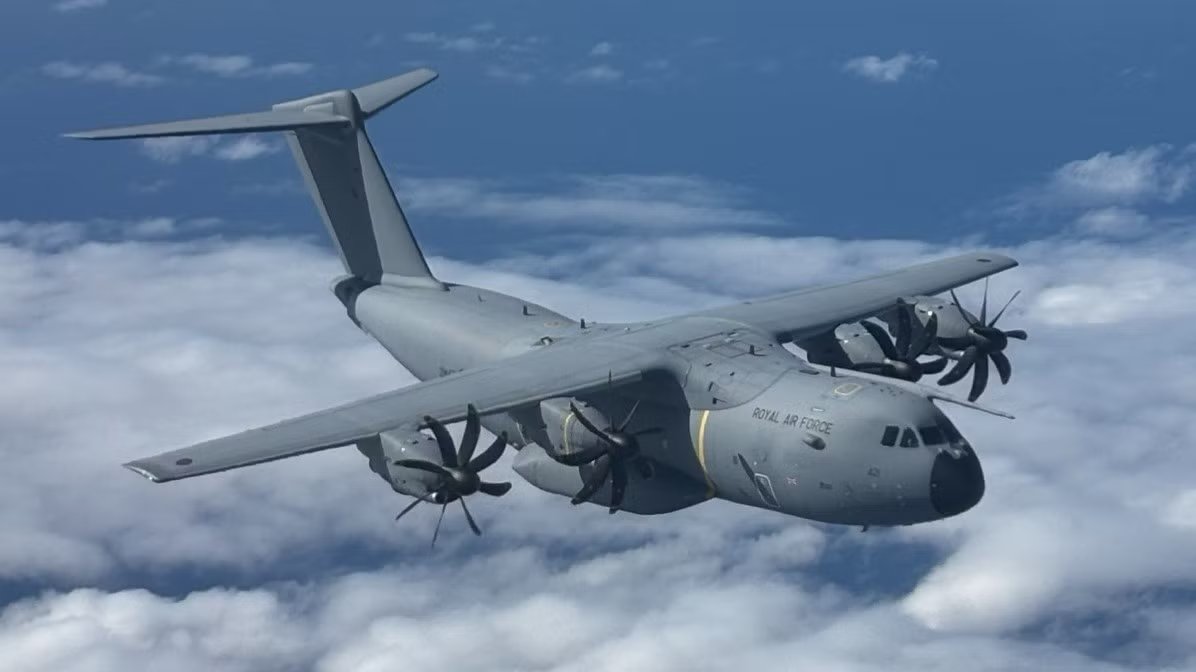
On Saturday, the United Kingdom deployed six paratroopers and two military clinicians from 16 Air Assault Brigade to provide aid to the island of Tristan da Cunha. The medical relief team arrived in style as they were airdropped by a Royal Air Force Airbus A400M in the first humanitarian support mission executed by parachute in RAF history.
The relief team flew 4,217 miles (6,788 km) from their homefield at RAF Brize Norton to reach Ascension Island for a stopover. The A400M, or Atlas C.1, took off again and flew over 1,800 miles (2,900 km) to reach the air drop point, including an aerial rendezvous with a RAF Voyager tanker to refuel in midair.
Atlas’ Special Delivery: The Army’s Long Ride With The RAF

Flightradar24
Tristan de Cunha is the most isolated overseas territory in the UK and is also described as the most remote inhabited island in the world. The sparse travel facilities dictated the high-adrenaline travel method as the volcanic archipelago is very remote and lacks any airstrip. The normal means of travel between the islands for the 221 inhabitants is limited to boats, and no other infrastructure exists.
The closest inhabited island is St Helena at just over 1,490 miles (2,400 km) away, while the continent of South Africa is over 1,740 miles (2,800 km) across the ocean. As a rocky outcropping in the South Atlantic Ocean, weather conditions can be extremely harsh. The paratroopers faced winds that often could gust over 25mph (40 kmh) for Saturday’s mission.
Nevertheless, the British Army and RAF team successfully performed their duty and delivered critical relief to the people of Tristan de Cunha. The mission was specifically launched because the island’s oxygen supplies were at a critical level, as the patient’s condition was deteriorating from the hantavirus, or rat virus.
While the Army medical team parachuted into the island, 3.3 tonnes of oxygen tanks and medical supplies were simultaneously airdropped from the A400M before it departed the airspace. In the official press release by the Ministry of Defense, Foreign Secretary Yvette Cooper said:
“I am deeply grateful to the personnel across the Armed Forces and the RAF… This extraordinary operation reflects our unwavering commitment to the people of our Overseas Territories and to British nationals, wherever they are.”
Jumping Out Of A Perfectly Good Airplane: A Perilous Air Drop

Ministry of Defence
The local government of Tristan de Cunha and residents gave a very warm welcome to the daring paratroopers and “pulled out all the stops at short notice.” Brigadier Ed Cartwright, commander of the 16 Air Assault Brigade, told the BBC that the team jumped 3 miles (5 km) out at a point over the ocean. The powerful wings forced the parachutists to turn into the wind and ride the air from far off the coast before they touched down on the edge of the island in a narrow drop zone.
Cartwright remarked on the precision demanded from every member of the team to safely get every person and pallet on land, saying: “The consequence of getting that wrong is that you end up in the Atlantic.” Fortunately, all six reached the island without mishap, along with their precious cargo, while the RAF A400M and Voyager made a safe journey home.
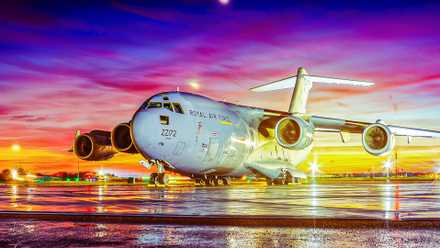
The 7 Most Remote Royal Air Force Bases & Their Strategic Roles
The RAF operates bases in the Atlantic and other locations beyond the British Isles.
The Airbus A400M: Ready For Any Mission

Ministry of Defence
The RAF’s special delivery on Saturday highlighted many of the unique qualities of the Atlas C.1, as the A400M is known in the UK. Despite being a four-engine turboprop aircraft, it can fly at a ‘near jet’ cruising speed of Mach 0.72 to make long transits much faster than its predecessors. The plane’s long range and air-to-air refueling capability also make it a reliable workhorse in global airlift ops.
Its four powerful turboprop engines are equipped with 8-bladed scimitar propellers that provide the power and stability demanded for paratroopers to exit the aircraft safely in the high-wind conditions found over remote islands. Meanwhile, fly-by-wire controls and computerized airdrop software allow for highly accurate delivery even in extreme scenarios.