dailynewsnblog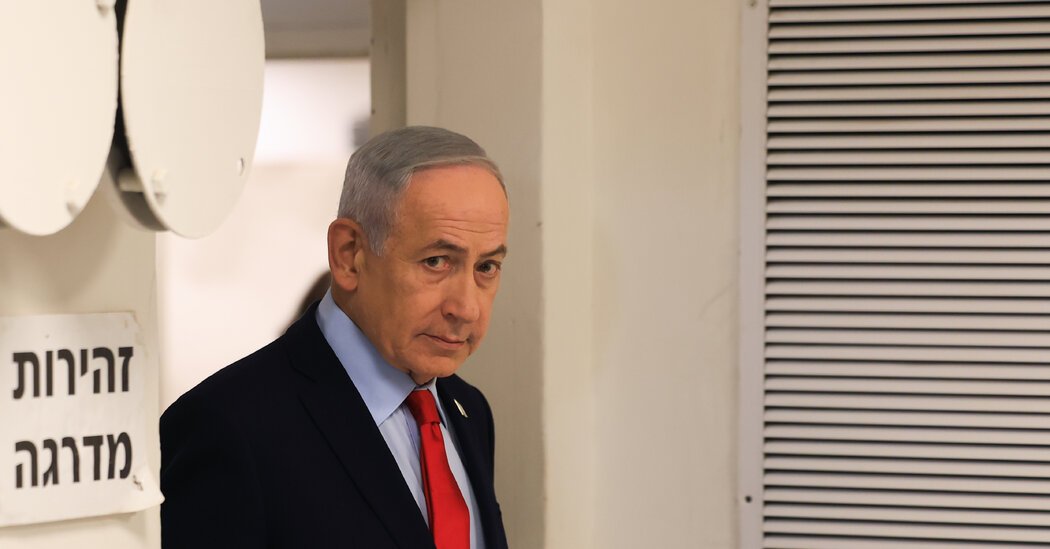
President Trump and Israel’s prime minister, Benjamin Netanyahu, said in separate interviews on Sunday that the war against Iran was not over, seeming to undermine messaging from the Trump administration last week that the conflict had run its course.
The interviews further compounded confusion about a military campaign marked by shifting goals and messaging since the American-Israeli attacks on Iran began in late February.
Mr. Trump, in an interview released by the syndicated news show “Full Measure,” said Iran had been defeated militarily. Yet when asked if it was accurate to say that combat operations were “over and done,” he refuted that assessment.
“No, I didn’t say that,” Mr. Trump said, adding that Iran was “defeated, but that doesn’t mean they are done.”
Mr. Trump estimated that about 70 percent of the United States’ targets in Iran had been hit. “We could go in for two more weeks and do every single target,” he added.
Mr. Netanyahu also told CBS’s “60 Minutes” in an interview that the conflict was not over, laying out a longer list of unfinished business to address.
“There is still nuclear material, enriched uranium, that has to be taken out of Iran,” Mr. Netanyahu said. “There’s still enrichment sites that have to be dismantled. There are still proxies that Iran supports. There are ballistic missiles that they still want to produce.”
Mr. Netanyahu added that an agreement with Iran to remove its enriched uranium would be the ideal method to ensure the country no longer has materials for a nuclear weapon. The fate of that nuclear material has been one of the key sticking points in U.S.-Iran peace talks, according to Iranian officials.
“I think it can be done physically, that’s not the problem,” Mr. Netanyahu said. He added, “If you have an agreement and you go in and you take it out, why not? That’s the best way.”
He declined to discuss military options for removing the enriched uranium should there be no such deal with Iran.
Mr. Trump appeared somewhat less intent on the issue, despite its being a driving force behind the war. He said that the United States was surveilling Iran’s remaining enriched uranium stockpile and that it would “get that at some point.”
Mr. Trump has said that the war was meant to ensure that Iran could never have a nuclear weapon, and has boasted about bombing its nuclear sites last summer. But he has also at times offered mixed messages about Tehran’s stockpile of near-bomb-grade uranium, which international inspectors say is likely buried at those sites.
Last month, Mr. Trump said he “didn’t really care” about the enriched uranium because it was so far underground. On Sunday, he said the United States was monitoring the situation. “We have that very well surveilled,” he said. “If anyone got near the place we will know about it and we will blow them up.”
Whatever gaps there may be between Mr. Trump and Mr. Netanyahu on the war and its goals, both of their interviews appeared to undermine statements made by Trump administration officials last week that the conflict had essentially concluded.
Secretary of State Marco Rubio last week told reporters that the war had ended at some point after the cease-fire took hold in April. “The Operation Epic Fury is concluded,” he said, using the name the Trump administration had branded the war. “We achieved the objective of that operation.”
Declaring the war finished served multiple purposes for the Trump administration: The White House claimed there was therefore no need to seek congressional approval for the continued use of the armed forces, as required after 60 days of conflict under the War Powers Resolution. It also followed attempts by Mr. Trump and the administration to downplay the extent of the conflict, which is wreaking havoc on the global economy and meeting resistance among some Republicans in Mr. Trump’s base.
But the declaration came as missiles continued to fly across the Gulf region and as the Strait of Hormuz remained choked, with Iran threatening commercial ships in the vital waterway as the United States blockades Iranian ports in an effort to pressure the country.
Erica L. Green, Aaron Boxerman and Adam Sella contributed reporting.