dailynewsnblog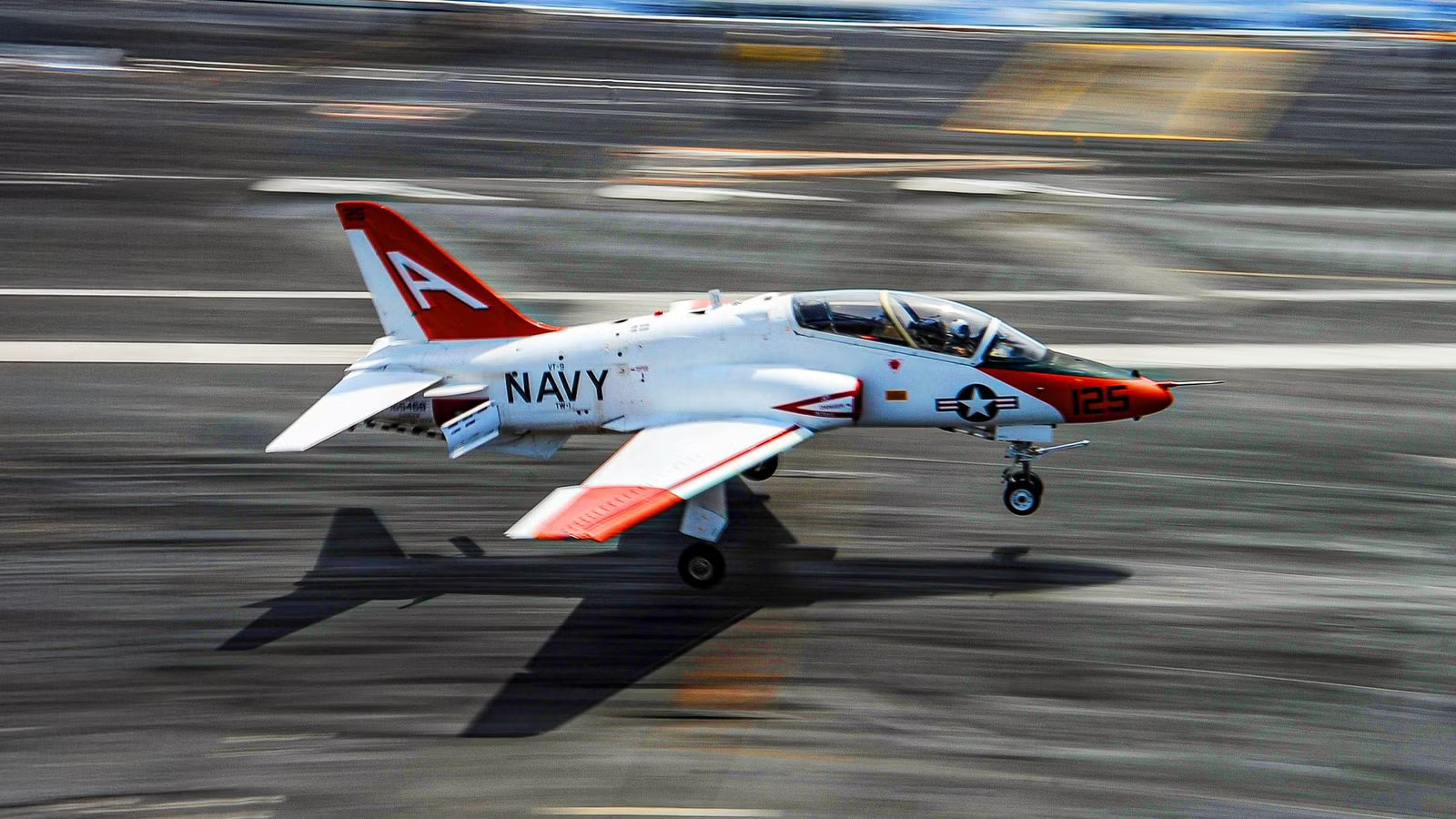
The next generation of training for American naval aviators will cut a quintessential rite of passage that the tailhook community has honored for decades when the new undergraduate jet training system comes online. The new aircraft will not be equipped to land on an aircraft carrier, as when new pilots are granted the wings of gold that designate them as qualified naval aviators, they will not yet have performed a real-life landing on the ‘boat.’
None of the proposals that are currently being considered has any features designed for carrier operations. The final round began last month with a contract award expected sometime next spring, and in a surprising turn of events, Lockheed Martin officially withdrew its TF-50N from the competition this month. That only leaves the competition between the joint  Boeing-Saab T-7B Redhawk the US Air Force is expecting, the Sierra Nevada Corporation Freedom trainer, and the Textron Leonardo M-346N.
Core requirements include a top speed of Mach 0.9, the capability to sustain 6 G’s, an operational ceiling of 41,000 feet (12,497 m), and a 5th-generation cockpit environment. Specifically, the Navy is seeking Precision Landing mode and large area displays that mirror the Lockheed Martin F-35 Lightning II stealth fighter and the Boeing FA-18EF Block III Super Hornet.
According to The Aviationist, the USN plans to acquire 216 aircraft with a goal of sustaining over 76,000 annual flight hours for student naval aviators. The SNC aircraft is a standout in the competition as a clean sheet design conceived with field carrier landing practice in mind and said to be capable of 35,000 carrier-style landings to facilitate the Navy’s new strategy.
The Sunset Of The T-45 Goshawk

The US Navy is transitioning away from using the McDonnell Douglas T-45 Goshawk primarily because, from a purely operational standpoint, the Navy views traditional training as a luxury it can no longer afford. Streamlining the pipeline is less about changing the culture and more about math and throughput. Add to that, aircraft carriers are among the most in-demand assets in the US military. Every day a carrier spends qualifying students is a day it isn’t deployed to the South China Sea or the Middle East.
The old pipeline was notorious for bottlenecks. Students would often wait months for a spot on an aircraft carrier to finish their T-45 qualifications. By removing the requirement to find a carrier deck for students, the Navy can wing pilots much sooner. Additionally, spending hundreds of hours teaching a pilot to manually fly on the ‘ball’ in a cockpit with analog gauges doesn’t translate well to a fifth-generation cockpit.
The Undergraduate Jet Training System

The transition away from the T-45 Goshawk is part of the logic behind the decision to move carrier quals to the FRS. It wasn’t until this month, March 2026, that the Navy was able to finally solidify requirements for a successor aircraft to replace it. The undergraduate jet training system will eventually be a tailor-made training plane to prepare pilots for the experience of flying fifth-generation fighters.
Unlike the T-45, this aircraft is still not expected to be carrier-capable. Developing a carrier-capable jet is expensive. It requires reinforced landing gear and airframes to survive unflared high-impact landings. By choosing a land-based trainer, the Navy can use existing designs and avoid years of structural re-engineering.
Simulators have already become more important to the overall training cycle of fighter pilots in the Navy, and will continue to become more and more influential in the development of Navy pilots. The UJTS program is not expected to announce a contract award until 2027, and the first of 216 planned jets will likely not arrive until a few years later. Essentially, this means that the break from tradition has been finalized, and the decades of earning the wings of gold after catching the wire on the boat are over.
How Much Does The USAF T-7A Red Hawk Trainer Cost?
Get the rundown on the procurement of the T-7A Red Hawk, a new jet trainer designed to build the USAF’s future fighter pilots.
Paradigm Change In Naval Aviation: The New School Of Strike Fighter Flying

Under the longstanding training regimen, Student Naval Aviators previously had to perform ten successful arrested landings. Also called traps, these four touch-and-goes were performed on a moving carrier deck as the final crucible of flight school. As of March 2025, students destined for the Boeing F/A-18 Super Hornet, EA-18G Growler, and Lockheed Martin F-35C Lightning II now receive their wings after completing Field Carrier Landing Practice on land rather than at sea.
The technology that has led the Navy to change its program is the advanced autopilot found in modern carrier-borne jets, dubbed ‘Magic Carpet.’ Today’s strike fighters are equipped with Precision Landing Mode that automates much of the control inputs during the approach to the carrier. It makes landings significantly safer and easier than the manual ‘ball flying’ required in the older T-45.
One of the largest risks is to the manpower levels of active squadrons. The FRS syllabus now focuses heavily on mastering Precision Landing Mode. While this makes landing safer, the FRS must ensure pilots can still land the plane if the technology fails. Since the change formally began, the results support the new process.
Carrier qual failure rate in F/A-18 fleet replacement squadrons has plummeted from 18% to 4.5%, as USNI reported. Each day a carrier spends on qualifying students costs over $1 million and distracts from deployment readiness. Moving these qualifications to simulators and fleet squadrons frees up the carrier for combat operations.
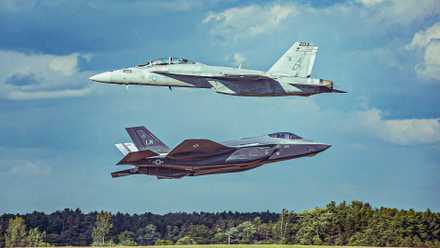
How The Boeing F/A-18 Super Hornet Stacks Up Against The F-35C In 2026
The US Navy’s strike fighters go head-to-head.
Naval Aviation In A Nutshell: A Tailhook Snapshot

Coming in for a landing on the boat starts 1.5 miles (2.4 km) out. The pilot begins with landing checks to confirm the wings are unlocked, flaps down full, and most importantly, tailhook down. The pilot turns into ‘the groove,’ aka the final straight approach, which typically lasts less than 20 seconds. The pilot monitors the Optical Landing System, or the ‘meatball,’ on the carrier deck. An amber light aligned with green horizontal lights indicates a perfect glide slope.
Just in case the plane needs to get airborne if the pilot misses the wire, they immediately go full afterburner as soon as they feel the wheels touch the deck. Known as ‘a bolter,’ the power allows the jet to regain enough speed to take off again from the end of the deck. If the aircraft were to crash into the water, it would be extremely dangerous with the carrier driving forward during recovery ops.
This is one of the worst-case scenarios, as the aircraft carrier can run over the plane in the water. Thus, the extra wear and tear, equipment, and fuel burn are worth the moment of high power should the plane catch the wire and not require it.
If the hook catches a wire, the jet is pulled to a stop in about two seconds. The pilots aim for the number three wire ideally. Only after a complete stop does the pilot pull the throttle back to idle. If a plane cannot catch a wire due to a mechanical failure, like a broken hook, the carrier can deploy a barricade as a backup. This is a large net made of heavy straps to forcibly stop the plane as a last resort, and it typically damages the plane.
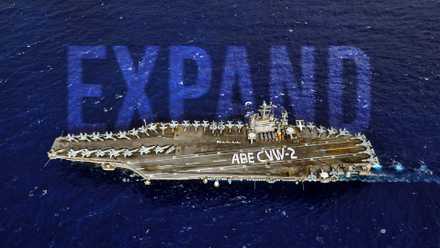
Why The US Navy Is Quietly Expanding Its Aircraft Carrier Fleet
America is getting more of the mighty flat tops.
On The Ball In The F-35C: Landing A Stealth Fighter On The Boat

The way that flying works in the latest and greatest fighter jet of the US Navy is different from everything that came before it, including even the latest Block III Super Hornet. The F-35C uses large trailing-edge flaps to assist in pitch control through Integrated Direct Lift Control that takes much of the vertical alignment burden off the pilot. It also provides immediate and predictable responses, making glide path corrections much more stable.
The Precision Landing Mode system decouples flight controls and pilot input. The computer calculates the ship’s speed and movement, maintaining a perfect 3-degree glide slope. The pilot focuses on the lineup, or horizontal alignment, while the jet handles the descent rate. And on approach, the F-35C is designed to be an auto-throttle flyer. The pilot engages the throttles, and the jet manages engine power to stay on speed for the specific landing weight.
While ‘magic carpet,’ as the Delta flight path PLM programming is called, offers exceptional computer assistance, the performance of the F-35C is also unique to carrier aviation. Flying the F-35C feels similar to the F/A-18E/F Super Hornet in terms of handling and angle-of-attack, or alpha, but it offers significantly more power at lower altitudes on top of advanced automation. The F-35C’s single F135 engine provides more low-end power and better energy recovery than the Super Hornet’s twin F414 engines, especially when both are in combat configurations.
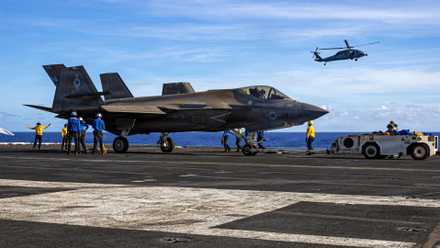
Here’s Why Landing An F-35 On An Aircraft Carrier Is So Difficult
What it takes to be in the tailhook club.
Navy Pilots Earning The Wings Of Gold The Old Fashioned Way

Student pilots who will fly the E-2D Advanced Hawkeye or the C-2 Greyhound are still put on a pipeline of training that includes carrier qualification before receiving their wings. The reason why these pilots are not exempt is that the airframe they will fly in the fleet is not equipped with PLM. These turboprop airframes use older systems despite being modernized for current operations, and therefore do not have the Magic Carpet software.
However, this is not expected to last forever. Following the lead of the fighter community, E-2D and C-2 pilots would eventually perform their first actual trap at sea only after reaching their specific training squadron, like VAW-120 at NAS Norfolk for the E-2. They will qualify using the actual fleet aircraft they are destined to fly, rather than a trainer. Meanwhile, the C-2 is currently being phased out in favor of the CMV-22B Osprey. Future Carrier Onboard Delivery, or COD, pilots will transition to a vertical take-off and landing VTOL training syllabus.