dailynewsnblog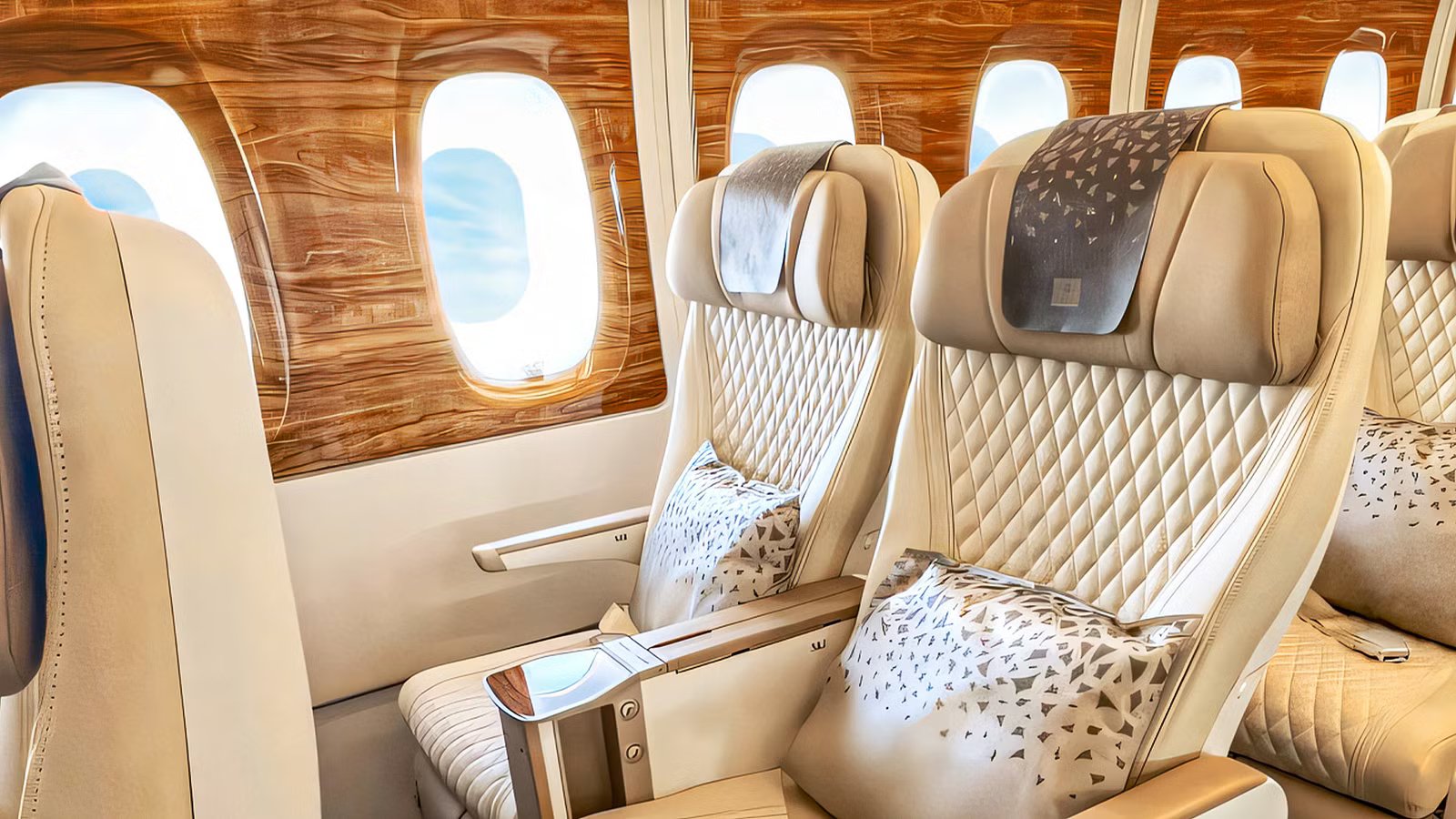
Premium Economy is the newest mainstream travel class, slotting in between business class and economy, but the experience varies widely by airline, and so too does price. You usually find at least 38 inches (96.5 centimeters) of pitch, along with wider seats, ranging from four-abreast on a narrowbody to eight abreast on an Airbus A350/A380/Boeing 747/777. In addition, the onboard service is typically upgraded from economy, although you won’t get lounge access like in business class.
Premium demand is generally high in the industry, making premium economy particularly compelling for airlines, as many airlines report it as their most profitable cabin on a square-footage basis. As such, the cabin is being adopted by an increasing number of airlines, and the experience is slowly becoming standardized as customer demands and expectations are becoming understood. However, there is still significant variance, more akin to the differences you see in business class than to the rather uniform experience offered in economy across different airlines.
The World’s Best Premium Economy Airline For Value

In 2026, AirlineRatings.com awarded the title of ‘World’s Best Value Premium Economy Product’ to Vietnam Airlines. The carrier was also rated as the world’s 16th best full-service airline in the world. Pricing is an important factor regarding value, but Vietnam Airlines’ premium economy product is also fairly unique compared to competitors’ relatively homogeneous offerings. It uses the same per-row configuration as other airlines, installing seven-abreast seats on its Boeing 787s and eight-abreast on its A350s, but it offers more legroom, pitching seats at 42 inches (107 centimeters).
However, while it offers some of the most spacious premium economy seats, the onboard experience is intentionally the same as in economy. Premium economy passengers receive the same meals as economy passengers, while being plated identically. Most airlines serve upgraded catering in premium economy, served on ceramic plates with metal cutlery. However, Vietnam Airlines’ premium economy fares are fairly modest, which makes for an overall excellent value proposition.
Premium economy is becoming widespread, but there are concerns about its value proposition. Of course, a product is worth what the market will pay for, and Vietnam Airlines’ positioning of the product appears to be popular. Elsewhere in the world, however, airlines generally charge much higher fares for premium economy than Vietnam Airlines does, which highlights what the experience actually offers compared to what passengers are paying for.
The Value Proposition Of Premium Economy

Premium economy is positioned between business class and economy, but the onboard experience is much closer to economy. The seats are wider with more legroom and a larger screen, but they’re essentially upsized versions of economy seats with greater recline. A business class seat, on the other hand, typically has direct aisle access and can be converted into a bed, while also including a privacy door in many cases. In addition, most airlines include lounge access with business class tickets, while catering is significantly upgraded.
The other issue is that airlines often price premium economy either squarely between business class and economy, or closer to business class, while offering an experience that is essentially an upgraded version of economy. As such, many see high-priced premium economy tickets as being a poor value proposition. Of course, this perception hasn’t stopped airlines from recording massive profits in the cabin, and these prices are reflective of the fact that premium economy is in high demand and, in many cases, a relatively new cabin option.
Because premium economy only became mainstream in the past ten to 15 years, many airlines lack substantial data on demand and price sensitivity. As such, many airlines were conservative when deciding the size of their premium economy, often installing cabins with 20 to 30 seats. The result is that supply is intentionally low, and premium economy demand now outstrips demand in most markets, giving airlines more pricing power.
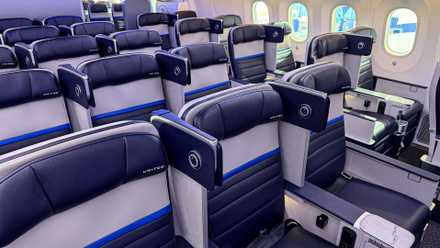
The US Airlines With The Most Premium Economy Seats Per Aircraft In 2026
United Airlines currently takes the lead, but Delta and United continue to offer passengers compelling premium economy products.
The Most Expensive Premium Economy Seats

Prices vary more often by price rather than by airline, but  Emirates is routinely cited as charging among the highest fares in the airline industry for premium economy. The carrier is retrofitting its Airbus A380-800 and Boeing 777-300ER fleets and taking delivery of new Airbus A350-900s equipped with premium economy. It’s the only one of the three largest Middle Eastern carriers (Emirates, Etihad Airways, Qatar Airways) to add premium economy, and it’s been relatively conservative with its cabin sizes. While the A380s have 56 seats, the 777s only have 24, while the A350s have either 21 or 28.
While Emirates is known for being one of the world’s best airlines, it doesn’t always position itself as a high-priced option. This makes its premium economy fares, often set in the four-figure mark, rather striking, although this can largely be sustained by Emirates’ premium brand and limited supply. The seats, however, are hardly groundbreaking aside from the distinctive seat covers. Emirates is using the Recaro PL3520, a fairly popular model, and it offers 40 inches (101.6 centimeters) of legroom, which is above average, but not industry-leading.
|
Emirates Fleet |
Premium Economy Cabin |
|---|---|
|
Airbus A350-900 |
21 seats or 28 seats (2-3-2) |
|
Airbus A380-800 |
56 seats (2-4-2 lower deck) or 58 seats (2-3-2 upper deck) |
|
Boeing 777-200LR |
24 seats (2-4-2) |
|
Boeing 777-300ER |
24 seats (2-4-2) |
Emirates is unique in installing seven premium economy seats per row on the Airbus A350 (most operators install eight-abreast), but the hard product is largely the same as other airlines overall. However, Emirates has heavily invested in the soft product, offering passengers multi-course meals plated on china and placed on linen tablecloths, with rotating regional menus, while also offering select business class wines. While the seats themselves aren’t remarkable, the Emirates premium economy experience as a whole is one of the best in the world.
Exploring Lower-Priced Premium Economy Products

Some airlines offer a premium economy product that essentially consists of economy seats with extra legroom, sometimes with a blocked middle seat. Often, these are on narrowbody airliners that operate shorter routes, and they often serve as a substitute for regional business class. Elsewhere, while some airlines tend to offer low prices for their premium economy products, the experience is fairly similar to other airlines, with larger recliner seats and upgraded dining.
Many budget airlines, however, tend to sell reasonably priced premium cabins, branded as either business class or premium economy and use standard recliner seats. What makes low-cost carriers like Air Premia or Norse Atlantic unique, however, is that these two airlines offer significantly more legroom than many full-service carriers, at 42 inches (107 centimeters) or more. Legroom is one of the qualities that passengers value the most, making these seats extremely appealing.
Meals are typically complimentary in premium cabins on long-haul budget airlines, although they might not be as elaborate as on Emirates, for example. Still, with the added space offered by Air Premia and Norse Atlantic, premium economy is a highly desirable cabin option, especially considering that these two airlines usually offer much lower fares than their full-service competitors. This is especially notable considering the generally high premium economy fares offered by legacy carriers.
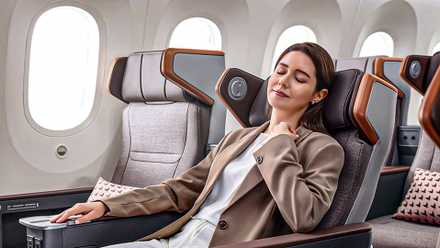
The Airlines With The World’s Most Spacious Premium Economy Cabins In 2026
These cabins are incredibly comfortable.
The Increasing Prevalence Of Price Segmentation

Generally, premium economy only comes with full fare tickets that include priority ground service and a standard seat. However, US airlines in particular have been leading the industry in price segmenting economy, and they’re now looking to apply the same concepts to premium cabins. United Airlines recently unveiled new tiers for its Premium Plus and Polaris cabins, offering customers a basic, a standard, or fully refundable ticket. Delta Air Lines is already offering PremiumSelect customers a choice between a standard and a refundable ticket, with a basic tier expected in the future.
A United Premium Plus Base ticket is typically non-refundable, and assigning a seat comes with a surcharge. In addition, upgrades to Polaris are not allowed, while customers with a base ticket are only entitled to one complimentary checked bag rather than two. Furthermore, customers who book a base fare do not earn miles and cannot change their flights. Similar restrictions also apply to customers booking a base fare in the Polaris cabin.
|
United Airlines Travel Classes |
Fare Types |
Delta Air Lines Travel Classes |
Fare Types |
|---|---|---|---|
|
United Polaris |
Base, Standard, Flexible |
DeltaOne |
Classic, Extra |
|
United First |
Standard |
Delta First |
Classic, Extra |
|
United Premium Plus |
Base, Standard, Flexible |
Delta PremiumSelect |
Classic, Extra |
|
United Economy |
Base, Standard, Flexible |
Delta Comfort |
Basic, Classic, Extra |
|
Delta Main |
Basic, Classic, Extra |
Offering these tickets allows airlines to appeal to more passengers while competing more effectively against low-cost airlines. But while basic tickets may be priced slightly lower compared to prior fares, these tactics as a whole have allowed full-service airlines to generally charge more while offering fewer services and benefits to many airlines. As such, despite criticisms of the value proposition of premium economy when priced closer to business class, it’s unlikely that  United Airlines and future airlines that roll out basic premium economy fares will offer superior value in the future.