dailynewsnblog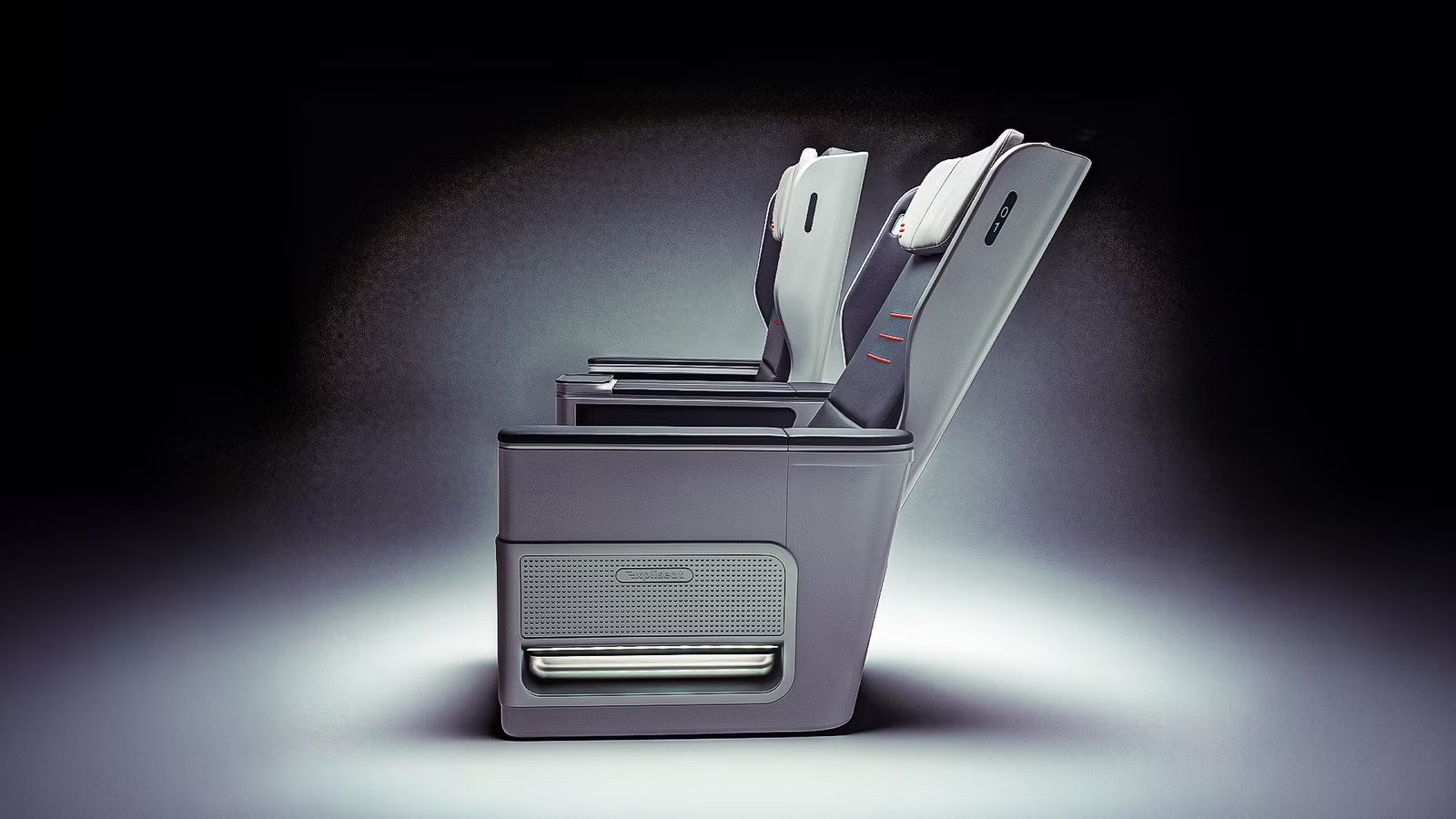
For decades, the evolution of aircraft seating has been framed as a question of comfort, branding, and passenger experience. But beneath the surface, one constraint has consistently dictated what is, and isn’t, possible: weight. Nowhere is this more evident than in regional aviation, where smaller aircraft magnify the operational impact of every additional kilogram. While long-haul cabins have steadily advanced toward fully flat beds and high-end materials, regional jets have remained stuck in a cycle of compromise, offering only incremental upgrades that fall short of true business-class standards.
The unveiling of the TiSeat S by Expliseat at Aircraft Interiors Expo 2026 signals a potential shift in that equation. By leveraging lightweight materials like titanium and carbon fiber to achieve a reported 40% reduction in seat weight, the company is not just introducing a new product; it is challenging a long-standing industry limitation. In doing so, it raises a broader question: what happens when the physics that constrained premium seating for decades finally begin to loosen?
The Constraint No One Could Design Around

For decades, the biggest barrier to bringing true business class comfort to regional aviation hasn’t been a lack of demand; it’s been physics. Every premium seat introduces layers of structural complexity, actuation systems for reclining, reinforced frames to meet crash worthiness standards, wider cushions, deployable leg rests, integrated tray tables, and larger backshells. Each of these elements adds incremental mass. On widebody aircraft, those weight increases are diluted across a much larger payload and range envelope. On regional jets, however, the same additions represent a far greater proportion of total aircraft weight, turning what would be a minor penalty on a long-haul aircraft into a meaningful operational constraint.
Aircraft built by manufacturers such as Embraer and Bombardier typically operate with tighter margins in both payload and range, making them especially sensitive to weight increases. A regional jet like the Embraer E175 or Bombardier CRJ900 may carry between 70 and 90 passengers, meaning each seat accounts for a larger share of total mass compared to a narrowbody such as the Airbus A320. Add 44–66 lb (20–30 kg) per premium seat, and across even a small business class cabin, the cumulative impact can reach several hundred kilograms, directly affecting fuel burn, climb performance, and route economics.
This dynamic has historically forced airlines into compromise. Rather than installing fully-featured business class products, carriers opted for “premium economy-plus” seating, slightly wider seats, increased pitch, and enhanced service, but limited mechanical functionality. The result is a cabin that signals hierarchy without delivering the full experience passengers associate with business class. The core problem has remained unchanged: as comfort increases, weight rises disproportionately, outpacing what regional aircraft economics can realistically support, effectively keeping true business class out of reach for much of the segment.
A Launch That Signals A Strategic Shift

When Expliseat unveiled the TiSeat S at Aircraft Interiors Expo 2026, it wasn’t just introducing a new product; it was attempting to unlock a category that has been structurally constrained for decades. The company, best known for its ultra-lightweight economy seating, is now applying the same philosophy to the premium segment.
The TiSeat S represents Expliseat’s first entry into business class seating, but it builds on a proven foundation. Its economy product, the TiSeat 2X, is already recognized for significantly reducing seat weight compared to traditional designs. By extending that architecture upward into premium cabins, Expliseat is effectively challenging incumbents who have focused more on features than on fundamental weight reduction.
The broader implication is strategic. Instead of treating premium seating as an isolated, high-margin product, Expliseat is positioning it as part of a system-wide efficiency game. Airlines are no longer choosing between comfort and cost; they are being offered a pathway to achieve both simultaneously. That shift has the potential to reshape procurement decisions across fleets.
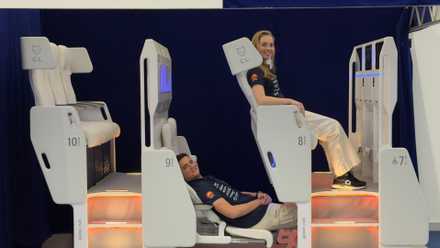
Business Class Comfort For An Economy Price? The Two-Level Design Aiming For The Airbus A350
Could double-decker seating be the future?
Engineering The Breakthrough In Materials

premium seating. With a density roughly 40% lower than steel but comparable tensile strength, titanium delivers a high strength-to-weight ratio, especially valuable in aviation. It also offers excellent fatigue resistance, meaning it can endure repeated stress cycles over years of service without compromising structural integrity, a key requirement for certification in commercial aircraft cabins.
The combined effect of these materials is a seat that is approximately 40% lighter than conventional business-class products. In practical terms, where a traditional narrowbody business class seat might weigh between 55 and 77 lb (25 and 35 kg), the TiSeat S reduces that to roughly 33–44 lb (15–20 kg). Across a cabin of 12–16 seats, this translates into a weight saving of up to several hundred kilograms, before accounting for additional reductions achieved when paired with lightweight economy seating, fundamentally shifting the economics of premium cabins on smaller aircraft.
Why Regional Jets Are The Real Battleground

The TiSeat S is explicitly targeted at regional aircraft, where the economics of weight reduction are most pronounced. On a typical regional jet, fuel burn can increase by approximately 0.03–0.05% per additional kilogram carried. While that may sound negligible, it compounds quickly across an entire aircraft and over thousands of flight cycles per year.
When the TiSeat S is combined with the TiSeat 2X in the main cabin, total aircraft weight savings can reach up to 1,323 lb (600 kg). For an aircraft operating multiple daily sectors, that reduction can translate into substantial annual fuel savings. For example, if a regional jet flies 2,000 sectors per year, even a modest reduction in fuel burn per flight can result in tens of thousands of dollars in savings annually.
Beyond fuel, weight reduction also impacts other operational parameters. Lower weight can extend range, allowing airlines to open new routes or operate existing ones with greater flexibility. It can also reduce wear and tear on components such as landing gear and brakes, contributing to lower maintenance costs over time. In a high-frequency market like the United States, where regional jets often operate short, repeated routes, these incremental gains become highly valuable.
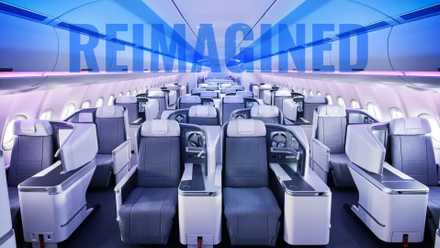
Airbus Files Patent Reimagining The Business Class Seat: What To Expect
The planemaker has big plans for the reimagining of business class travel.
From Cabin Product To Fleet Strategy

One of the most significant aspects of the TiSeat S is its shared component framework with the TiSeat 2X. This commonality allows airlines to standardize parts, simplify maintenance, and reduce inventory requirements. In an industry where operational complexity directly translates into cost, these efficiencies can be just as important as weight savings.
A unified design language across cabin classes also enhances the passenger experience. Instead of a stark contrast between economy and premium cabins, airlines can create a cohesive aesthetic that reinforces brand identity. This is particularly relevant for carriers operating mixed fleets, where consistency can be difficult to achieve.
The scalability of the TiSeat S further extends its strategic value. While initially targeted at regional jets, it is also designed for compatibility with narrowbody aircraft such as the A320 family and Boeing 737. This opens the door to cross-fleet standardization, where airlines can deploy similar seating products across different aircraft types, reducing training requirements and simplifying cabin operations.
Redefining What Premium Means On Short-Haul

Traditionally, premium travel on short-haul and regional routes has been defined by compromise. Airlines offered increased legroom and improved service, but stopped short of delivering the full suite of features associated with business class on longer routes. The limitation was not demand; passengers have consistently shown willingness to pay for comfort, but an inability to justify the associated costs.
The TiSeat S challenges this model by removing weight as the primary barrier. With features such as a wrap-around backrest, mechanical armrests, movable leg rest, and integrated tray tables, it delivers a level of comfort that more closely aligns with passenger expectations of business class. Importantly, it does so without imposing the traditional weight penalty.
If widely adopted, this could lead to a redefinition of premium travel on regional aircraft. Instead of a diluted version of business class, passengers may begin to experience a more consistent product across both regional and mainline flights. With certification and entry into service planned for 2027, the next phase will be market validation. If airlines embrace the concept, the TiSeat S may mark the point where physics stopped limiting premium seating and started enabling it.