dailynewsnblog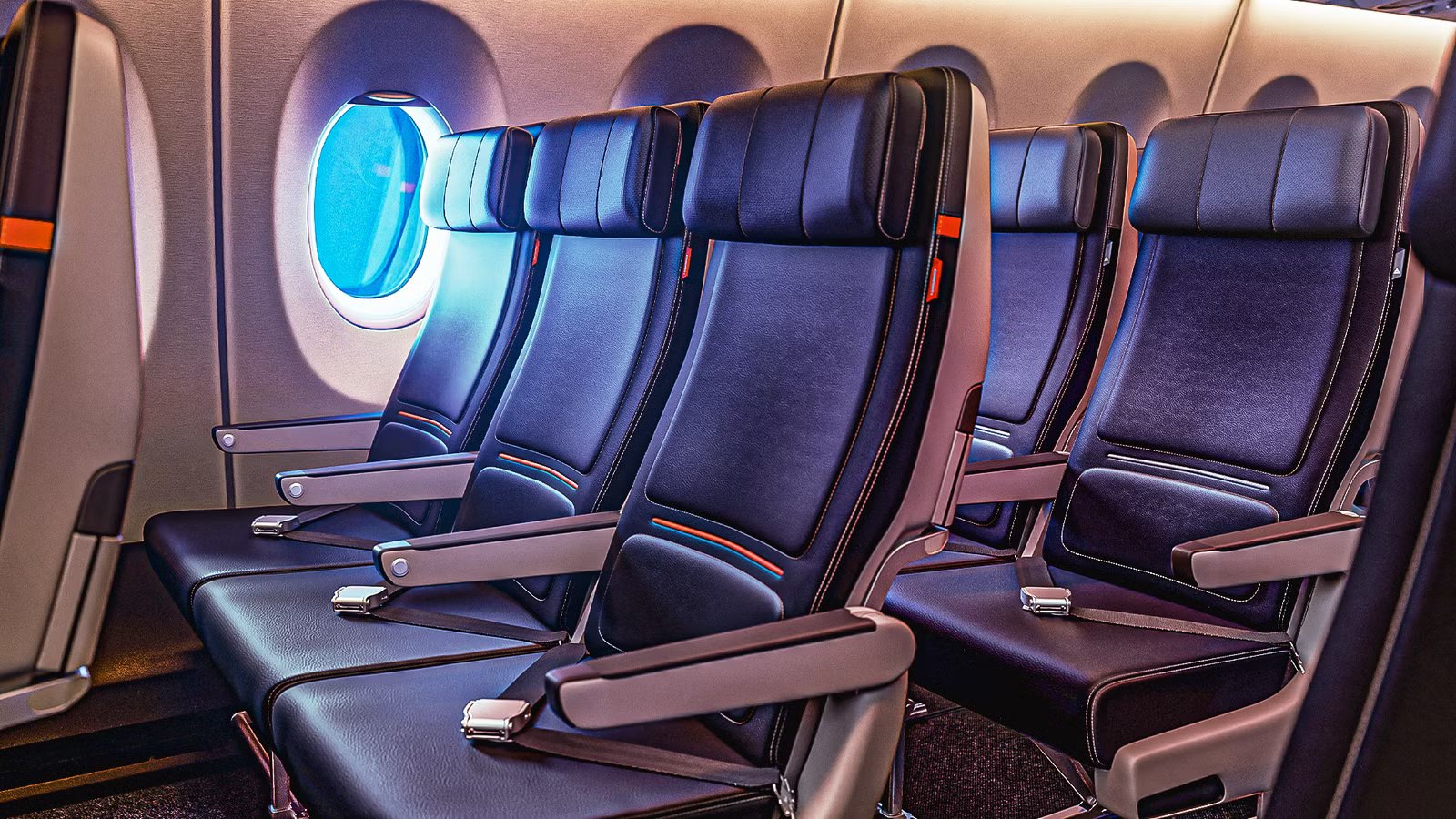
Air travel in 2026 feels tighter than ever, and that’s not a coincidence. Over the past five decades, the average economy seat has lost several inches of legroom, transforming affordable economy seating from a relatively comfortable travel experience to one that is cramped and crowded on most major US airlines. At the same time, carriers have taken that saved space and expanded their premium seating tiers, charging travelers for the convenience and comfort that they used to have, and creating a stark divide between different seats in the same cabin. This shows a deliberate strategy, in which discomfort in standard economy is used to drive passengers toward higher-margin upgrades.
This shift in economic strategy is the result of many decades of incremental change in the aviation industry. Despite that, it is becoming more and more apparent that airlines are testing just how far they can push their customers as they gradually normalize tighter seating and fewer amenities in the process.
Trading Passenger Comfort For Growing Profit Margins

JetBlue | Simple Flying
Over the past several decades, passenger comfort in economy class has steadily eroded as airlines optimize cabins for revenue rather than space. What was once a fairly standard 35-inch seat pitch in the 1970s has now compressed to around 30–31 inches on most major US carriers, with some ultra-low-cost airlines squeezing passengers into as little as 28 inches. This reduction may sound minor on paper, but across an entire aircraft, it allows airlines to add multiple extra rows of seats. The result is a denser cabin that fundamentally shifts the economics of every flight.
That added density translates directly into higher revenue per flight. By fitting even six to ten more seats on a narrow-body aircraft, airlines can generate thousands of additional dollars on every departure, especially when flights are full. At the same time, the deliberate tightness of standard economy creates a strong incentive for passengers to pay for extra-legroom options, which typically cost $50 to $150 more per seat. These premium economy and “extra space” sections deliver significantly higher revenue per square foot, turning what used to be standard legroom into a monetized upgrade.
The financial impact is substantial when scaled across an airline’s network. Premium seating products—such as extra-legroom rows and premium economy cabins—have become some of the fastest-growing and most profitable segments for carriers, attracting both leisure travelers willing to splurge and business travelers trading down from more expensive cabins. Meanwhile, basic economy fares often strip away perks, further nudging passengers toward paid upgrades. In effect, airlines are no longer just selling transportation; they are carefully segmenting comfort itself, converting inches of legroom into a reliable and expanding profit engine.
The Cost Of Flying Premium Economy In 2026 Compared To Economy
The hidden truth about premium economy.
Where The Shrinkage Is Happening

JetBlue
The reduction in seat space is not happening evenly across the industry. Instead, it reflects each airline’s business model, with the most aggressive cuts typically found among ultra-low-cost carriers, while full-service airlines have followed more gradually. Airlines like Spirit Airlines have pushed seat pitch to the lower extreme, prioritizing maximum passenger density above all else. Meanwhile, legacy carriers such as  American Airlines and United Airlines have quietly reduced standard economy space over time while simultaneously expanding their extra-legroom and premium offerings. Even airlines that market themselves as more customer-friendly, like
  Southwest Airlines, have maintained tighter configurations than in previous decades, though generally not as extreme as the lowest-cost competitors.
|
Economy |
Economy / Comfort Plus |
Premium |
|
|
Southwest Airlines |
31 inches (78.74 cm) |
34 inches (86.36 cm) |
36 inches (91.44 cm) |
|
American Airlines |
30–31 inches (76.2–78.74 cm) |
35 inches (88.9 cm) |
38 inches (96.52 cm) |
|
United Airlines |
30–31 inches (76.2–78.74 cm) |
34 inches (86.36 cm) |
38 inches (96.52 cm) |
|
Spirit Airlines |
28 inches (71.12 cm) |
32 inches (81.28 cm) |
36 inches (91.44 cm) |
The table above highlights how these strategies play out in practice. At the time of writing, Spirit leads the industry in ‘densification’, with standard economy seats at just 28 inches of pitch, effectively setting the floor for how tightly passengers can be packed into a cabin. By contrast, Southwestmaintains a slightly more generous baseline at around 31 inches, but still leverages upsell tiers with noticeably more space. The legacy carriers fall somewhere in between: Americanand Unitedboth cluster around 30–31 inches in standard economy, yet offer a sharp jump to 34–35 inches in extra-legroom sections and up to 38 inches in premium cabins. This tiered structure creates a clear, quantifiable difference in comfort, reinforcing the pricing ladder that encourages passengers to pay more for incremental improvements. This is especially apparent to travelers flying on full-service airlines such as United and American, while those flying on budget carriers such as Spirit have been less vocal about the legroom reduction.
The Shifting Focus To Premium Economy

EVA Air, Simple Flying
Premium Economy may feel like a modern innovation, but its roots stretch back more than three decades. Airlines such as EVA Air and Virgin Atlantic pioneered the concept in 1992, introducing a “middle” cabin that bridged the gap between economy and business class. What they created was a carefully calibrated product: enough additional space (typically 36–40 inches of pitch) along with wider seats, enhanced recline, and upgraded service elements, to justify a higher fare without encroaching on the exclusivity of business class. Over time, this formula spread across global carriers, eventually reaching the US market when American rolled out long-haul premium economy in 2016, followed by United and Delta Air Lines. What began as a niche offering has since evolved into a standard fixture on long-haul aircraft.
For airlines, the appeal of premium economy lies in its exceptional efficiency as a revenue generator. It occupies a “sweet spot” in the cabin—delivering significantly higher yields than economy while consuming far less space than business or first-class. Carriers like Lufthansa Group have described it as a “money-generating machine,” citing higher revenue per square foot than both economy and even some premium cabins. Similarly, American has noted that premium economy fares can average roughly double those of standard coach, reinforcing its role as one of the most profitable uses of cabin real estate. This strong financial performance has driven rapid expansion, with more airlines installing cabins and increasing capacity across global fleets.
Airlines’ New Monetization Strategy

Airlines are no longer just compressing seats to fit more passengers, they are intentionally redesigning the cabin as a layered pricing system where comfort itself becomes a product. By tightening standard economy seating pitch so much, airlines create a clear baseline of minimal space. From there, every additional inch of legroom is repositioned as a purchasable upgrade. This shift reframes the passenger experience: what was once included in the base fare is now segmented into tiers, each with a defined price point. The result is a cabin that encourages travelers to upgrade their experience in order to retain the comfort they’re already accustomed to.
This strategy has a direct impact on how passengers experience flying. By establishing a tightly packed standard economy cabin, airlines effectively make discomfort part of the baseline product, with meaningful comfort only available at an added cost. Carriers like American, Delta, and United reinforce this structure by clearly separating standard seating from extra-legroom and premium options. For travelers, the result is a more fragmented cabin experience: lower fares can come with noticeable trade-offs in space and comfort during what may be an already stressful travel experience.
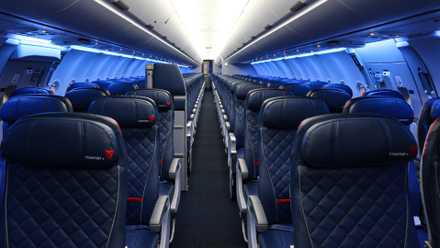
These Airlines Have The Most Spacious Seats For Economy Passengers In The US
Economy seat space varies widely among US airlines, with noticeable differences in legroom, width, and comfort.
Cutting Perks To Influence Travelers

Airlines are increasingly reshaping the passenger experience not just by adding new products, but by taking things away. Basic economy, once simply a lower-priced ticket, is now being systematically stripped of perks that previously made for an enjoyable travel experience for a wider range of customers. Carriers like American have reduced or eliminated mileage earning and loyalty benefits on these fares, while others have tightened seat selection, boarding priority, and change flexibility. This is intentional and designed to weaken the value provided by the lowest fare tier. Airlines are aiming to create a sharper contrast between basic economy and the rest of the cabin, making even modest upgrades feel significantly more worthwhile.
The impact is a clear shift in passenger behavior. As basic economy becomes more restrictive, many travelers are pushed to book higher fare classes or consider premium economy options. This gradually reshapes the cabin structure, turning standard economy into a no-frills baseline while positioning premium economy as the more practical, comfort-oriented choice for a growing share of flyers.
The Future Of Passenger Legroom And Comfort

Looking ahead, the trajectory for passenger space is unlikely to reverse, as airlines continue refining cabins to balance affordability with higher-margin upsells. The steady compression of standard economy, paired with the expansion of extra-legroom and premium economy products, suggests that comfort will remain something passengers increasingly pay for rather than expect. Some airlines have faced backlash over their shrinking economy seating, however, which may slow their willingness to retrofit their entire fleets as aggressively. Even so, with major carriers continuing to invest in tiered seating and premium cabins, the broader direction is clear: the future of air travel will be defined less by uniform experiences and more by how much comfort a passenger is willing to buy.