dailynewsnblog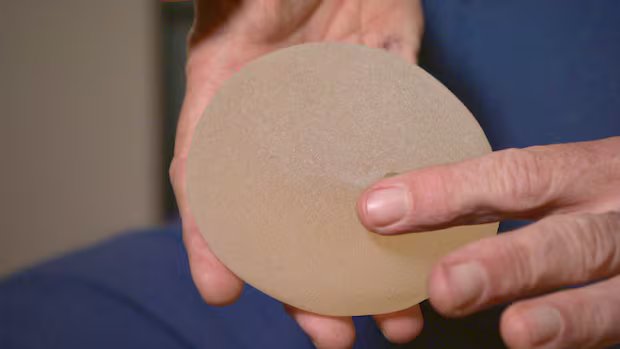

Listen to this article
Estimated 5 minutes
The audio version of this article is generated by AI-based technology. Mispronunciations can occur. We are working with our partners to continually review and improve the results.
Health Canada has launched a new voluntary registry that will allow patients and health-care professionals to receive direct alerts about breast implant recalls and safety issues, but some patient advocates and medical experts say it doesn’t go far enough.
In a news release, the department explained Canadians can now sign up to receive these notifications, which will “support informed decision-making and strengthen patient safety” by providing subscribers with a “direct, trusted source of information.”
This comes two and a half years after the House of Commons standing committee on health called on Ottawa to not only create a national registry, but to also ensure it was “implemented via a mandatory, uniform informed-consent form that has a clear checklist … and offers the patient the possibility of opting out.”
The announcement also follows years of advocacy by women who’ve been harmed, as well as joint investigations from CBC, Radio-Canada and the Toronto Star into the potential dangers of the implants, such as a rare type of cancer and autoimmune disorders.
National registries that match patients with their implantable devices allow them to be alerted promptly and directly when there’s a recall, say advocates and researchers. Registries also collect reliable and comprehensive data on device failures and associated health risks.
“This opt-in, voluntary registry is the worst decision Health Canada could have made from the point of view of patient safety,” said Terri McGregor, who testified before lawmakers as a patient advocate in May 2023.

In 2015, the Ontario woman was diagnosed with breast implant-associated anaplastic large cell lymphoma (BIA-ALCL), a rare cancer associated with textured breast implants. McGregor is suing manufacturer Allergan for failing to warn her of the risks tied to her implants.
“Health Canada should be embarrassed. They did the complete opposite of what their oversight committee suggested they do,” said McGregor. “The biggest beneficiary of an opt-in registry is the manufacturers. They are completely off the hook. They are the ones celebrating today.”
Julie Elliott, the Canadian representative for the Breast Implant Safety Alliance, called the new registry “doomed to fail” and says this in no way forces surgeons to discuss it with patients.
Voluntary registry ‘useless’ in the U.S.
Health-care professionals also expressed concern over the registry being voluntary, pointing out the model has not proven reliable in other countries, including the United States.
“That means only about 10 to 15 per cent of patients will register. So that’s not a lot,” said Dr. Jan Willem Cohen Tervaert of the voluntary registry. “So it’s more or less useless because the major goal of the registry is, firstly, if there is a disaster that immediately all the patients can be tracked down.”
In an article published in the Canadian Journal of Surgery, the University of Alberta professor and immunologist, who has been studying the link between autoimmune symptoms and breast implants for years, wrote that good registries are a must to detect health risks of breast implants at an early stage. He told CBC News the only advantage of voluntary registries is they are less work.
The model Health Canada has chosen is “the least effective for any use,” said B.C. plastic surgeon Peter Lennox in an email to CBC News. The UBC professor added that most countries with successful registries preferred an “opt out” model.
Lennox showed the 2023 committee how he’d collected his own data on suspected BIA-ALCL cases, stressing that mandatory data collection would be key to a successful registry.
“That gives you much more robust data and much less chance of patients being missed. That would have been the ideal model,” he said.
Former committee VP disappointed
Bloc Québécois MP Luc Thériault, who was vice-chair of the House of Commons standing committee on health from 2019 to early 2026, told CBC he was “deeply disappointed” in today’s outcome, given the amount of time it took for Ottawa to announce the registry.
Thériault, who initially proposed that the committee should study the possibility of a national breast implant registry, said he’s also puzzled by the lack of clarity in the announcement.

“This in no way answers the very clear and unanimous recommendations made by our oversight committee,” he said. “How do we even know that plastic surgeons will inform women properly? It puts the entire responsibility on women to inform themselves, when this is on Health Canada.”
The announcement mentions that a “printable poster” would be made available for health professionals to display in their offices to help inform patients about the new registry.
CBC News followed up with Health Canada to ask about its decision to choose a voluntary registry and what the timeline is for its implementation.
We were told the department could not answer our questions in time for our deadline.