dailynewsnblog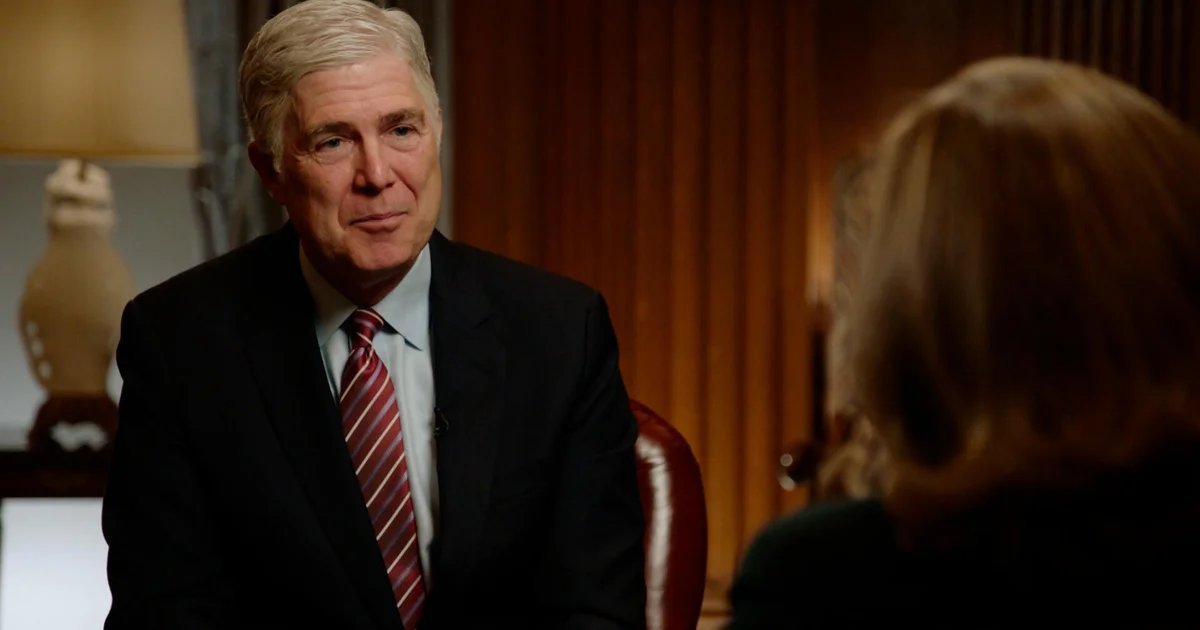
Washington — Supreme Court Justice Neil Gorsuch rebuffed President Trump’s suggestion that members of the high court owe loyalty to the president who appointed them, saying that his loyalty is to the Constitution and the laws of the United States.
The president has repeatedly lambasted the Supreme Court for its 6-3 ruling in February invalidating his most sweeping tariffs. Gorsuch and Justice Amy Coney Barrett, both appointed to the high court by Mr. Trump, were among the six justices in the majority, and the president has leveled particularly harsh criticisms of them for their votes.
In a Truth Social post last month, Mr. Trump claimed the justices appointed by Democratic presidents “stick together like glue, totally loyal to the people and ideology that got them there.”
“Certain Republican Appointees,” he continued, “let the Democrats push them around, always wanting to be popular, politically correct, or even worse, wanting to show how ‘independent’ they are, with very little loyalty to the man who appointed them or, more importantly, the ideology from which they came to be Nominated and Confirmed.”
But in an interview with CBS News chief legal correspondent Jan Crawford, Gorsuch said a justice does not owe a president loyalty.
“My loyalty is to the Constitution, the laws of the United States,” he said. “That’s the oath I took. It’s really just that simple.”
Gorsuch, who joined the Supreme Court in 2017, when he was 49, said there’s a reason why the Constitution gives federal judges life tenure.
“Think about it,” he told Crawford. “You’ve given nine old people life tenure. But you give them life tenure if you believe their job is only to apply the law fairly without regard to anybody or anything else or politics or any of the noise.”
Gorsuch said he believes the structure of the federal judiciary laid out in the Constitution works.
“Do I care what people say left, right, center about me? Nah,” he said.
Gorsuch and co-author Janie Nitze have written a new children’s book, called “Heroes of 1776: The Story of the Declaration of Independence,” that hit shelves Tuesday.
In addition to attacking the Supreme Court for its ruling striking down most of his tariffs, Mr. Trump has indicated that he believes the high court will invalidate his executive order seeking to end birthright citizenship. The president attended oral arguments for the case last month and wrote on social media, “based on the questioning by Republican Nominated Justices that I watched firsthand in the Court, we lose.”
But the Supreme Court has also come under criticism from Democrats, most recently for its decision last week weakening a key provision of the Voting Rights Act. House Democratic Leader Hakeem Jeffries called the high court “illegitimate” and the conservative justices “extremists.”
That ruling, as well as the Supreme Court’s 2022 decision overturning Roe v. Wade and its 2024 decision on presidential immunity, have reinvigorated calls for reforms to the Supreme Court. Maryland Democratic Rep. Johnny Olszewski on Monday proposed a constitutional amendment to establish 18-year term limits for justices, and Democrats have in recent years pushed to add seats to the high court. Those proposals, however, have failed to gain traction in Congress and are especially unlikely to clear the Senate, where most legislation requires 60 votes to advance.
Congress set the number of Supreme Court justices at nine in 1869, and Gorsuch said that composition has “worked reasonably well,” echoing a view expressed by the late Justice Ruth Bader Ginsburg in 2019.
He also urged those advocating for reforms to make sure they know the history of the institution and have thought through the consequences of instituting such changes.
“You may have some great ideas about reforming things and they might be right,” Gorsuch said. “Make sure you know what you’re reforming before you tinker with it. Once you start tinkering, you expect other people to tinker. And then where does it end?”