dailynewsnblog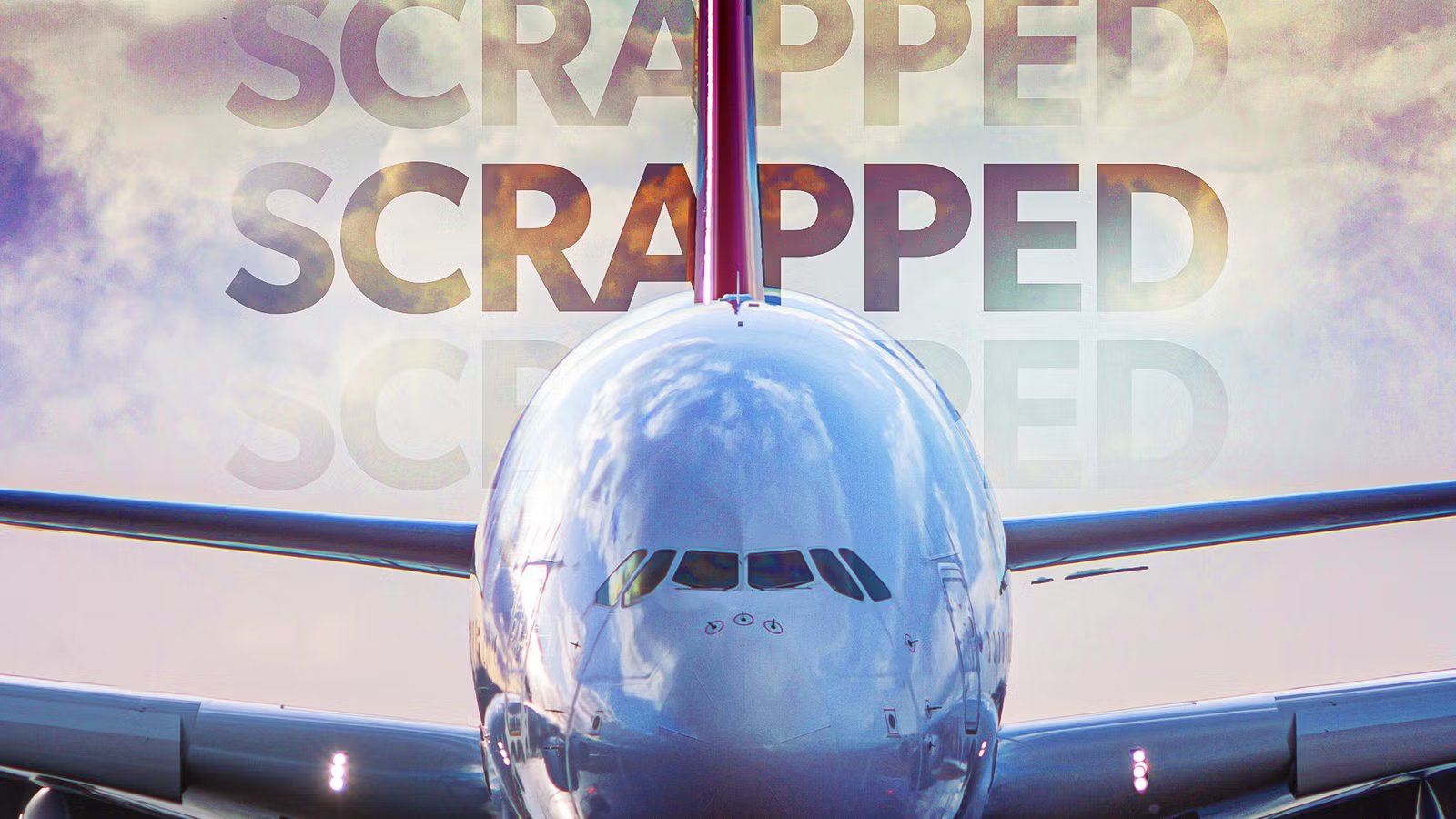
More than twenty years after Airbus first presented its A380 freighter idea, the aircraft still comes up in aviation discussions as one of the industry’s most ambitious “what ifs.” In the early 2000s, as global air cargo demand grew rapidly, manufacturers and airlines were looking for ways to move more freight through busy hub airports.
So why did a program that attracted significant early interest from FedEx, UPS, and Emirates end up being canceled before any planes were built? This Simple Flying article examines how the Airbus A380 freighter went from an ambitious cargo aircraft concept to being scrapped before any planes were produced. It looks at what the aircraft was meant to be, how expectations of airlines and the cargo market changed over time, and how production and engineering issues at Airbus led to the program’s cancellation.
The Jet That Almost Rewrote Air Cargo History

Shutterstock | Simple Flying
When Airbus launched the A380 program on December 19, 2000, it was announcing a completely new passenger aircraft. Alongside the double-deck superjumbo that would eventually carry up to 853 passengers, Airbus unveiled plans for a freighter variant: the A380F. On paper, it was extraordinary. According to the Airport Technology report, the aircraft was designed to carry a payload of 330,000 lbs, spread across three cargo decks, over a range of 5,600 nautical miles. Airbus itself claimed the payload capacity was 30% larger than that of the nearest competitor aircraft. The only flying machine ever built with a higher freight capacity was the Antonov An-225 Mriya, and there was only one of those in existence.
The initial response from the cargo industry was enthusiastic. Airbus received early commitments from International Lease Finance Corporation and Emirates in 2001, followed by a firm order from FedEx Express for ten aircraft and ten options in 2002. UPS followed three years later with an identical commitment. In total, the A380F had accumulated 27 firm orders and 20 options from major customers like FedEx and UPS before a single component had been manufactured. For a brief period, it looked as though Airbus was about to deliver the cargo world its biggest leap forward since the Boeing 747 had first appeared on the scene in the early 1970s.
However, by 2007, both FedEx and UPS had canceled their orders, switching to more flexible twin-engine alternatives, including the Boeing 777F. Emirates and International Lease Finance Corporation converted their A380F commitments into passenger orders instead. Airbus continued to list the aircraft on its website until at least January 2013 before quietly removing it.
How Airbus Convinced FedEx, UPS, And Emirates To Sign Up – Then Lost Them All

According to early reports, Airbus presented the A380F clearly: transport more cargo with fewer flights and lower costs per shipment. The concept focused on major global hubs, where traffic was expected to grow, but airport slots were already scarce. The company also reassured customers that the freighter would share much of its design with the passenger version. This would likely make maintenance and training easier.
By the mid-2000s, though, the market began to change. Analysts at the time noted that cargo airlines preferred smaller aircraft that could fly more often instead of relying on a few very large jets. Meanwhile, delays with the passenger A380 raised concerns about the freighter’s timeline.
Operators like FedEx reportedly became less willing to wait as uncertainty grew. UPS reached a similar conclusion. It seems both companies ultimately chose flexibility and reliability over maximum capacity. For  Emirates, initial excitement about the freighter shifted to a stronger focus on passenger growth. By the time Airbus effectively canceled the A380F, it was evident that the market had moved on from the conditions that had once made the aircraft attractive.

The Airbus A380F – The Freighter Plane That Got Scrapped
The Airbus A380F would have been one of the world’s largest cargo aircraft had it been built.
The Design Was Spectacular On Paper, But The Physics Told A Different Story

According to technical assessments released after the program was halted, the A380F’s main problem was not a lack of demand but design limits. The aircraft’s double-deck structure, initially designed for passengers, added weight and complexity that reduced efficiency when it was adapted for cargo. According to a FlightGlobal report, freighters rely on simple, wide main decks for quick loading. The A380’s internal layout made this harder to achieve without significant compromises.
It also seems that the payload figures, while impressive on paper, did not easily translate to real-world operations. Analysts noted that cargo aircraft are usually limited by volume before weight. The A380F’s extra capacity risked going unused on many routes. Meanwhile, some reports showed that four-engine aircraft like the A380 typically use more fuel per flight than newer twin-engine freighters, especially as engine technology improved through the 2010s and into the 2020s.
By the time newer aircraft such as the Boeing 777F and later the Boeing 777-8F were assessed, it became clear that slightly smaller, more efficient jets could carry less per flight but generate more profit overall due to lower operating costs and greater route flexibility. In that context, the A380F’s size, once viewed as its greatest strength, increasingly appeared to be a disadvantage influenced by both physics and market demand.
Wiring, Software Wars, And The Production Crisis That Sealed The Program’s Fate

Shutterstock | Simple Flying
The turning point was caused by internal production problems instead of issues with the aircraft’s design. Different Airbus sites were using incompatible versions of design software, which led to significant problems with the aircraft’s wiring. Early findings revealed that wiring harnesses designed in one location did not fit properly during final assembly, forcing extensive rework.
The scale of the problem quickly became apparent. Thousands of cables had to be redesigned or manually adjusted, which significantly slowed production. These delays pushed delivery schedules back by years and added considerable costs. It also seems that customer confidence weakened as timelines became more uncertain.
By the late 2000s, Airbus had limited options. The company focused its resources on fixing and delivering the passenger version, resulting in repeated delays for the freighter. Analysts observed that the A380F was severely impacted by the production delays plaguing the passenger variant, which ultimately undermined the freighter’s viability. As a result, the A380F program gradually faded away because ongoing technical and manufacturing issues made its continuation impractical.

Why The Airbus A380 Freighter Was Scrapped
Learn more about how market inviability, fundamental design flaws, and broader issues with the Airbus A380 program
The 777-8F: The Aircraft That Would Have Made The A380F Obsolete Anyway

According to the previous Simple Flying report, the Boeing 777-8F shows a clear shift in cargo aviation. Airlines now focus more on efficiency rather than just carrying the maximum load per flight. They want aircraft that can fly longer distances while using less fuel and maintaining profitability across more routes.
Industry analysts note that this change took time. As reported by the International Air Transport Association (IATA), newer twin-engine planes have gradually replaced older, larger freighters. The newer models cost less to operate and offer more flexibility in global networks. The 777-8F follows this trend, offering near-heavy-freighter capacity with significantly better fuel efficiency than older four-engine designs.
By the time the 777-8F was introduced, many observers noted that the market was already leaning in this direction. Cargo operators valued frequency, range, and lower operating costs more than the maximum payload per aircraft. In such an environment, even a flying A380 freighter concept would have had a hard time competing, as the economics favored smaller, more efficient aircraft that better fit modern logistics networks.
Why No One Has Tried To Revive It – And Why That Is Unlikely To Change

There has been no serious effort to bring back the A380F since it was dropped. It seems the main reason is practical: the aircraft it depended on is no longer in production, and restarting it would mean rebuilding supply chains, tooling, and certification work that no longer exist.
Industry analysts also point out that cargo airlines have moved on in terms of what they want from aircraft. Operators now prefer planes that are cheaper to run, easier to schedule across different routes, and less risky to fill on every flight. That makes very large, niche freighters harder to justify, even if they look impressive on paper.
Because of that shift, there is little incentive to revisit the idea. Newer freighters already cover the same long-haul roles with better economics and more flexibility, especially aircraft like the Boeing 777F and the newer Boeing 777-8F. In that environment, the A380F is seen less as an unfinished project and more as a design that belonged to a different phase of air cargo planning.