dailynewsnblog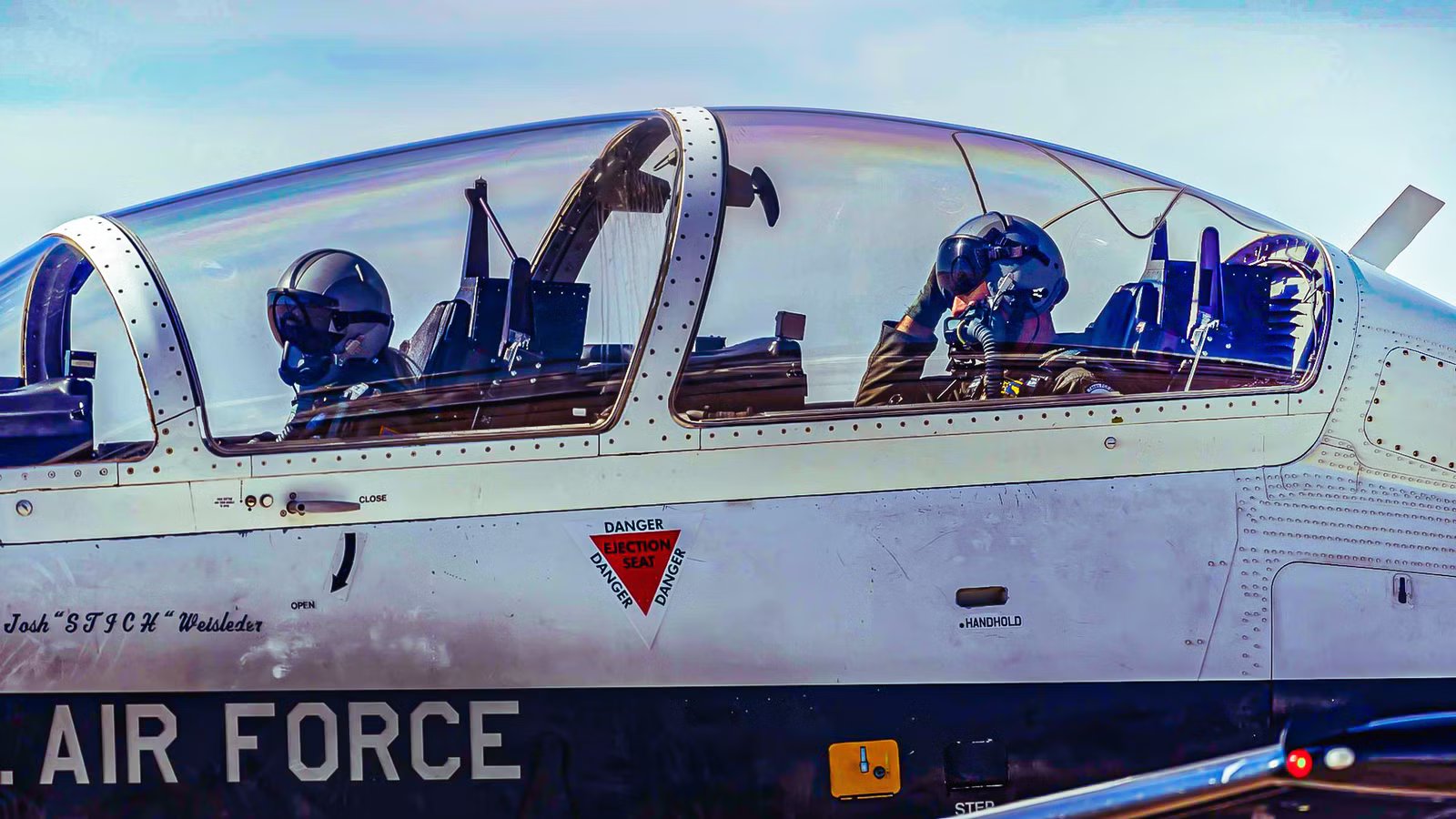
The Republic of Korea Air Force did not have a formal policy that prohibited aircrew from taking selfies in flight for many years. Then, a few years ago, everything changed in South Korea when one pilot’s final flight went terribly wrong. The air crew had planned to send off the major in style with the explicit goal of capturing a few exciting memories in the air, as many others did in other squadrons.
This 2021 incident was a midair collision between two F-15K Slam Eagle jets during a training mission near Daegu. Just before touchdown on December 24, two planes flew toward base at 312 knots (578 kmh). The wingman then executed a fast climb around 13,000 feet, followed by a sharp bank of 137 degrees. This maneuver was intended to show the upper side of his jet to the lead aircraft for a better camera angle. Instead, the wingman’s left tail stabilator struck the left wing of the lead jet.
The collision caused approximately 878.7 million won, or $600,000, in damages to the  Boeing fighter jets, according to JPost. Prior to the mishap, this type of conduct was known to be commonplace but regulated by squadrons through informal self-policing. It was only after multiple media outlets reported on the incident, including the cause, that the Air Force made a public apology and instituted formal regulations to prevent any future cases.
Colliding Slam Eagles: The Daegu Incident

Fortunately, the aircrew involved in the 2021 midair collision were at least able to safely land. While the Air Force initially kept the details under wraps, a Board of Audit and Inspection report released in April 2026 revealed that the crash was the direct result of pilots attempting to take ‘selfie’ photos and videos, according to AeroTime. The pilot was suspended from flying, faced severe disciplinary action, and eventually left military service to become a commercial airline pilot.
The Ministry of National Defense originally ordered the pilot to pay the full repair cost. Upon appeal, the BAI reduced the fine by 90% to roughly 88 million won, or $62,000. The reduction was granted because it was reasoned that the Air Force bore partial institutional responsibility for its lax controls, and the fact that such filming had become a common, unregulated practice among other pilots.
The ROKAF issued a rare formal apology to the public in April 2026, acknowledging the concern caused by the previously undisclosed incident. The incident ended the final flight selfie tradition. The BAI report explicitly criticized the ROKAF for letting personal media use blur operational discipline, leading to a military-wide push to prioritize safety over commemorative social media content.
The new policy included a National Defense Mobile Security app, which disables all camera and recording functions on-site. Starting in June 2024, the Air Force and other branches began prohibiting iPhones at headquarters and sensitive facilities because Apple’s privacy settings prevent the military’s security app from controlling hardware like the microphone and USB access.
Why It Happened: Institutional Inertia

Most modern air forces have long-standing, though sometimes selectively enforced, restrictions on personal electronic devices in the cockpit. While the South Korean military was rapidly digitizing and allowing conscripts limited phone use in barracks to improve mental health, specific safety regulations for specifically intense environments like fighter jet cockpits lagged behind.
Without a high-profile accident specifically linked to distracted flying from selfies, the ROKAF lacked the internal momentum to challenge a popular pilot tradition. In contrast, the United States Air Force and the Royal Air Force have a strict policy against smartphones or other electronic devices in tactical aircraft. The only time that filming happens is during specific events for public relations or ‘incentive rides’, which are controlled and monitored.
The United Kingdom’s Royal Air Force doesn’t have a specific policy but does recommend against similar activity and at least one pilot has been court-martialed for inappropriate use of a personal device on the flight deck. That happened in 2014, when an RAF pilot’s DSLR camera jammed and caused an Airbus A330 multi-role tanker transport to suddenly plummet a few thousand feet in flight.
The US Federal Aviation Administration and the European Aviation Safety Agency both have a policy for commercial pilots to maintain a ‘sterile cockpit’ below 10,000 feet. The reason is because of the risk at lower altitudes and the amount of manual action required by air crew in order to properly and safely operate the plane in a higher risk phase. This same logic applies to military aircraft performing aggressive aerobatic maneuvers, such as the Daegu incident.
5 Aircraft That Pilots Say Are The Most Technologically Advanced
The most cutting-edge aircraft of 2026.
The Unfortunate Flight of RAF Voyager 333

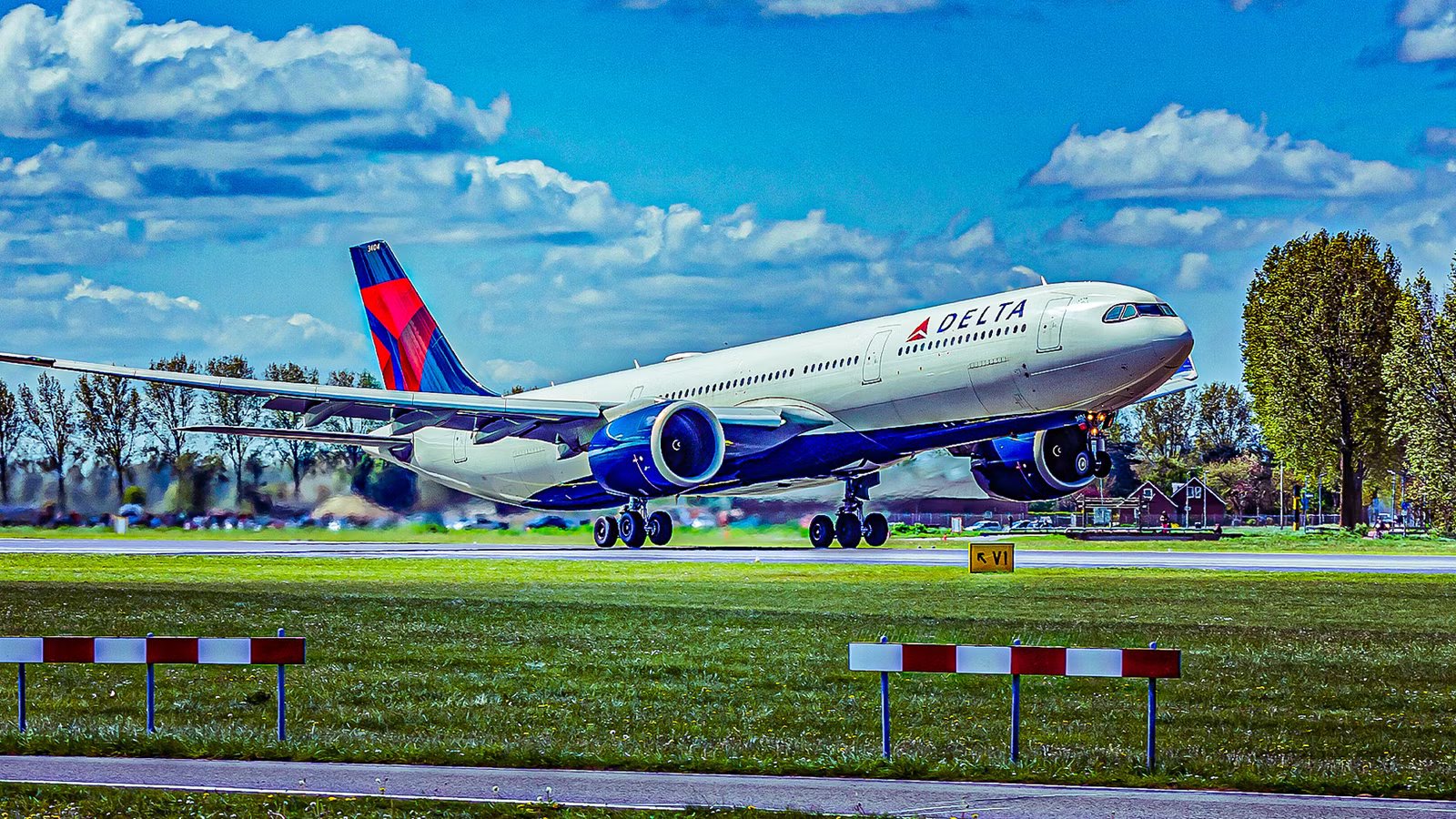
In a similar recent incident to the Daegu crash, Flight Lieutenant Andrew Townshend was taking photos of other aircraft from the cockpit of RAF Voyager ZZ333 as it transited over the Black Sea on February 9, 2014. The plane was cruising at 33,000 feet with 198 personnel on board returning to the UK from Afghanistan. After taking 95 pictures, he placed the camera in a small gap adjacent to the armrest of his seat and decided to adjust the controller of the widebody Airbus A330. This decision proved to be fateful when the captain adjusted his motorized seat later in the flight.
After moving the seat forward, the armrest wedged the camera body against the side stick and input a full pitch-down command to the fly-by-wire system. The input instantaneously disengaged the autopilot, which put the jet into a nose dive that peaked at 15,000 feet per minute and nearly pushed the plane to break the sound barrier. After diving 4,400 feet in 27 seconds, the envelope protection programming overrode the manual input and leveled out the aircraft to avoid exceeding its structural limitations.
It was only because of the electronic safety programming that the aircraft was able to recover. Because the dive was so violent and unannounced, the cabin experienced negative G-forces. Passengers and crew who were not buckled in were thrown into the ceiling. Of the 33 injuries that resulted from the mishap, one co-pilot suffered a fractured back from being violently thrown into the ceiling of the plane.
Why Doesn’t The World’s Most Produced Fighter Jet Have A Thrust Vectoring Nozzle?
How the Viper side-stepped thrust-vectoring.
The Fallout from Negligence on the Flight Deck

The way that the RAF handled this incident was very different from the way the ROKAF treated the Daegu mishap. The RAF grounded its Voyager fleet for 13 days to investigate. New rules were implemented specifically forbidding pilots from placing any objects in the gap between the armrest and the side-stick. The investigation by the Military Aviation Authority found the crushed camera still in the cockpit, with forensic evidence of compression consistent with being jammed, according to Flight Global.
In 2017, the captain was dismissed from the RAF and handed a four-month suspended prison sentence after pleading guilty to negligently performing a duty. The Ministry of Defence has faced numerous civil claims from passengers. Some settlements for trauma and physical injury have reached high figures, such as an undisclosed significant payout to an Army veteran in 2018, according to the Times.
Many of the 189 passengers on board suffered from long-term psychological effects, including PTSD and a phobic fear of flying. At least one crew member left the RAF due to these mental injuries. Lieutenant Nathan Jones suffered severe injuries that included a fractured back and nerve damage. Despite these injuries, he was credited with helping to save the aircraft and later went on to captain Great Britain at the Invictus Games.
How The F-35’s Automated Departure Resistance System Prevents Spins For Pilots In Combat Maneuvers
A closer look at the Air Force’s ‘spin proof’ fifth-generation fighter.
Operational Security And Flight Deck Safety

While the US Armed Forces have avoided a direct equivalent to the Daegu mid-air collision, they have faced high-profile incidents involving digital distractions and souvenir culture that prompted policy changes as well. Most recently, the Army had a 2024 ‘Tablet Trouble’ mishap due to an unsecured tablet.
The pilot’s device slipped from its mount and became wedged in the flight controls during a training flight. The backseat pilot was forced to execute an emergency maneuver to stop the sudden descent into the tree canopy. In the aftermath, it was found that the airframe had over-torqued the engine and damaged the tail rotor blades in a Class C mishap.
The US Armed Forces has a policy known as operational security regulations that were hand in hand with technical safety standards. Unlike the policies seen elsewhere, the US military treats personal electronic devices as a significant risk to both national security and flight safety. In many cases, aviators are required to put phones into a Faraday case that blocks any electronic signals before bringing the device on a military aircraft.
The actual primary driver for the Department of Defense policy is to avoid vulnerabilities that would allow adversaries to access classified information. Each branch gives commanding officers the authority to enforce these policies through various means. Devices with photographic or recording capabilities are explicitly prohibited in sensitive environments. Wireless devices cannot be used to store or process classified information unless they meet specific certification standards.
Pilots are increasingly equipped with government-authorized tablets for use as Electronic Flight Bags to store maps and charts. These devices must follow approved operational procedures and are strictly for duty-related tasks, not personal use. Any electronic device allowed in a cockpit, such as a professional camera for combat documentation, is subjected to extensive testing to ensure its electromagnetic output does not interfere with the aircraft’s navigation or communication systems.