dailynewsnblog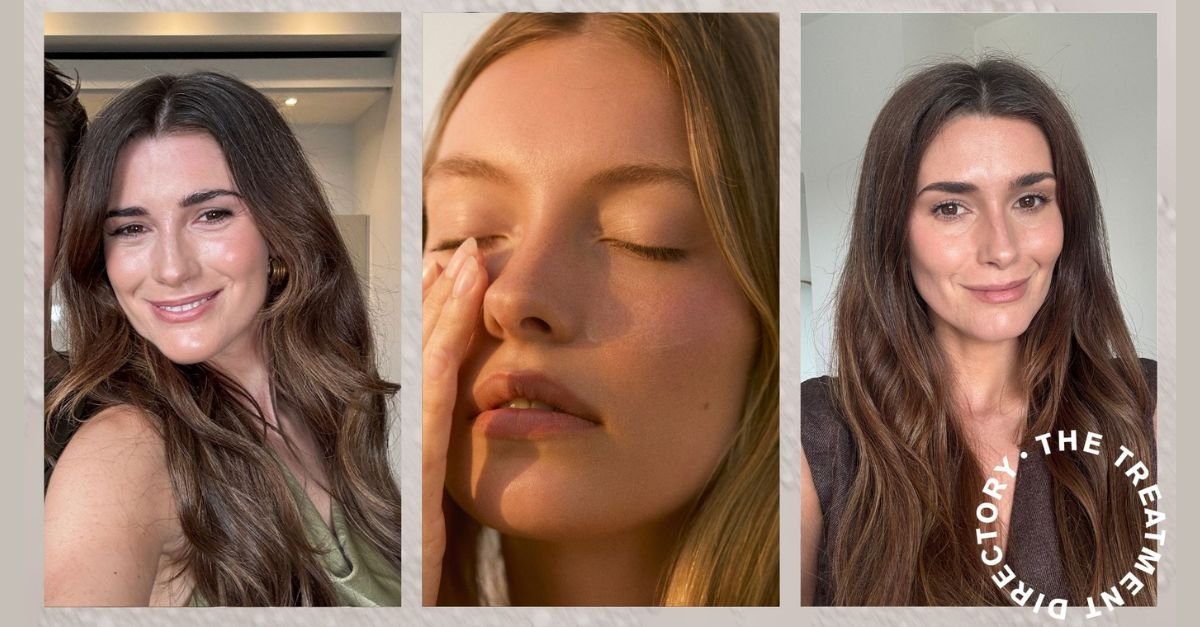
Growing up, I always loved my hooded eyes. However, having a genetically heavier brow and deep-set eyes means that, now in my early thirties, I can see some signs of ageing and a little more drooping around my outer eyes that no eye cream nor microcurrent device can truly lift. It’s not extreme hooding, or something I spot when looking in the mirror exactly, but in photos, I’ve noticed that my eyes now look smaller, more squinty and less awake than they used to when I smile. My eyeshadow and eye makeup also don’t sit as well as they used to. It’s not a big deal, but I often feel I look more tired than I feel.
I’d already tried a couple of treatments for my hooded eyes, including Sofwave and some Botox around my eyes, but I had yet to try a Botox brow lift. So, I went to visit consultant ophthalmologist and oculoplastic surgeon, Dr Elizabeth Hawkes, to try the treatment for myself. Thinking of trying a Botox brow lift for yourself? Scroll on for the things I think you need to know.
What Is a Botox Brow Lift?

(Image credit: The Vault Stock)
“Botox is a neuromodulator, meaning it works at the site of a nerve and muscle at the neuromuscular junction and inhibits the muscle from contracting,” says Dr Hawkes. “It functions as an anti-wrinkle injection to reduce the formation of lines, and it is used quite frequently around the eyes, but it can also help with hooded eyes and lifting the brow area. It can subtly change the brow and upper eye by lifting or opening to better frame the face, and gently soften lines without inhibiting expression,” she says.
“Whilst Botox cannot eliminate excess skin in the upper eyelids [only a surgical procedure called an upper blephroplasty can remove excess skin], when strategically placed with a clear understanding of the interaction between the frown muscles and the forehead muscles, Botox can lift the position of the eyebrows, and this is commonly referred to as a chemical brow lift,” she adds.
During a Botox brow lift, your practitioner will typically treat the glabellar complex (in between the eyebrows) as well as the upper portion of the orbicularis oculi (a sphincter-like muscle that encircles the eye area).
“The aim of a non-surgical brow lift using neuromodulators is to relax the depressor muscles of the brow, primarily the glabellar complex and the upper portion of the orbicularis oculi,” says Dr Hawkes. However, a good practitioner will always ensure the dose and placement are tailored to your facial anatomy. “The treatment is always tailored,” she says. “The dose and placement depend on the patient’s anatomy and the degree of lift they’re looking to achieve. In some cases, a small amount can be placed in the frontalis (the brow elevator), but this requires precision, as over-treatment can lead to heaviness. It’s very much a case-by-case approach.”
Who Is It Suitable for?
A Botox brow lift can be an option for those wanting to achieve a more refreshed eye area, making it a good treatment for those with hooded eyes. It’s also a good first step before considering surgical procedures, such as an upper blephroplasty. “There are some patients who present with very mild to mild hooding that can be treated with Botox without needing surgical intervention; however, it all comes down to consultation,” says Dr Hawkes.
“Many patients opt to go down an injectable route, almost as a segue to surgery, as they can better understand how they would look and can possibly stave off surgery for a couple of years,” she says. “Results vary, but most patients can expect a subtle lift of around 1-2mm. Whilst that may sound minimal, it’s often enough to create a fresher, more open appearance.
However, it’s important to manage your expectations, as it won’t give the same results as a surgical procedure. “An upper blepharoplasty will deliver a more significant and structural change, particularly where there is excess skin. However, not everyone is a candidate for surgery,” says Dr Hawkes. “In younger patients, especially, we tend to favour non-surgical options first. A neuromodulator brow lift can offer a subtle elevation and help improve the appearance of hooded lids, but expectations should remain realistic. It enhances rather than replaces surgery,” she says.
Botox can also be used to correct brow or lid asymmetry to help achieve more balance around the eye area.
How Long Does It Last?
The effects of Botox typically begin to appear within one to two days, but full results are usually visible within one to two weeks after treatment,” says Dr Hawkes. “Botox is usually metabolised and out of your system within 12 weeks, but many patients continue to see results for up to four to six weeks beyond that, depending on individual factors such as metabolism and muscle activity,” she says.
You’ll be pleased to know that a Botox brow lift had minimal discomfort as aesthetic treatments go, and also has minimal-to-no downtime. “This is considered a low-pain procedure, and most patients rate it around one out of 10 in terms of discomfort with no significant downtime,” she says. “Small bumps may appear at the injection sites immediately after treatment, but they usually resolve within 15 minutes. As with most injectable treatments, there is a small risk of bruising, though it is generally minimal.”
Aftercare
There is minimal downtime immediately after the treatment, and you can resume most activities after 24 hours. “Aftercare is minimal. Small bumps at the injection sites are common and usually settle within 10–15 minutes, says Dr Hawkes.
“Patients should avoid touching or rubbing the area for around six hours, and refrain from exercise and alcohol for 24 hours,” she says. “There is a small risk of bruising, although this is uncommon and can be minimised with careful technique.”
Most people can have a Botox treatment; however, contraindications include pregnancy, breastfeeding and certain neuromuscular conditions such as myasthenia gravis or Lambert-Eaton syndrome, Dr Hawkes tells me. “In experienced hands, it’s a very safe procedure with a well-established track record. Botulinum toxin has been used in both medical and aesthetic settings for decades and has a strong safety profile,” she says.
How Much Does It Cost?
The cost of a Botox brow lift can vary depending on location, the experience of the practitioner and the areas treated. “Costs can vary depending on practitioner expertise and treatment complexity, ” says Dr Hawkes. A Botox brow lift with Dr Hawkes starts from £395.
My Botox Brow Lift Experience

(Image credit: @eleanorvousden for Who What Wear UK)
I met with Dr Hawkes in her London clinic and discussed my concerns with her during my consultation. After she assessed my eye area and facial expressions, she cleansed the area and marked out the injection points to treat. I was also given a stress ball, but honestly, I didn’t need to use it as it was virtually painless thanks to Dr Hawkes’ expert hands. The injections around the eyes were a little pinchy, but it was all over and done with after a couple of seconds. Dr Hawkes treated the areas between my brows as well as the outer eye area, and it was all done within 10 minutes. I had some initial redness and bumps that disappeared after 15 minutes or so. After my treatment, I could resume my usual skincare routine that evening.
As the Botox takes time to work, you won’t see immediate results. However, I could start to see the effects kick in after two or three days. Over the course of two weeks, I could gradually see my brows looking more lifted and the lines around my eyes and between my brows soften. I still have full movement in my face, but my eyes looked more refreshed and open, even with an eye-to-eye smile.
Before and After
Before

(Image credit: @eleanorvousden for Who What Wear UK)
After

(Image credit: @eleanorvousden for Who What Wear UK)
My Final Thoughts
I’m now one month post-treatment, and I couldn’t be happier with the results from my Botox brow lift. I still look like myself, and I still have hooded eyes; however, my eyes look more open and refreshed. Where the muscles have relaxed, my eyes are less squinty when I smile, which makes them look more wide-awake, and the lines around my eyes have softened, too. I also see a lift in my brows, and although subtle, it makes all the difference in opening up my eyes and giving me more eyelid space.
Perhaps it’s a placebo effect, but not only do my eyes look perkier and wide-awake, but I also feel more energised and less tired as a result. Having hooded eyes means I’m often subconsciously lifting my brows up for fear of looking tired or grumpy (which then results in tension on my facial muscles), and so I love that I don’t need to worry about looking sleepy or cross when my face is at rest. Now, my eye area looks refreshed and more open, and even my eye makeup sits better now.
Of course, having a Botox brow lift can be a significant financial commitment, as results will only last three months or so. However, the short-term results also mean you can see if you like the results without committing to a more permanent change. Personally, I’m enjoying my results, and I will plan to look at repeating the treatment ahead of special occasions when I want to look and feel my best for photos. I can’t recommend a Botox brow lift—especially one with Dr Hawkes—enough.
Book an appointment with Dr Elizabeth Hawkes.
Disclaimer: It’s crucial to do thorough research into the aesthetics procedure and practitioner(s) you’re considering. For injectable treatments, we advise checking the GMC (General Medical Council), NMC (Nursing and Midwifery Council) and GDC (General Dental Council) registers to ensure your chosen practitioner is a registered medical professional with an active licence to practice medicine in the United Kingdom. Note that Botox (botulinum toxin) is a prescription medicine in the UK, and therefore can only be legally prescribed by a cosmetic or aesthetic doctor, surgeon, dentist (not a dental therapist or hygienist) or nurse prescriber after a face-to-face consultation. Dermal fillers and biostimulators (such as polynucleotides) are not prescription medicines, and can therefore be performed by non-medics (like an aesthetic practitioner, for example), though we still recommend seeking treatment with a doctor or nurse to ensure you are in the hands of someone who has the skill, experience and tools necessary to deal with any complications, should they arise. You can find recommended and vetted practitioners near you on The Tweakments Guide, or the BCAM (British College of Aesthetic Medicine) and BAMAN (British Association of Medical Aesthetic Nurses) registers. Additionally, the Government has recently announced a crackdown on unsafe cosmetic procedures, and amongst other measures, is urging the public to only visit practitioners at providers registered with the CQC (Care Quality Commission).