dailynewsnblog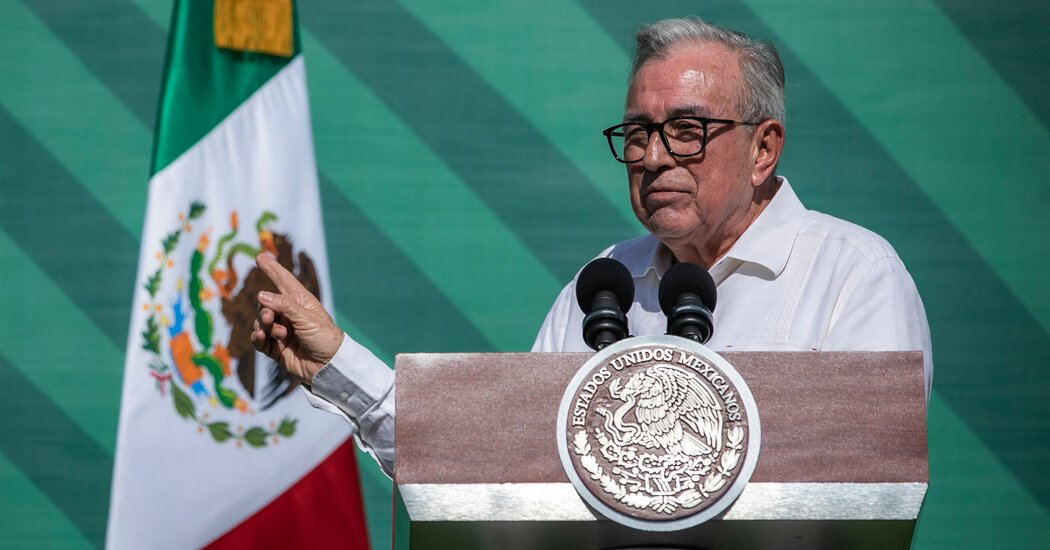
Rubén Rocha Moya, the Mexican governor indicted by the United States this week, said Friday night that he would temporarily step down from his post, expanding the political fallout from accusations that he aided a powerful drug cartel for years.
Mr. Rocha, 76, said in a two-minute recorded statement late Friday that he was innocent but would take “a temporary leave of absence” as governor of the Mexican state of Sinaloa to focus on defending himself from the accusations.
“I can look my people and my family in the eye because I have not betrayed them and I never, ever will,” he said. “And I will demonstrate that firmly when the justice institutions of our country require it.
Mr. Rocha’s case has dominated the national conversation in Mexico since Manhattan prosecutors unsealed an indictment on Wednesday accusing him and nine other current and former Mexican officials of a yearslong conspiracy to protect the Sinaloa Cartel in exchange for bribes and political support. The cartel has long dominated Sinaloa, a state of three million on Mexico’s western coast, and prosecutors portrayed Mr. Rocha as central to the group’s impunity since his election in 2021.
President Claudia Sheinbaum of Mexico has responded warily to the U.S. indictment, refusing to order Mr. Rocha’s arrest as American prosecutors requested, saying they lacked enough evidence. She said that Mexico’s attorney general’s office would instead investigate Mr. Rocha.
The indictment has put Ms. Sheinbaum in a difficult position. Mr. Rocha is a prominent member of her party, Morena, but the Trump administration has been putting intense pressure on her to crack down on cartels and corruption.
Mr. Rocha’s decision to take a leave of absence instead of resigning had a clear advantage for him. As an elected official, Mr. Rocha has immunity from criminal conviction, which must be stripped by Mexico’s Congress if he is to face charges. His leave of absence allows him to step down from his position while retaining his immunity.