dailynewsnblog
The era of frustratingly slow, high-latency inflight internet is rapidly coming to an end as low-earth orbit (LEO) satellite constellations fundamentally reshape the passenger experience. Travelers have long struggled with connection speeds that barely support text messaging, let alone high-definition streaming or real-time gaming. This guide examines the aggressive rollout of Starlink and similar technologies across the global aviation sector, highlighting the carriers that are prioritizing seamless connectivity as a core part of their brand identity.
The shift from traditional geostationary (GEO) satellites to LEO networks represents a total structural change in how aircraft communicate with the world below. Traditional systems located thousands of miles away suffer from massive latency delays, while constellations like Starlink orbit significantly closer to the Earth’s surface. This proximity allows for a broadband-at-home experience, enabling airlines to finally offer free, high-speed WiFi as a standard amenity rather than a paid luxury.
Technological Revolution?

Traditional inflight connectivity has long relied on satellites positioned in geostationary orbit, approximately 22,000 to 22,300 miles (35,786 km) above the planet. While these systems provide broad coverage, the sheer distance the signal must travel results in a latency of at least 600 milliseconds. In contrast, Starlink operates a massive constellation of over 9,000 satellites in low earth orbit, situated roughly 340 miles (547 km) above the ground.
This drastic reduction in altitude is the technical foundation for the sub-30-millisecond latency that Starlink provides to modern aircraft. This enables tasks that were previously impossible, such as live video conferencing, cloud-based productivity apps, and low-latency gaming. Airlines are finding that providing this level of performance is a significant competitive advantage, as it removes the last remaining barrier between the ground office and the airplane cabin. Delivering download speeds up to 350 Mbps, carriers can ensure that every passenger on a full flight can stream content simultaneously without a drop in quality.
The physical installation of this technology requires a specialized aeronautical terminal that weighs approximately 85 lbs (38.5 kg). It adds a small amount of weight to the airframe, but the trade-off in passenger satisfaction and brand loyalty is considered a worthwhile investment by premium carriers. Each installation costs between $170,000 USD and $300,000 USD per aircraft, depending on the fleet type and the level of existing hardware compatibility. As more satellites are launched, the network capacity continues to grow, ensuring that the bandwidth bottleneck of previous generations becomes a thing of the past.
All For Free?

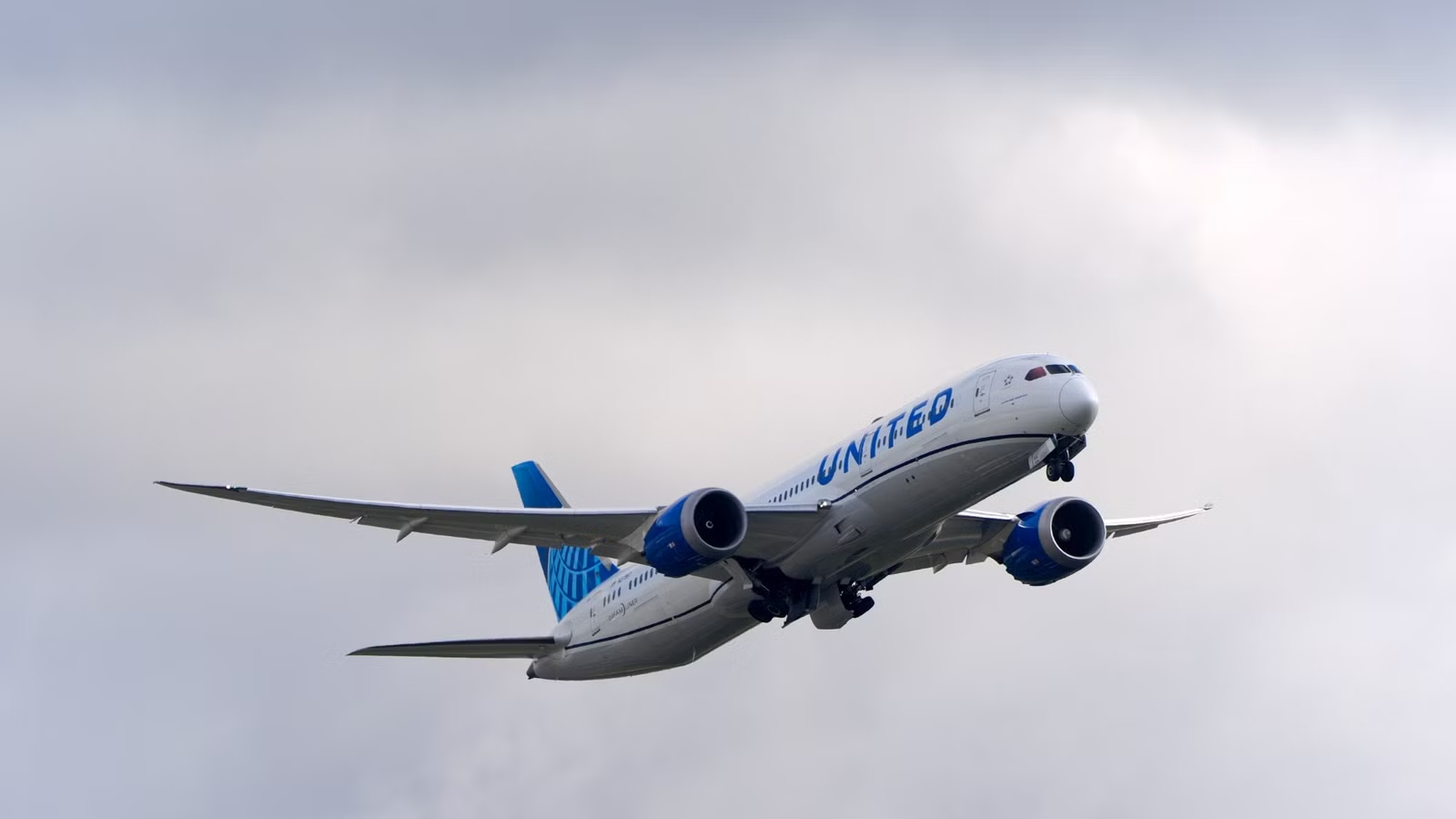
 United Airlines has positioned itself at the forefront of the global race for LEO satellite dominance, executing a rapid fleet-wide deployment of Starlink terminals. This is especially significant for the carrier’s regional operations, which have historically operated with substandard or non-existent connectivity compared to the mainline fleet. As of early 2026, the airline has successfully outfitted more than 300 regional jets, bridging a technological divide that has long plagued short-haul travelers.
The logistical complexity of outfitting 800 aircraft by the end of 2026 cannot be overstated, as it requires synchronized maintenance windows across multiple global hubs. The installation involves mounting the 85-lb (38.5 kg) electronically steered antenna on the upper fuselage, a process that must be completed with aerodynamic precision to minimize fuel burn penalties. These terminals are designed to communicate with the Starlink constellation at a latency of less than 30 milliseconds, providing enough bandwidth for every passenger to stream 4K video. Unlike older systems that required a dedicated satellite for each flight, the LEO network distributes the load across thousands of points, ensuring high speed even in congested air corridors over major cities.
The decision to offer this service free to all passengers represents a significant change in the airline’s revenue model. Removing the paywall that traditionally guarded high-speed access, United is betting on increased brand loyalty and a higher volume of business travelers who require uninterrupted connectivity. This strategy also simplifies the onboard experience, as passengers no longer need to navigate complex login screens or credit card prompts to get online. The move specifically targets the connected traveler demographic, ensuring that whether someone is on a Boeing 737 or a smaller Embraer 175, the digital experience remains uniform and exceptionally fast.
Is Starlink About to Replace Seatback Screens Forever?
Not every airline will eliminate seatback screens entirely, but some may see a clear opportunity to reduce reliance on traditional IFE.
Major Fleet Overhaul

 Southwest Airlines, long known for its egalitarian approach to air travel, is undergoing a digital metamorphosis to stay competitive in an increasingly connected market. The carrier has relied on a mix of providers like Anuvu and Viasat, but consistent performance remained elusive across its massive all-Boeing 737 fleet. In early 2026, Southwest announced a pivot to Starlink, aiming to equip more than 300 aircraft by the end of the year. This transition is a direct response to customer feedback that prioritized reliable, gate-to-gate internet as a non-negotiable part of the flying experience, especially as the airline moves toward assigned seating and premium cabin segments.
The technical overhaul involves replacing existing dome antennas with the low-profile Starlink aeronautical terminal, which is significantly more aerodynamic than the hump associated with older satellite systems, thereby improving fuel efficiency across the carrier’s 800-aircraft fleet. Southwest can now offer its Rapid Rewards members, a service that supports data-heavy activities like live sports streaming and cloud gaming. This is a move to bolster its loyalty program, as the high-speed tier is offered as a free perk for members, sponsored in part by long-term partners like T-Mobile.
The shift also reflects a broader historical trend where low-cost carriers (LCCs) must behave more like premium airlines to retain corporate travelers. Southwest’s decision to invest heavily in Starlink suggests that it no longer views WiFi as a luxury add-on but as essential infrastructure. For travelers, this means the days of seeing the service unavailable message while flying over the Rocky Mountains or remote parts of Mexico are over. The airline is betting that the cost of the hardware will be offset by the increased value of its Rapid Rewards ecosystem and the ability to attract passengers who would otherwise choose a full-service competitor.
Heading To Airlines Globally

The global rush to integrate LEO satellites extends far beyond the borders of North America, as international flag carriers recognize that high-speed connectivity is the new currency of passenger satisfaction. From the ultra-premium cabins of the Middle East to the tech-focused hubs of East Asia, the adoption of Starlink is creating a new hierarchy of global airlines.
 Qatar Airways has emerged as a major player in this space, becoming one of the first airlines to offer Starlink across its widebody fleet, including its flagship Boeing 777 and Airbus A350 aircraft. Integrating this technology into their world-renowned Qsuite experience, they are turning their business class into a private office in the sky. In the East Asian market, Zipair has led the charge as the first Japanese carrier to embrace the LEO revolution, targeting the tech-savvy demographic traveling between Tokyo and the West Coast. This move is particularly important for the transpacific market, where a 350 Mbps connection can save a business traveler nearly ten hours of lost productivity during a long-haul flight.
|
Airline |
Regional Focus |
Deployment Status |
Feature Highlight |
|
Qatar Airways |
Middle East / Global |
Fleet-wide rollout |
Integrated into Qsuite |
|
Zipair |
Japan / Transpacific |
Early Adopter |
Free for all passengers |
|
Hawaiian Airlines |
Pacific / US Mainland |
Fully Equipped |
Coverage in dead zones |
|
British Airways |
Europe / Atlantic |
Testing Phase |
Short-haul focus |
|
Air New Zealand |
Oceania / Global |
Commencing 2026 |
Enhanced Polar coverage |
The expansion also includes European giants like  British Airways and
  Lufthansa, which are adding the technology to modernize their short-haul fleets and compete with high-speed rail. These airlines are increasingly turning to the Airbus HBCplus platform, which allows seamless switching between satellite providers. Allowing a carrier to transition from Starlink to future systems like Amazon’s Project Kuiper with minimal hardware changes, Airbus is future-proofing the next generation of long-haul cabins.
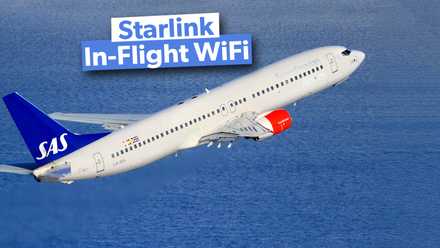
All The Airlines Installing Starlink WiFi & How Soon They’ll Go Live
Some aircraft already have the system up and running.
The Low-Cost Feud

Interestingly, budget giants like Ryanair or Spirit Airlines have not joined the race to install high-speed satellite terminals. Passengers on a three-hour flight across Europe or the United States would certainly value the ability to stream content, but the economic reality for an ultra-low-cost carrier (ULCC) is starkly different from that of a premium legacy airline. For a business model predicated on the thinnest possible margins, any addition to the aircraft that increases weight or drag is viewed with extreme skepticism. For many of these carriers, the capital expenditure required for a fleet-wide rollout simply does not align with their no-frills philosophy.
The deterrents for these budget operators are a combination of installation costs and long-term operational penalties, as mentioned previously. The costs and added weight when multiplied across a fleet of 500 aircraft flying multiple sectors a day are massive, and the cumulative increase in fuel consumption becomes a multi-million-dollar annual expense. Michael O’Leary, the CEO of Ryanair, has been vocal about his refusal to pass these costs on to passengers, arguing that the majority of travelers would prefer a €20 ticket to a €30 ticket with free WiFi.
This divide highlights a structural split in the aviation industry regarding the value of a connected cabin. For a legacy carrier, Starlink is a tool for customer retention; for a ULCC, it is an unnecessary weight penalty that threatens the low-fare promise. Realistically, until the hardware becomes significantly lighter, perhaps moving toward flat-panel antennas integrated directly into the fuselage skin, the world’s biggest budget airlines will likely remain offline. The exception may come from middle-ground carriers like JetBlue, which has committed to Amazon’s Project Kuiper starting in 2027, betting that the demographics of its passenger base justify the added drag and weight of the satellite dish.
No More Dark Spots

The dark spots of global travel are rapidly disappearing as airlines gain the flexibility to patch together multiple networks. By leveraging innovations like HBCplus, a carrier can theoretically use Starlink for transoceanic flights and a regional provider for domestic legs, all while maintaining a seamless user interface for passengers. This flexibility also reduces the risk for airlines currently on the fence about investing in $300,000 USD antenna systems.
Knowing that the hardware is future-proofed against the next decade of satellite innovation makes the capital expenditure far more palatable for boardrooms concerned with long-term asset management. As the hardware becomes a standard factory-fit option, the cost of entry for high-speed WiFi will continue to drop, eventually making it a baseline expectation rather than a premium differentiator.
The competition in the LEO space is only set to intensify as Amazon’s Project Kuiper begins its full-scale commercial rollout in 2027. This rivalry between SpaceX and Amazon is expected to drive down bandwidth costs, potentially allowing even the most frugal ultra-low-cost carriers to reconsider their stance on in-flight internet. As aircraft become increasingly integrated nodes in a global data network, the focus will shift from simply getting online to how that connectivity can be used to personalize the travel experience through real-time baggage tracking, biometric processing, and instantaneous rebooking.