dailynewsnblog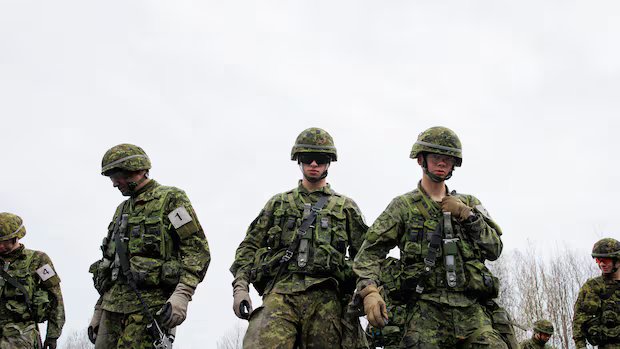

Listen to this article
Estimated 4 minutes
The audio version of this article is generated by AI-based technology. Mispronunciations can occur. We are working with our partners to continually review and improve the results.
A higher number of military recruits are failing to pass basic training since changes were implemented to boost enrolment, says a leaked report circulating within Canada’s defence community.
The 15-page internal evaluation report, dated Jan. 27, says the success rate dropped to 77 per cent in 2025, compared to 85 per cent the previous year.
On Thursday, defence officials verified the authenticity of the report by Lt.-Col. Marc Kieley, commandant of the Canadian Forces Leadership and Recruit School (CFLRS) in Saint-Jean-sur-Richelieu, Que.
Defence officials announced last week that the military had achieved the highest level of recruiting in three decades, and that the overall size of the Armed Forces had begun to grow modestly for the first time in several years.
They highlighted how the military beat its recruitment target, helped mostly by the enrolment of 1,400 permanent residents.
Kieley’s report, however, noted a series of problems including the number of new troops suffering from mental health conditions, notably anxiety, as well as cultural issues.
The proportion of candidates requiring multiple attempts to graduate from basic training jumped to 14.89 per cent, the report said. That’s far higher than the 8.44 per cent who required multiple attempts in 2024, and well above long-established annual rates.
Over the last few years, the federal government has sought to boost military recruiting by relaxing several policies related to pre-existing medical conditions, and has stopped doing aptitude tests.
The Defence Department also opened the door to recruiting more foreign nationals and newly arrived Canadians with permanent residency.
“The current CAF basic training model assumes that roughly 85 per cent of all candidates can be effectively trained to become CAF soldiers, sailors and aviators and officers, with the majority requiring only a single training course and a minority taking two or three attempts,” Kieley wrote.

The recruiting school delivers basic military qualification courses and basic military officer qualification training. The increase in the failure rate has “created significant friction” within the training school.
Juno News was the first to publish the evaluation report.
Kieley expressed concern about the “dramatic increase” in the number of applicants “presenting significant mental-health concerns,” including anxiety.
According to the report, 92 recruit candidates had to be sent to an outside hospital or clinic on multiple occasions.
“The local suicide crisis centre is typically filled to full capacity with CFLRS candidates,” Kieley wrote, adding that a number of the recruits aren’t disclosing their mental health challenges during the initial recruitment process.
He recommended the military keep a close eye on the enrolment of candidates with pre-existing medical conditions.
Some recruits ‘not yet acclimatized’ to Canadian society
Changes that allowed for the admission of permanent residents into the Forces also meant a higher number of training units with newly arrived immigrants.
“These initial platoons were also made up of candidates with as little as three months residency in Canada, leading to a significant culture shock as candidates had not yet acclimatized to Canadian society, let alone Canadian military culture,” Kiely wrote.
Those units had a higher failure rate, with one French-speaking unit graduating only 48 per cent of the class.
Permanent residents have “been a challenging demographic to train,” said the report.
The unit cited with the high failure rate was also beset with allegations of racism and infighting, such as recruits from Cameroon “against those from Côte d’Ivoire.”
Kieley also noted that in the officer training unit, some permanent residents struggled with the culture shock of being “expected to treat women as their peers.”