dailynewsnblog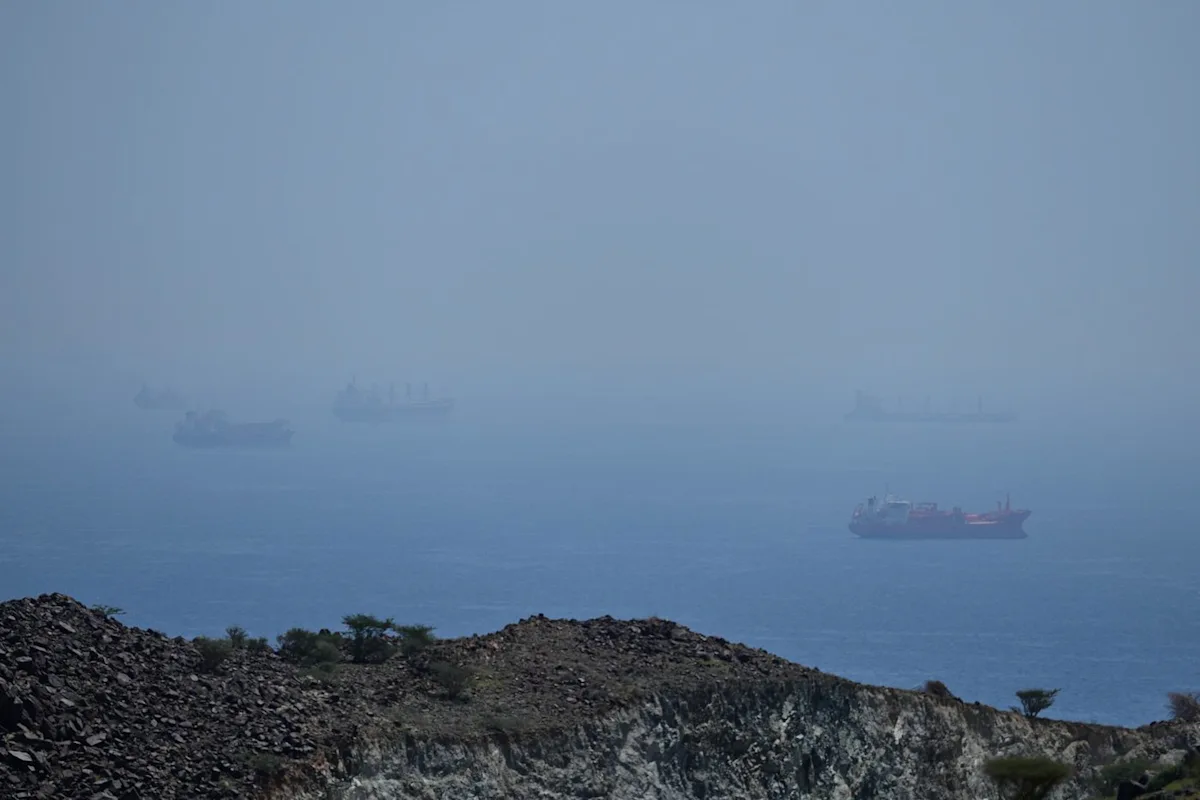
CALGARY — A closely watched global crude benchmark briefly touched its highest price since war erupted in the Middle East more than two months ago before retreating on Thursday, as a resolution to the supply squeeze in the Strait of Hormuz remains elusive.
Brent — the price benchmark tied to light, sweet, seaborne crude — for June delivery spiked above US$126 per barrel and then swiftly pulled back toward US$114. That monthly contract is only seeing light trading, with those for July delivery and onward showing a much higher trading volume and less volatility.
In the most actively traded part of the market for Brent, the contract for July delivery reached as high as US$114.70 per barrel overnight. It settled at US$110.40, nearly unchanged from the day before.
So far during the war, the peak price for the most actively traded Brent contract was US$119.50, set last month.
Brent’s price is still much more expensive than its roughly US$70 level prewar.
Thursday’s swings are likely a function of traders reacting to a report suggesting U.S. military operations against Iran could ratchet back up, said Al Salazar, head of macro research at Enverus.
U.S. news site Axios reported that President Donald Trump was to be briefed on a plan for a “short and powerful” wave of strikes on Iran, potentially targeting infrastructure.
“There hasn’t been any followup which is probably why it sold off,” said Salazar.
“A lot of people are taking bets on the price of oil, and if they are uncomfortable with the risk that’s presented to them — on the hints of a potential invasion, in this case — they have every incentive to make sure that they’re on the right side of that trade. So that compounds quite rapidly, and we get the volatility that we see.”
Further adding to the unpredictability is the fact that there is very little backup crude supply in the market to act as a cushion. In normal times, about 20 per cent of the world’s crude supply passes through the Strait of Hormuz, a narrow waterway connecting the Persian Gulf with the open sea.
Traffic has all but halted since late February, when the U.S. and Israel began their strikes on Iran. There’s been virtually no change in that situation despite the ceasefire announced three weeks ago.
“We all know that supplies are increasingly constrained so any hint of more damage or more supply off-line really makes traders and buyers of crude and products that much more risk averse,” Salazar said.
“Everybody’s on their toes right now for any potential of additional supply off-line. So small rumours of a ground invasion certainly can lead to the volatility that we saw over the past 24 hours.”