dailynewsnblog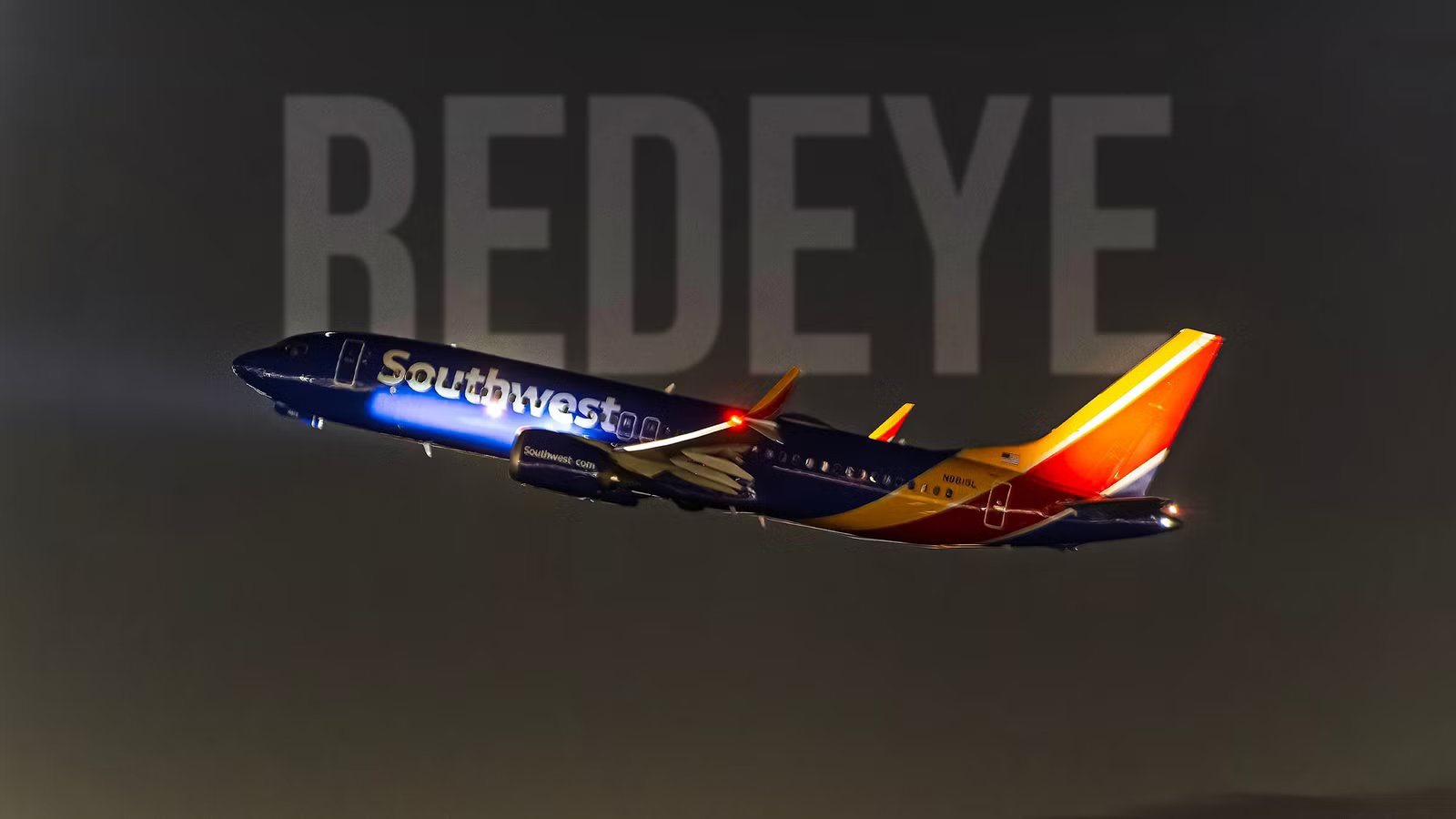
The expansion of overnight air travel in the United States reflects a broader shift in how airlines are optimizing both time and infrastructure. Historically, many carriers underutilized late-night hours due to limited passenger demand, operational complexity, and community noise restrictions. However, as competition intensifies and margins tighten, airlines are increasingly turning to redeye flights to maximize aircraft usage and unlock additional revenue without significantly increasing fleet size. This trend is particularly visible on long-haul domestic routes, where flying overnight allows passengers to save daytime hours while enabling airlines to operate continuous schedules.
Against this backdrop,  Southwest Airlines is undertaking one of the most ambitious redeye expansions in its history, targeting 53 daily overnight flights by October 2026. This move is not occurring in isolation; it is part of a broader operational transformation that includes changes to boarding processes, scheduling precision, and network design. The transition away from its long-standing open-seating model is central to making this expansion viable, reflecting a deeper alignment between customer experience, operational efficiency, and the logistical demands of overnight flying.
From Open Seating To Assigned Seats

For more than five decades, Southwest Airlines differentiated itself through a unique open-seating model in which passengers boarded in groups and selected any available seat. This system, while simple and cost-efficient in short-haul, high-frequency markets, became increasingly strained as the airline expanded into longer routes and more complex scheduling environments. The transition to assigned seating, effective for travel beginning January 27, 2026, marks one of the most significant operational changes in the airline’s history.
The scale of Southwest’s network makes this shift particularly consequential. By October 2026, the airline plans to operate 53 daily redeye flights system-wide, a dramatic increase compared to its historically minimal overnight presence. These flights include long transcontinental routes such as San Diego to Boston and new early-morning arrivals at key hubs. Managing such a schedule requires a level of predictability that open seating struggles to provide, especially when boarding efficiency becomes critical to maintaining tight turnaround windows.
Data from airline operations research consistently shows that boarding variability, not just average boarding time, drives delays. Open seating introduces variability because passenger behavior is less structured: seat searching, group coordination, and aisle congestion all fluctuate from flight to flight. Assigned seating reduces that variability, enabling airlines to plan schedules with tighter buffers. For a network adding dozens of overnight flights, that consistency becomes a prerequisite rather than a luxury.
The Operational Demands Of Redeye Flights

Redeye flights operate in one of the most constrained time windows in aviation. Departures often occur between 12:00 AM and 2:00 AM, with arrivals tightly clustered around early morning airport reopening times. For Southwest, new flights departing Los Angeles at 1:00 AM and Las Vegas at 1:25 AM are both scheduled to arrive at Dallas Love Field at exactly 6:00 AM, the precise minute the airport’s voluntary noise quiet period ends.
This level of precision leaves little margin for error. A delay of even 10–15 minutes during boarding can push arrival times into restricted windows or disrupt gate availability for subsequent departures. Unlike daytime operations, where delays can sometimes be absorbed or redistributed, overnight flights feed directly into the first wave of morning departures. That makes punctuality not just desirable but essential for maintaining the integrity of the entire day’s schedule.
Additionally, crew duty regulations impose strict limits on working hours, especially during overnight operations. If boarding delays push a flight past allowable duty limits, airlines may need to swap crews or cancel flights altogether, both costly outcomes. Assigned seating helps mitigate this risk by standardizing boarding times, reducing uncertainty, and allowing more precise alignment with crew scheduling constraints.
This Is Southwest’s New Busiest Airport: Is It Where You Think?
Interestingly enough, the carrier’s two busiest airports see plenty of flights between one another.
Boarding Efficiency: Variability Vs Speed

Southwest has long argued that its open-seating model enables faster boarding compared to traditional assigned seating. In ideal conditions, such as daytime flights with experienced travelers, this can be true. However, the key issue for redeye operations is not just average boarding speed but consistency. Studies in airline boarding processes show that variability can increase total delay costs more than slightly longer but predictable boarding times.
Passenger behavior on overnight flights differs significantly from daytime patterns. Travelers are often fatigued, less responsive to boarding instructions, and more likely to carry additional comfort items such as blankets and pillows. These factors increase the likelihood of aisle blockages and prolonged seat selection decisions. In an open-seating system, even a few indecisive passengers can create cascading delays that slow the entire boarding process.
Assigned seating eliminates the seat-selection phase. Passengers know their row and seat in advance, reducing hesitation and minimizing aisle congestion. While boarding may not always be faster in absolute terms, it becomes more uniform. For an airline operating 53 daily redeyes, even a reduction of 3–5 minutes in boarding variability per flight can translate into hours of recovered schedule reliability across the network.
Aircraft Utilization And Network Economics

Airlines generate revenue from aircraft only when they are in the air. Redeye flights allow carriers to extend aircraft utilization into overnight hours, effectively adding an extra “day” of flying without increasing fleet size. For Southwest, expanding to 53 daily redeye flights represents a significant boost in asset productivity, particularly on long-haul routes where aircraft would otherwise sit idle overnight.
However, this strategy only works if turnaround times remain tight. A typical redeye flight arriving at 6:00 AM must be turned around quickly to operate a morning departure, often within 30–45 minutes. Any delay in boarding or deplaning can compress this window, leading to missed departure slots and downstream disruptions. Assigned seating contributes to faster and more predictable boarding, which in turn supports these rapid turnarounds.
The financial implications are substantial. Even a single delayed aircraft can affect multiple subsequent flights, increasing operational costs through crew overtime, passenger compensation, and missed connections. By improving boarding consistency, Southwest reduces the likelihood of such disruptions. Over a network of dozens of overnight flights, these incremental gains can translate into millions of dollars in annual savings.
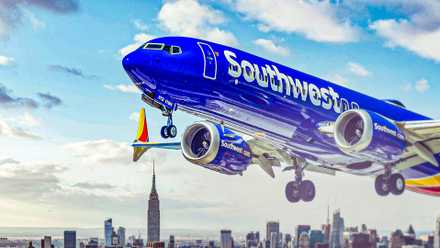
Broken Promises: How Southwest Is Impacted By Boeing 737 Delays
The carrier confirms it will not receive over 100 contracted deliveries from Boeing
Community Impact And Noise Constraints

The introduction of new redeye flights into Dallas Love Field (DAL) has sparked significant community concern. The airport’s Voluntary Noise Program requests that airlines avoid scheduling flights between 11:00 PM and 6:00 AM, a seven-hour window that has historically kept overnight commercial activity to a minimum. While not legally binding, compliance has generally been high, making Southwest’s decision to schedule arrivals at exactly 6:00 AM notable. By timing flights to land the moment the quiet period ends, the airline remains technically compliant while still expanding early-morning operations.
Aircraft noise data helps explain the pushback. A typical Boeing 737 on approach can generate roughly 85-95 decibels, and environmental studies show that noise above 70 decibels can disrupt sleep, particularly during pre-dawn hours when ambient noise levels are lower. Residents and advocacy groups argue that even precisely timed arrivals can be disruptive, especially if delays of 10–15 minutes push flights into the restricted window. This has fueled calls for a mandatory curfew and greater community oversight in the airport’s proposed 2040 lease agreement, highlighting the ongoing tension between operational efficiency and local quality of life.
Assigned seating plays an indirect but important role in this context. By reducing boarding-related delays, the airline can better ensure that flights depart and arrive within planned timeframes. This minimizes the risk of violating noise expectations and strengthens the airline’s position in regulatory discussions. In essence, operational precision becomes a tool not just for efficiency but for maintaining social and political license to operate.
Strategic Transformation And Competitive Positioning

Southwest’s move toward assigned seating reflects a broader strategic evolution. As the airline expands into longer routes, international markets, and more complex scheduling patterns, it increasingly resembles traditional network carriers. Redeye flights, once avoided by Southwest, are now a central component of its growth strategy, enabling it to compete more effectively on coast-to-coast and international routes.
The introduction of the airline’s first international redeye, from Las Vegas to Costa Rica, underscores this shift. Long-haul passengers often expect assigned seating, particularly for overnight travel where comfort and predictability are paramount. By aligning its product offering with these expectations, Southwest Airlines positions itself to attract a broader customer base beyond its traditional short-haul market. This is especially important on routes exceeding four to five hours, where passenger preference data consistently shows higher satisfaction when seat assignments are guaranteed in advance. It also brings the airline closer in line with industry norms, where virtually all major carriers offering international overnight service rely on assigned seating to manage both customer expectations and onboard logistics.
Ultimately, the decision to phase out open seating is less about abandoning a legacy feature and more about enabling future growth. Operating 53 daily redeye flights requires a level of operational discipline and predictability that open seating cannot easily provide. Assigned seating, combined with updated labor agreements and network planning, forms the foundation for Southwest’s next phase, one defined by efficiency, scalability, and increased competitiveness in a rapidly evolving aviation landscape.