dailynewsnblog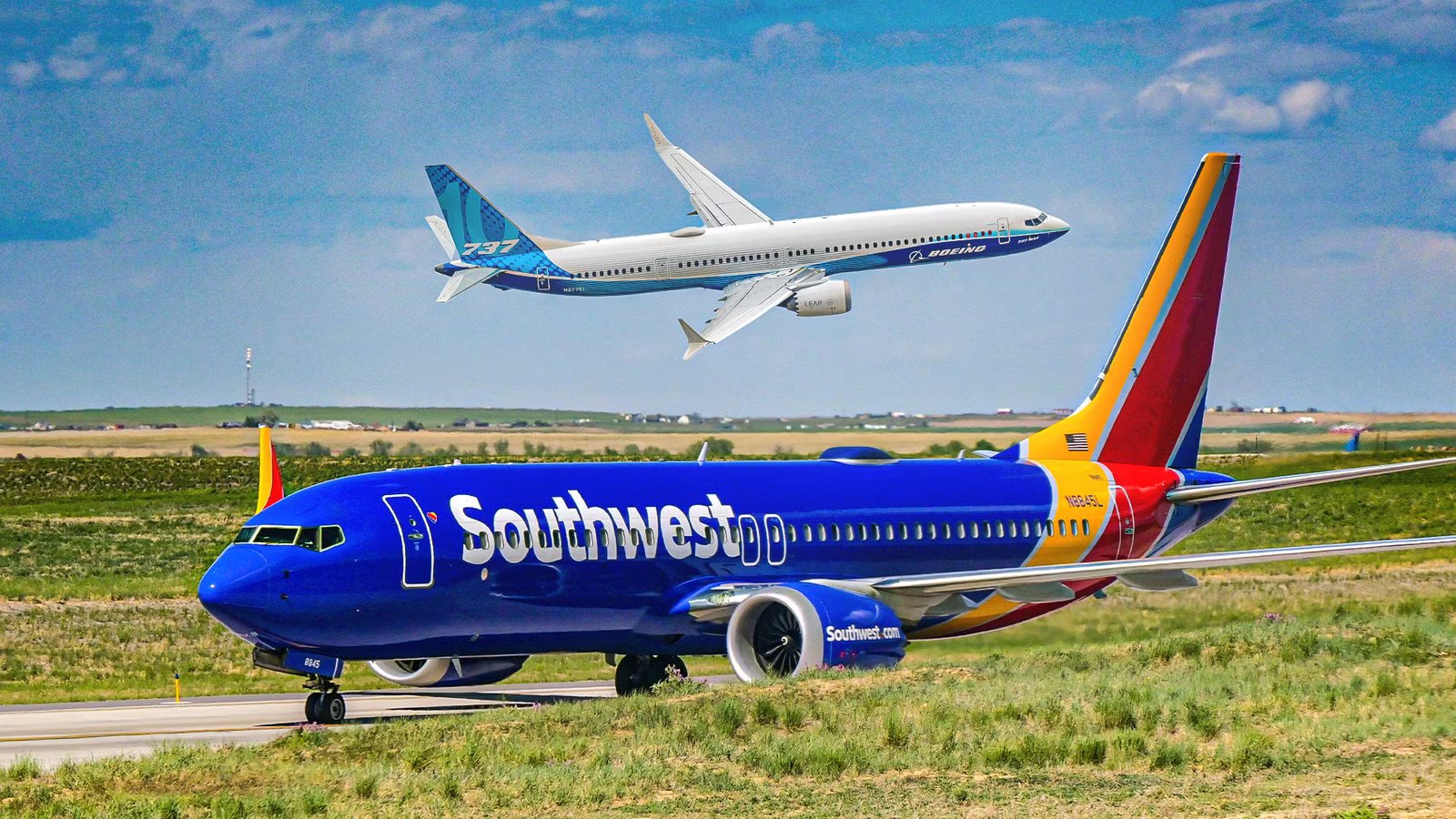
With certification of the 737 MAX 10 and 737 MAX 7 now both expected in 2026,  Boeing appears to be placing increasing emphasis on the larger MAX 10 over the smaller MAX 7. Earlier expectations had the MAX 7 reaching certification first, potentially as soon as this fall, with the MAX 10 following in early 2027. However, Boeing’s intensified push to bring its largest 737 variant to market has accelerated that timeline, leaving both aircraft on track for certification in the same year.
For  Southwest Airlines, a carrier that has built its entire business model around the 737, this shift creates significant challenges. The carrier has been counting on the MAX 7 as the long-term replacement for its aging 737-700 fleet, making continued delays especially disruptive. As Boeing devotes greater urgency to the MAX 10, Southwest is left waiting for the aircraft most critical to its own fleet modernization plans.
The Boeing 737 MAX 7 Vs. 737 MAX 10

Although both the MAX 7 and MAX 10 belong to the same family, the two aircraft serve very different roles in the market. The MAX 7 is the smallest variant in Boeing’s MAX lineup and is designed as a modern replacement for the aging 737-700, perfect for an airline like Southwest which already operates 289 of the type. According to Boeing, the 116-foot-8-inch (35.56 meters) MAX 7 will have a typical two-class seating capacity of 138 to 153 passengers. Additionally, the MAX 7 is expected to have the longest operational range of any MAX aircraft, with a range of 3,800 nautical miles (7,040 km).
The MAX 10, by contrast, sits at the opposite end of the spectrum. As the largest 737 variant ever built, the MAX 10 is designed to carry significantly more passengers and maximize revenue on high-demand routes. At 143 feet, 8 inches long, the MAX 10 will have a typical seating capacity of 188 to 204 passengers and a range of 3,100 nautical miles (5,740 km). The MAX 10’s size will put it above the 737-900ER and 737 MAX 9 in terms of size, bringing additional passenger capacity to Boeing’s successful narrowbody lineup.
The fundamental differences between the MAX 7 and MAX 10 are what drive each aircraft’s valuation. The MAX 7 is optimized for thinner markets, enabling routes that otherwise might not have been economically feasible with a 737 MAX 8 or had too much demand for a regional jet. The MAX 10, meanwhile, is all about scale, allowing airlines to increase capacity over legacy 737s on busy transcontinental routes in the US or shorter routes where operating a widebody would not make sense.
Over 4x Orders: Why The 737 MAX 10 Comes First For Boeing

With the MAX 7 and MAX 10 both nearing certification, Boeing is increasingly prioritizing the 737 MAX 10 over its smaller sibling, primarily due to the MAX 10’s giant order backlog. The 737 MAX 10 has accumulated over 1,400 orders compared to just over 300 for the MAX 7. That means the MAX 10 has over a four times advantage over the MAX 7 in terms of order volume, translating to higher revenue and customer satisfaction potential.
The revenue potential of the MAX 10 is significant because, in commercial aviation, orders alone do not generate income. Boeing receives most of its payments only when aircraft are handed over to customers, creating a financial incentive for the American manufacturer to prioritize the MAX 10 over the MAX 7. For Boeing, this means certifying the MAX 10 as quickly as possible, as even if the manufacturer were to enter the MAX 7 into service today, that would bring in much less revenue comparatively due to the aircraft’s smaller order book.
While both the MAX 7 and MAX 10 are integral parts of Boeing’s 737 MAX lineup, the scale of demand for the MAX 10 makes the aircraft more favorable to bring to market than the MAX 7. Airlines in the US, such as  United Airlines and
  Alaska Airlines, and globally have centered a significant portion of their future narrowbody fleets around the MAX 10, an aircraft already six-plus years delayed. By prioritizing the MAX 10, Boeing can minimize any further delay and allow its airline customers to begin building around it.

737 MAX 10 Solution: Boeing’s Bold Move To Get Its Largest Narrowbody Certified
The American planemaker is on course to the finish line.
Competing With Airbus & The A321neo

Another crucial factor in Boeing’s focus on the MAX 10 is driven by its competition with Airbus and the A321neo. The plane has proven to be the aircraft of choice for airlines seeking a narrowbody aircraft with additional capacity and performance. The A321neo’s ability to serve high-demand routes efficiently has allowed Airbus to capture a commanding position in this segment of the market, with the A321neo contributing significantly to the A320 family overtaking the 737 for the title of most popular narrowbody aircraft.
The 737 MAX 10 is Boeing’s answer to the A321neo, at least in the short- to medium-haul market. On the outside, the MAX 10 and A321neo are both very similar aircraft. Both the A321neo and 737 MAX 10 have similar passenger capacities of around 180 to 200 passengers in a 3-3 configuration. However, the A321neo notably has options to significantly increase the range to around 4,000 nautical miles (7,400 km) with auxiliary fuel tanks, something not available on the 737 MAX 10.
|
Category |
737 MAX 10 |
Airbus A321neo |
|---|---|---|
|
Seating |
188-204 |
180-220 |
|
Range |
3,100 nautical miles (5,740 km) |
4,000 nautical miles (7,400 km) |
|
Length |
143 feet, 8 inches (43.8 meters) |
146 feet (44.51 meters) |
|
Wingspan |
117 feet, 10 inches (35.9 meters) |
117 feet, 5 inches (35.8 meters) |
|
Engine |
CFM LEAP-1B |
CFM LEAP-1A |
With the MAX 10 delayed by multiple years, airlines looking for an immediate solution in the short- to medium-haul market have increasingly chosen to sign with Airbus for their narrowbody fleet renewal rather than wait for Boeing. With each year that passes without MAX 10 certification, Airbus stands to strengthen its dominance even further, making MAX 10 certification a must for Boeing.
Southwest’s Peculiar Position With 90% Of All MAX 7 Orders

For Southwest Airlines, Boeing’s prioritization on the MAX 10 spells trouble for the airline. While countless airlines around the world will immediately benefit from MAX 10 certification, Southwest is in an unusual position as the main customer for Boeing’s 737 MAX 7. With approximately 90% of all MAX 7 orders, without Southwest, the MAX 7 program might not even exist.
According to Southwest’s latest annual report filed with the SEC, Boeing was expected to deliver 101 737 MAX 7 and 66 737 MAX 8 aircraft to the Dallas-based airline in 2026 alone. That total also includes 81 undelivered aircraft originally scheduled for 2024 and 2025, underscoring how delays have already cascaded into future years. With 672 firm orders split between the MAX 7 and MAX 8, Southwest is one of Boeing’s largest 737 customers and is completely reliant on Boeing to keep its fleet renewal and growth plans on track.
The MAX 7 is especially important because it is the aircraft Southwest needs most. While the airline has already modernized part of its fleet through deliveries of more than 300 MAX 8 aircraft, the smaller MAX 7 is the model intended to replace large numbers of aging 737-700s that still form a major part of Southwest’s network, an aircraft that Southwest has also slowly started retiring from its fleet. For Boeing, however, the far greater global demand for the MAX 10 means that the program naturally carries greater urgency, even if it leaves one of its most loyal customers waiting longer than expected.

Broken Promises: How Southwest Is Impacted By Boeing 737 Delays
The carrier confirms it will not receive over 100 contracted deliveries from Boeing
What The 737 MAX 7 Will Actually Do For Southwest

For Southwest, the Boeing 737-700 has been a critical part of the airline’s fleet for decades. The -700’s smaller size enabled Southwest to operate high-frequency service on thinner routes, all while maintaining profitability without the overcapacity issue. Moving forward, this role will be filled by the MAX 7, bringing improved operating economics and efficiency to the legacy 737-700 platform.
Currently, Southwest’s 737-700s are equipped with 137 economy seats, including six rows of extra legroom seats at the front of the aircraft in addition to the exit row. Seating on the MAX 7 is expected to stay the same, with around 137 seats in total, allowing for a direct replacement on most routes. However, the MAX 7 also offers significant improvements in range, increasing by up to 800 nautical miles (1,480 km) compared to the legacy 737-700. All of this is done with around a 20% reduction in fuel costs per seat, thanks to the MAX family’s improved aerodynamics and fuel efficient LEAP-1B engines.
These improvements are crucial for Southwest’s business model. Lower fuel costs translate directly to higher profitability, and the increased range opens up new route possibilities, including potentially flights to Europe. At the same time, maintaining smaller aircraft ensures that Southwest can continue serving less-dense markets effectively. However, without the MAX 7, Southwest would be forced to continue relying on the 737-700 or deploy the MAX 8 on routes where it may not make economic sense.
Certification Timelines: When Will The New MAX Variants Enter Service?

With Southwest’s huge commitment to the MAX 7, the airline and Boeing are both hopeful for MAX 7 certification later this year. Additionally, Boeing expects the MAX 10 to also receive certification in 2026, marking a significant shift from earlier timelines that had the MAX 7 entering service this year followed by the MAX 10 in 2027. Boeing confirmed in its latest quarterly update that it expects certification for both variants during 2026, with first customer deliveries beginning in 2027.
One of the biggest factors behind the prolonged delays has been the engine anti-ice system. Boeing has spent years working through the technical fix and the corresponding regulatory review, all while maintaining heightened scrutiny of its manufacturing programs following quality-control issuesin 2024. Recent reports indicate that Boeing has entered the final phases of flight testing, also known as the Type Inspection Authorization 2 phase, suggesting that both variants are finally moving closer to the finish line and entry into commercial service.
MAX 7 and MAX 10 certification, possibly this year, is good news for both Southwest and other global carriers. For Southwest specifically, as the main customer for the MAX 7, the airline expects deliveries to begin rapidly after certification, with nearly every aircraft rolling off the production line delivered to the airline. If Boeing meets its current target, Southwest may finally begin receiving the aircraft it has waited years for in 2027, but until certification is complete, some uncertainty remains.