dailynewsnblog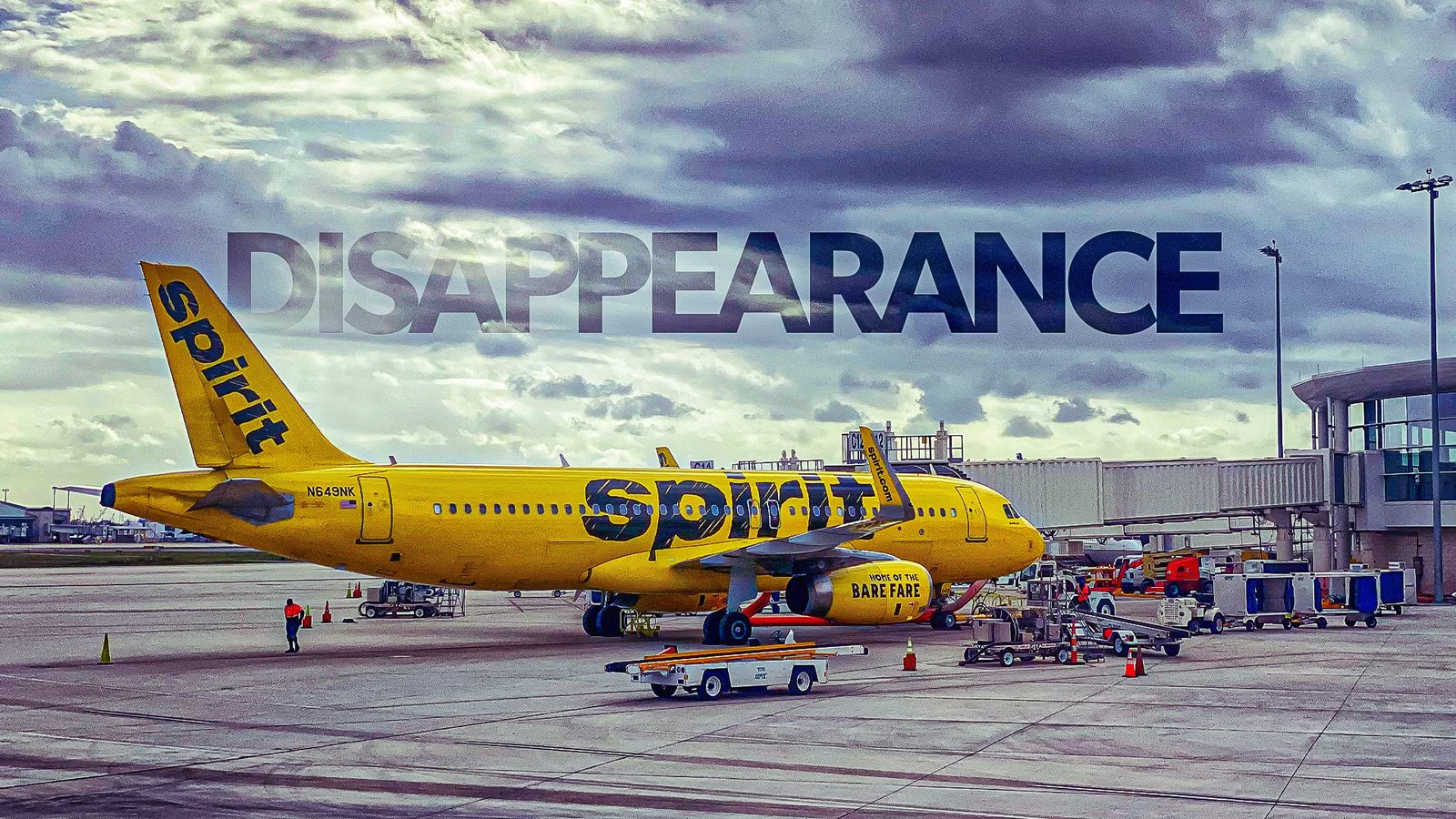
The disappearance of Spirit Airlines from the world of commercial aviation would matter significantly beyond just the set of routes where its yellow Airbus A320 family models actually operate. The airline’s crisis has escalated from a difficult restructuring into a broader competitive warning for the entire US airline market. If the country’s most recognizable ultra-low-cost carrier collapses, travelers would lose one of the strongest downward pressures on fares.
Spirit Airlines is now pursuing federal financing while trying to survive a second bankruptcy process, with analysts reporting that the Trump Administration has discussed a $500 million financial rescue package as the airline currently faces a severe cash squeeze. The company has also confirmed plans to shrink dramatically, targeting only 76-80 aircraft by the third quarter of 2026. The core issue here is not just that seats are being lost. Rather, it is that Spirit’s business model has long shaped how bigger airlines price their own networks.
When Spirit Airlines enters the sector, legacy carriers often respond with lower basic economy fares. When Spirit threatens to enter, they may attempt to price defensively before Spirit ever even arrives. That means its liquidation could raise fares across the entire network, even on routes where Spirit has never served.
This is primarily because the credible threat of ultra-low-cost industry competition would weaken significantly. For budget travelers, the loss would be structural, with significantly fewer low-fare benchmarks, less pressure on incumbents, and more pricing power for airlines that manage to survive.
What Has Led Spirit To Be In Financial Trouble In The First Place?

Spirit Airlines’ financial crisis did not simply begin with one bad fuel shock. Rather, the fuel spike already exposed how little room the airline had left to err. The carrier’s ultra-low-cost model, one which once sat at the cutting edge of American aviation business strategy, depended on packing planes with highly price-sensitive leisure travelers, charging low base fares, and making up revenue through significantly higher fees. That worked better before the pandemic, but Spirit never fully regained financial strength afterward.
Instead, it faced weaker demand from budget travelers, higher labor costs, aircraft groundings tied directly to engine problems, and heavier competition from legacy carriers that copied parts of the model through basic economy fares. Another important component to keep in mind here is failed merger activity. Spirit had looked to consolidation as a way out of its financial troubles, but the airline came under intense stress once that deal was blocked, and the company was left trying to restructure as a standalone airline with very limited pricing power.
The Low-Cost Airline Industry As A Whole Has Struggled

The Spirit Airlines network today is no longer the sprawling ultra-low-cost growth machine that it was before bankruptcy. The carrier is being completely rebuilt around a much smaller footprint, with Spirit itself saying that it intends to rightsize just around 76 to 80 aircraft by the time that the third quarter of 2026 comes around, primarily when it comes to Airbus A320 and A321ceo jets. This is a dramatic retreat from the 214 aircraft the airline had in its fleet when it entered its second Chapter 11 case in 2025.
It also means that the airline will only be required to operate a smaller number of routes, fewer frequencies, and a sharper focus on cities that actually still manage to produce cash. From an operational perspective, Spirit remains most important in leisure-heavy, price-sensitive routes such as Florida, the Caribbean, Las Vegas, and other major coastal airports. Nonetheless, the airline’s shrinking presence has already invited competitors to move in, especially at Fort Lauderdale, where Frontier and JetBlue have been adding pressure as Spirit pulls back its network.
That contradiction also reflects a broader problem that exists across the low-cost sector as a whole. Fuel spikes hurt every airline, but they are especially damaging for carriers with customer bases that are price-sensitive, as it makes them the least able to absorb fare increases. At the same time, legacy airlines have used basic economy ticket prices to blunt the ULCC advantage, while higher labor and aircraft costs have made the old profitability formula much harder to sustain.

Spirit To Shrink Fleet By Nearly 100 Planes In Effort To Become Smaller, Stronger Airline
More trouble at Spirit Airlines as the airline will now cut its fleet size by almost half.
Which Airlines Would Benefit Most From Spirit Leaving The Market?

The clearest overall winner from a Spirit Airlines market exit would likely be Frontier Airlines, because it is the closest strategic substitute. After all, it is an ultra-low-cost carrier with a similar leisure-heavy customer base, Airbus fleet, and fee-driven model is likely to succeed if a primary competitor leaves the industry. If Spirit disappears, Frontier would be the most natural airline to absorb price-sensitive travelers who still want the cheapest possible fare, especially in Florida, Las Vegas, Orlando, and other transcontinental leisure markets.
JetBlue is also well-positioned, especially at Fort Lauderdale, where Spirit has historically been a dominant player. As Spirit has shrunk, JetBlue has already increased its relative presence there, making it one of the most obvious immediate beneficiaries of gate availability, displaced passengers, and weakened low-fare competition. As noted, Spirit’s own restructuring plan calls for a fleet reduction to just 76-80 aircraft by the third quarter of 2026, which leaves significant capacity for other operators to directly chase.
Legacy carriers like United, Delta, and American may benefit indirectly. They are less likely to directly recreate Spirit’s lowest fares, but they could gain pricing power on routes where Spirit previously forced basic economy discounts. Southwest could also selectively benefit in some leisure markets, although its higher cost structure makes it a direct replacement, while smaller carriers like Breeze, Avelo, and Allegiant could pick up niche opportunities.
Why Does Low-Cost Competition Benefit Passengers?

The introduction of low-cost competition to a market benefits passengers because it forces the entire market to behave fundamentally differently. Carriers like Spirit Airlines not only offer cheap tickets themselves, but they also pressure larger carriers to defend their overall market share. When an ultra-low-cost carrier enters a route, legacy airlines often respond with lower prices, basic economy products, fare sales, or more aggressive pricing across the board.
Even travelers who never book Spirit can benefit because American, Delta, United, JetBlue, or Southwest may cut prices to avoid losing budget-conscious customers. The benefit is especially important in concentrated markets where only two or three major airlines dominate service. Without a low-cost challenger, those carriers have more freedom to keep ticket costs elevated, reduce promotional pricing, or focus on higher-margin passengers.
Spirit’s presence has historically acted as a kind of price ceiling. Although the airline’s offering is uncomfortable, bare-bones, and fee-heavy, it remains extremely useful as a competitive benchmark. Low-cost airlines also expand the industry by making air travel possible for people who might otherwise drive, take a bus, delay a trip, or not travel at all. Their booking discipline bounds the industry from below. That is why Spirit’s potential exit is such a big deal for passengers: it would remove the competitive pressure that keeps airfares lower on average.

Why Spirit Airlines Really Doesn’t Want To Join Forces With Frontier
The carrier will go it alone and expects its reorganization plan to be done this year.
Why Have Mergers Been Blocked?

Airline mergers have been blocked on competitive grounds primarily because regulators and courts have focused significantly less on national market share and much more on what happens on a route-by-route basis. In the case of JetBlue and Spirit, the concern was that JetBlue would fully eliminate Spirit, the largest ultra-low-cost carrier in the nation.
The Justice Department convincingly argued that this would reduce passenger choice and raise prices, especially for those who rely on Spirit’s cheapest tickets. A federal court agreed and blocked the $3.8 billion deal in January 2024. The American-JetBlue Northeast Alliance was challenged for similar reasons, according to government documents.
Even without a full merger, the court found that the partnership reduced direct competition in Boston and New York by allowing the airlines to coordinate schedules and share revenue. The broader legal logic is simple. With fewer players in the industry, there will be less fare pressure, less capacity discipline, and fewer options for travelers.
Walking A Very Thin Line

At the end of the day, Spirit Airlines’ financial struggles have put regulators in a very tricky situation. They have made moves to block mergers directly, primarily because they would reduce competition and choices for passengers. There is some truth in this argument, but it is also important to note that Spirit Airlines is a struggling company. The airline has far too much leverage on its balance sheet for it to comfortably generate profits and survive in an industry that is extremely cyclical and highly subject to fluctuations in the macroeconomy.
This means that regulators are put in the difficult position of trying to support Spirit, because its elimination would be bad for passengers, especially those who travel on tighter budgets. This has led the Trump government, a historically anti-bailout and anti-regulation administration, to consider stepping in to save Spirit.