dailynewsnblog
Boeing 737 MAX into that of the Airbus A320neo is not just a change of aircraft: it represents a transition between two fundamentally different eras and philosophies of aviation design. Although both aircraft entered service in the 21st century, the A320neo in 2016 and the 737 MAX in 2017, their underlying DNA reflects very different starting points. The A320 family was originally conceived in the 1980s as the world’s first fully digital fly-by-wire narrow-body airliner.
At the same time, the 737 traces its origins back to 1965, making it one of the longest continuously produced commercial aircraft families in history. For pilots, these differences are not abstract: they are immediately tangible. The 737 MAX typically cruises at around Mach 0.79 with a range of roughly 3,550 nautical miles (6,575 km) for the MAX 8. In contrast, the A320neo cruises at about Mach 0.78 with a comparable range of around 3,400–3,700 nautical miles (6,300–6,850 km) depending on configuration.
Both aircraft carry between 150 and 180 passengers in standard layouts, yet the experience of flying them differs dramatically. From cockpit ergonomics and control inputs to automation philosophy and system integration, transitioning pilots must adjust not just their procedures, but their instincts and expectations about how the aircraft behaves.
Cockpit Space And Design
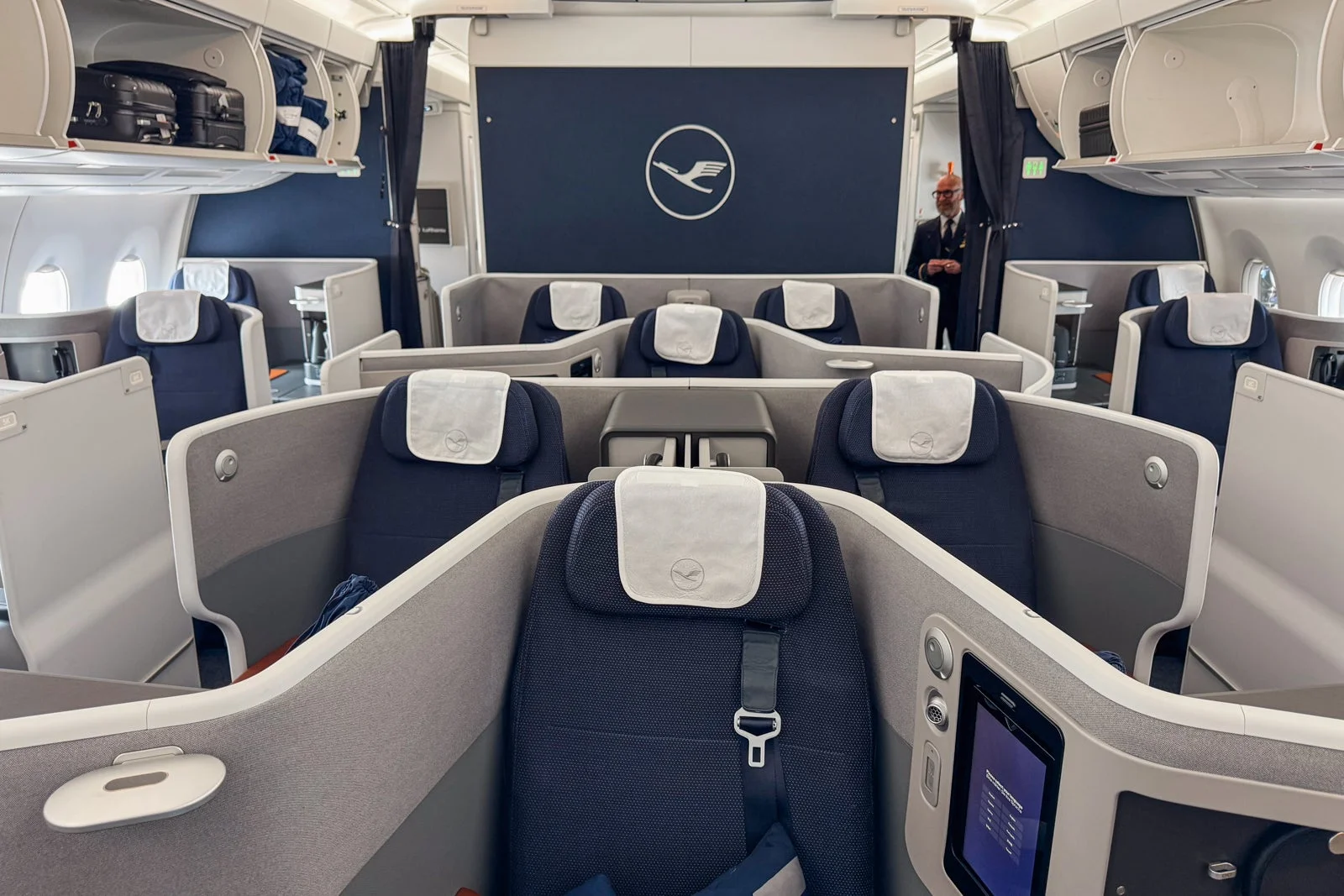
One of the most immediately noticeable differences lies in cockpit space and layout. The A320neo’s cockpit width is approximately 12 feet and one inch (3.7 meters), benefiting from a wider fuselage cross-section designed specifically for digital avionics and side-mounted controls. This results in more shoulder room, larger instrument panels, and a generally less cramped working environment.
By comparison, the 737 MAX cockpit retains a narrower fuselage cross-section of about 11 feet and seven inches (3.54 meters). While Boeing has modernized the cockpit with four large-format displays, measuring around 15.1 inches (38.4 cm) diagonally on newer variants, the physical space between pilots remains tighter. This is particularly noticeable during long-duty days and high-frequency short-haul operations.
The difference in design philosophy becomes evident in panel layout as well. Airbus uses a more centralized, screen-focused interface with six primary LCDs, while Boeing’s layout reflects incremental upgrades layered onto an older architecture. For pilots, this translates into differences in scan patterns, situational awareness, and even fatigue levels over time.
Control Interface: Yoke Vs Sidestick
The control interface is perhaps the most iconic distinction between these jets. The 737 MAX uses a conventional control yoke, mechanically linked (via cables and pulleys, with hydraulic assistance) to the control surfaces. This system provides force feedback, allowing pilots to feel aerodynamic loads and resistance, which many describe as intuitive.
The A320neo, by contrast, uses a sidestick controller with a maximum deflection of about 16 degrees laterally and 20 degrees longitudinally. Instead of moving control surfaces directly, the sidestick sends electrical signals to flight control computers, which interpret and execute commands.
A critical difference is that Airbus sidesticks are not mechanically linked. This means one pilot cannot physically feel the other’s input. Instead, priority is controlled electronically, with override logic and warning tones. For pilots used to the 737, this lack of tactile cross-feedback can be one of the most challenging adjustments early in training.

How Much Does The Airbus A320neo Cost In 2026?
This is how much an A320neo costs in 2026.
Fly-By-Wire Vs Conventional Controls

The Airbus A320neo uses a fully digital fly-by-wire control system in which pilot inputs are converted into electrical signals and sent to a network of flight control computers. These computers, arranged in multiple redundant channels, interpret the input and command hydraulic actuators at the control surfaces. The aircraft has three independent hydraulic systems (Green, Blue, and Yellow), each operating at around 3,000 psi (20.7 MPa), which power the ailerons, elevators, rudder, and other flight controls.
Rather than moving surfaces directly, the pilot’s input is processed, filtered, and then executed by the system, ensuring smooth, coordinated control movements even in turbulent or high-workload conditions. Meanwhile, the Boeing 737 MAX retains a more traditional control architecture. Pilot inputs are transmitted mechanically through cables, pulleys, and linkages, and then assisted by hydraulic power control units to move the control surfaces.
The aircraft uses dual main hydraulic systems (System A and System B), also operating at approximately 3,000 psi (20.7 MPa), to provide the force needed to move primary flight controls. Because of this direct linkage, there is a continuous physical relationship between pilot input and surface movement, even though hydraulic pressure does most of the heavy lifting.
These underlying systems create fundamentally different control behaviors. In the Airbus A320neo, the computers act as intermediaries, continuously adjusting and optimizing control surface movements based on pilot input and aircraft state, which results in smoother and more standardized responses. In the Boeing 737 MAX, the pilot’s input is more directly transmitted, with hydraulics simply amplifying the force required, leading to a more immediate and tactile connection between the controls and the aircraft’s motion.
Automation Philosophy

Airbus and Boeing diverge most clearly in how automation governs the aircraft at the edges of the flight envelope. In the A320neo, this is defined through a hierarchy of control laws. Normal Law provides full flight envelope protection, preventing stalls, overspeeds, and excessive bank or pitch. If certain failures occur, the system degrades into Alternate Law, where some protections, such as stall protection, are reduced or replaced with warnings.
In more severe cases, it reverts to Direct Law, where pilot inputs correspond much more closely to control surface movement, with minimal computer intervention. This layered approach ensures the aircraft remains controllable in all situations, while progressively handing more responsibility back to the pilot as system capability decreases. In the 737 MAX, however, there is no equivalent system of ‘laws.’ The aircraft maintains a consistent control philosophy regardless of failures, with pilots retaining direct authority throughout.
Protections exist in the form of alerts and augmentation systems, such as a stick shaker for stall warning or speed trim for stability, but these do not impose hard limits on pilot input. Even in abnormal conditions, the relationship between pilot command and aircraft response remains largely unchanged, which simplifies the mental model but places greater responsibility on the crew to recognize and correct unsafe situations.
In practical terms, this means Airbus pilots operate within a system that actively keeps the aircraft inside safe aerodynamic boundaries under normal conditions, only losing those protections in degraded modes. Boeing pilots, by contrast, always operate with full authority, relying on training, awareness, and procedural discipline to stay within limits. Both approaches meet rigorous certification standards, but they shape pilot behavior differently.

The Striking Differences Between The Airbus A321XLR & Boeing 737 MAX 10
The Airbus A321XLR and Boeing 737 MAX 10 represent the pinnacle of evolution in the aviation industry, pushing narrowbodies to their absolute limits.
Systems And Alerts: ECAM Vs Traditional Workflow

The A320neo features the Electronic Centralized Aircraft Monitor (ECAM), which continuously tracks thousands of system parameters across engines, hydraulics, electrics, and environmental systems. When a fault occurs, ECAM not only displays the problem but automatically generates a prioritized, step-by-step procedure on the lower display. As pilots carry out each action, completed items disappear in real time, allowing crews to focus only on what remains.
It also consolidates related warnings, prevents redundant actions, and can even inhibit less critical alerts during high-workload phases like takeoff and landing. In the 737 MAX, the alerting philosophy is more traditional. The aircraft provides clear warnings through the Engine Indication and Crew Alerting System-style displays, master caution lights, and aural alerts, but it does not automatically walk pilots through full procedures.
Instead, crews identify the issue and then reference the Quick Reference Handbook, either in paper or electronic form, to carry out the appropriate checklist. This requires deliberate cross-checking, confirmation, and crew coordination at each step.
Studies in aviation human factors suggest integrated systems like ECAM can reduce pilot workload significantly, particularly in high-stress or time-critical scenarios, by removing the need to search for and manage checklists manually. However, Boeing’s approach keeps pilots more directly involved in diagnosing and resolving issues, reinforcing system knowledge and procedural discipline. As a result, Airbus crews tend to focus more on system monitoring and execution, while Boeing crews remain more actively engaged in the full decision-making process.
Handling And Flight Feel

Handling characteristics differ in ways that pilots quickly notice. The 737 MAX has a wingspan of 117 feet and ten inches (35.9 meters) and uses split-tip winglets to improve aerodynamic efficiency. Its control feel changes with speed and configuration, providing continuous feedback about the aircraft’s aerodynamic state.
The A320neo, with a wingspan of 117 feet and five inches (35.8 meters) and sharklet wingtip devices, delivers a more consistent response due to fly-by-wire control laws. The relationship between sidestick input and aircraft behavior remains largely stable across the flight envelope.
This consistency reduces workload but can feel less tactile. Some pilots prefer the ‘connected’ feel of the Boeing, while others favor the stability and predictability of the Airbus. Both aircraft are certified to handle crosswinds of up to around 35 knots (40 mph / 65 km/h) and operate in temperatures ranging from approximately -40°F to +122°F (-40°C to +50°C).