dailynewsnblog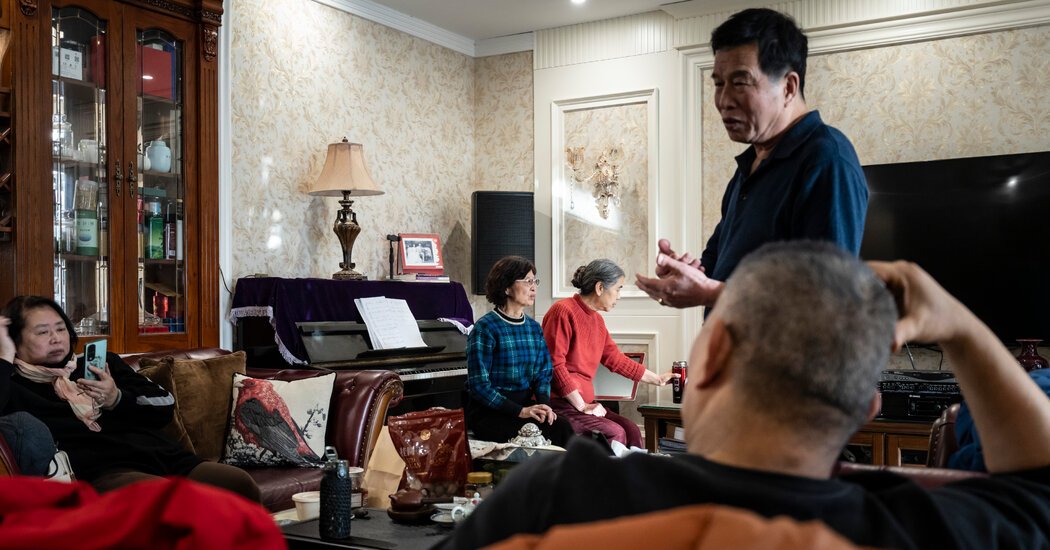
The drum team arrived late to the rally, its members wearing bright red costumes as they spilled out of a minivan. Other attendees were already dancing to music blaring from a nearby speaker or chanting the name of their favored candidate.
It had all the hallmarks of a rollicking election campaign. But the dozens of people who had gathered on a winter morning in January, about two hours northwest of Beijing, were not there to support a politician. This was about their homeowners’ association.
In the United States, homeowners’ associations are mostly known as the often reviled organizations that tell homeowners where they can park or how long they can keep up their Christmas lights. But for these Chinese homeowners, their group has become a tiny-scale experiment in grassroots organizing, aimed at winning control over their gated community, Lafite Waterfront.
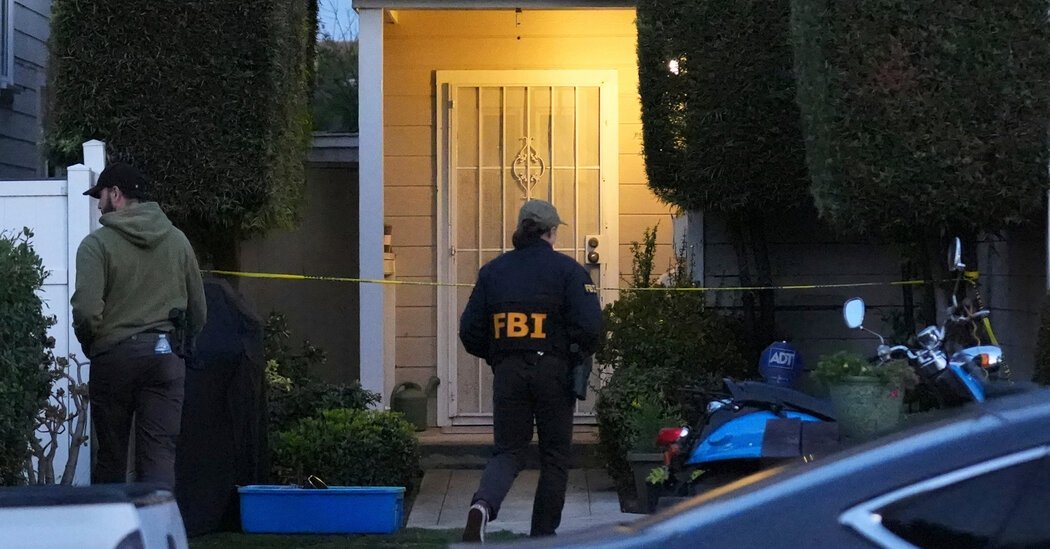
Even organizing around something as mundane as property management carries risks in China, where collective action is tightly monitored. Police officers and security guards stood nearby, watching closely. At one point, the police took away one homeowner.
The owners have signed petitions, canvassed neighbors, drafted bylaws and held elections for the group’s leadership. They have rallied and protested to challenge what they see as violations of their rights.
“The law empowers homeowners to take control,” a slogan on one flag declared.
The owners’ original goal was hardly political. They were frustrated that the company that managed their compound of about 2,000 houses had done little to improve security after a spate of burglaries.
But when the homeowners tried to hire a different company, the original one, which is run by the developer, refused to leave. Appeals to the local government for help were largely rebuffed.
The members have grown only more determined. On the day of the rally, in January, when they were trying again to force out the old company, dozens of them had driven from Beijing before sunrise. (Many of the largely affluent owners use their houses in the compound as second homes.)
Liu Xinzhong, 76, was one. A retired executive at a state-owned company, Mr. Liu said he had originally joined the group to protect the value of his property, and because he admired the other owners’ enthusiasm.
“Then, as I got more involved, I also grew more resentful toward the abuses of law,” he said, armed for the cold with a fuzzy cap and a thermos.
The homeowners’ battle is one example of how some Chinese are still standing up for their interests, even as their government has tried to snuff out independent organizing.
New homeowners’ associations have been established across China in recent years, especially since the coronavirus pandemic, when local governments locked many urban residents in their neighborhoods for long stretches. Suddenly, many residents realized the importance of having control over their homes.
After Burglaries, Residents Organize
The summer of 2021 had been tranquil in Lafite Waterfront, an upscale neighborhood styled after a French estate. The owners dined at the Seine River Restaurant and strolled past a golden statue of Napoleon.
Then, that September, 15 houses were burgled. When the owners demanded accountability from the property management company, which oversees security, they discovered that many of the neighborhood’s surveillance cameras did not work.
About a dozen owners formed a group chat to discuss what to do. They decided they needed an association.
“By yourself, you’re weak. Together, you’re powerful,” said Zhan Gui, 73, a retired financial worker who was part of the early discussions.
Homeowners’ associations are a relatively new phenomenon in China. After the ruling Communist Party began allowing private property ownership in the 1990s, disputes between homeowners and developers grew, and owners started banding together. The government formally recognized such groups in 2003, giving them the right to elect leaders and make decisions about their neighborhoods.
The government is usually wary of independent groups, but it did not have the resources to handle a ballooning number of low-level property disputes, said Shitong Qiao, a law professor at Duke University who wrote a book about Chinese homeowners’ associations.
For some Chinese, homeowners’ groups were their first experience in self-governance, Professor Qiao said. “Many Chinese are not familiar with democratic practice: Sit down, talk, negotiate and vote.”
But the authorities also tried to control the groups, emphasizing that they should be made up largely of party members and at times pushing handpicked candidates. The party is trying to “have its cake and eat it too,” Professor Qiao said.
In Lafite, the owners quickly got to work.
They collected signatures in support of the association. Mr. Liu, the retired executive, posted videos on social media to gin up excitement. Thirteen candidates ran for the seven-person board, promising better trash disposal and greater financial transparency for their management fees.
Ms. Zhan, the retired financial worker, did not run but spent hours every day coordinating a residents’ group chat, in which she fielded questions and complaints — about a promised swimming pool that had never materialized, fallen siding that was never repaired and pipes that frequently burst in the winter.
“All our hard-earned retirement money is here,” she said.
More than 1,600 owners eventually voted to establish the association.
The Party Intervenes
At first, the officials at Guanting Town, where Lafite is, refused to accept the association’s registration. They eventually gave in but later tried to revoke it, accusing the group of trying to operate too independently.
“Any form of homeowner self-governance must be under the guidance and supervision of the party and government,” the government said in a letter.
In 2023, some of the owners visited the county offices to protest the interference. Several, including Mr. Liu, were detained by the police and accused of disrupting public order.
Mr. Liu said he was held for six hours. The officers said the protest was illegal and pressed him to blame the association, he said. He insisted that the owners were acting of their own volition and was eventually let go.
In China, many local governments have close ties with property developers, to whom they lease land for revenue. The Lafite homeowners’ association, on its social media page, has accused the government of colluding with the developer.
The New York Times could not independently verify those allegations.
The town government has said that it supports the owners’ right to self-governance. “However, it is necessary to reiterate that protecting homeowners’ self-governance does not mean letting things run wild,” it wrote in a letter to the association.
The management company, Lihong, has echoed the government’s claim that the association is operating illegally. It has also sued residents who, as a form of protest, stopped paying property management fees.
The pressure might have deterred others, but Lafite’s homeowners had some advantages: time and money.
Many were retired officials, professors and executives. They hired lawyers and organized retreats to raise morale, including one where they sang karaoke and drafted a letter to a local court.
They also had political savvy. They knew that they had to highlight official wrongdoing, without seeming to challenge the government.
In the association’s headquarters, in a member’s home, posters declare loyalty to the government. The group’s letters to the authorities cite party slogans about grassroots governance.
“It comes down to using common sense, being open-minded, discovering injustice,” said another owner, He Shuzhong, 64, a retired official. “And then making use of what’s available within the current system.”
Still, some members have grown impatient. Mr. He said he had argued with other owners who wanted to directly criticize government officials.
On the morning of the January rally, Mr. He and Mr. Liu, the retired executive, drove together from Beijing. The existing management company’s contract was set to expire, and the owners were going to try to bring in employees of their preferred company, even without the developer’s agreement.
In the car, the men debated what success would look like. Should they demand that the developer’s company fully retreat? Or would bringing the new company onto the premises be enough?
As Mr. Liu steered his Mercedes-Benz along the highway, he suggested that an awakening was underway.
“People are starting to realize that this isn’t a simple property management issue anymore,” he said.
The Showdown
Soon after sunrise, Mr. Liu and Mr. He joined about 50 other owners outside Lafite’s gate.
The association’s leader, Wei Xiaoyang, reviewed the agenda: She and a few other owners would meet with local officials and leaders of the management company, while others rallied in the plaza.
But the officials and the company’s representatives did not show. Security guards tried to tear down the owners’ banner.
Undeterred, owners waved Chinese flags and sang patriotic songs.
A few managed to sneak the staff of their chosen company, Ruiying, into the compound through a back gate. The crowd cheered.
“Warmly welcome Ruiying!” they chanted.
Several officials eventually arrived, though the management company still refused to come. For hours, they huddled with homeowners in a conference room.
When they emerged after dark, Ms. Wei announced that the officials had agreed to ask the developer’s company to leave, though they claimed they could not force them. (Ms. Wei declined to be interviewed.)
For some owners, it sounded like another empty promise. But Mr. He, the retired official, was more upbeat.
The whole experience had been an experiment in community mobilization that he’d never expected, he said. He was happy for it to go on a bit longer.
“Because this is really so precious,” he said, adding, “If it just ended quickly, that wouldn’t be any fun.”
Siyi Zhao contributed research.