dailynewsnblog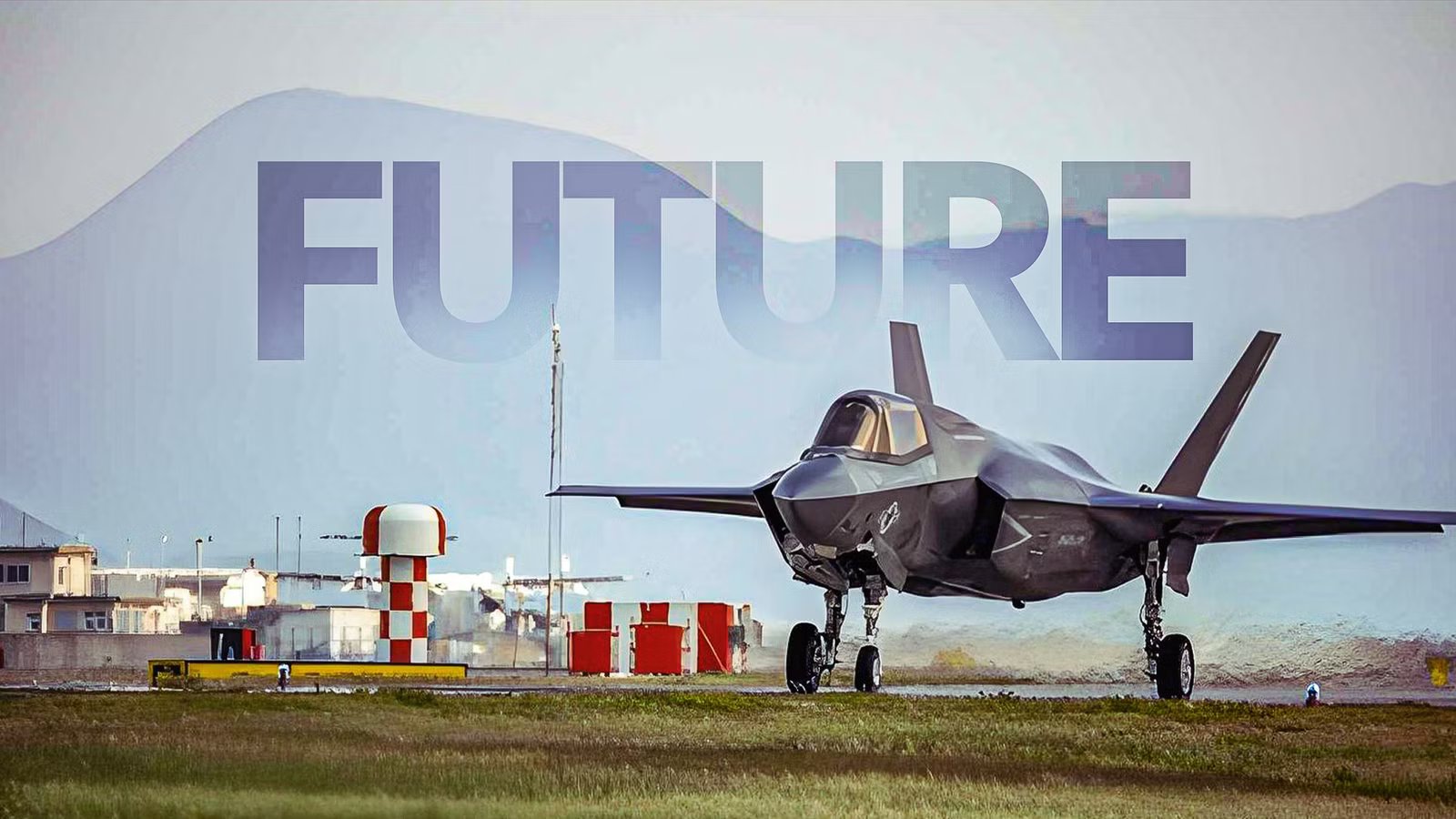
The United States is now working on the next generation of aircraft designed to stay ahead of China. The US considers itself to be in a period of heightened peer-on-peer competition that it hasn’t seen since the Cold War. Cutting-edge aircraft are being developed and built for the Air Force, Marine Corps, and Navy. Several aircraft are in the process of exiting (or nearing their exit from) service, including the AV-8B Harrier II, B-1 Lancer, legacy F/A-18 Hornet, the Lockheed U-2, A-10 Warthog (by 2030), F-15C/D, and others.
A range of new aircraft is set to form the core of US air combat in the future. The list will also exclude some important programs early in the development cycle and have uncertain funding, like the NGAS program. It will limit itself to the United States Air Force, and so the important naval MQ-25 Stingray tanker drone is also not listed.
Boeing F-15EX
Planned buy for 267 fighter jets

Not all of the future of the US Air Force air power will be next-generation stealth aircraft. In the White House proposal for Fiscal 2027, the plan is now to double the planned number of F-15EX fighter jets to 267. This is a significant boost and means the F-15EX is now envisioned to play a key role in USAF air power well into the 2040s and beyond. The proposal would see the Air Force purchase another 24 F-15EXs in 2027, along with another 37 F-35As.
The F-15 family first entered service in 1976 and has been a mainstay of US airpower ever since. The F-22 Raptor was designed to replace the F-15 family, but the end of the Cold War saw the Air Force only purchase 187 F-22s, down from the initially planned 750 purchase. This only allowed the F-22 to partially replace the Eagle; in response, the Air Force was forced to return to purchasing the F-15 as the massively updated F-15EX.
The Air Force is now phasing out its old F-15C/Ds and replacing them with F-15EXs and F-35As. But it’s the important McDonnell Douglas F-15E Strike Eagle fleet that is now in need of recapitalization. The Air Force has between 200 and 220 F-15Es in service, of which four have been lost in the 2026 Iran campaign. Increasing the eventual planned purchase of F-15EXs to 267 would allow it to fully replace these, plus some F-15C/Ds. It would also allow the Air Force to have three production lines humming – the F-15EX, the F-35A, and eventually the F-47.
Lockheed Martin F-35A Lightning II
Planned buy for 1,763 fighter jets

While the F-35 often gets in the news for all the wrong reasons, it is now, arguably, the most consequential fighter jet flying today. With Lockheed having delivered over 1,300 examples (of which around half have gone to the USAF), the fighter jet is now possibly the second most common fighter jet in service. The world’s most common fighter jet is the F-16, which remains in production for export. The other most common families are the F/A-18/EA-18G family and the Su-27/-30/-34/-35 family. The F-35 is now overtaking those families in terms of the number of flyable airframes.
After a dip to just 24 F-35As purchased in 2026, the White House proposal sees the Air Force purchasing 38 F-35As in 2027. The Air Force has a program of record for 1,763 F-35As. By 2026, around 754 of these are funded, meaning the Air Force still has plans to purchase another thousand. In terms of numbers, these will be the bulk of the USAF’s manned fighter jet fleet into the 2030s, 2040s, and 2050s.
The F-35 is currently undergoing its consequential Block 4 upgrade, which will drastically enhance its capabilities. Lockheed has managed to resolve the teething delays of the Technology Refresh 3 upgrade that paves the way for the Block 4. The F-35 is still maturing, and in the future, there is expected to be a Block 5 upgrade. The Air Force is envisioning the F-35 to be a command center of sorts operating with loyal wingman drones (CCA) and providing “a god’s eye-view” of the battle space to 4th-gen aircraft, like the F-15EX, with their heavy payloads.

Boeing F-47: Everything We Know So Far
There’s been a lot of mystique around the F-47.
Boeing F-47
At least 185 are planned

The F-22 Raptor may be the most advanced air superiority fighter jet flying today, but its days are numbered. Unlike the F-15EX and the F-16, the F-22 sits at the cutting edge and must have an unfair advantage over the most advanced rival enemy systems. This means that it faces being outdated more easily. When the F-22 entered service in the 2000s, its air dominance in wargames quickly became legendary.
But by the mid-2020s, its dominance is considered to be eroding due to improved radars, better missiles, and new aircraft like the Chinese J-20. Even if the J-20 can’t take on the F-22 directly, it can threaten the F-22’s enablers, like the aerial tankers and radar aircraft, which ultimately have a similar effect. The F-22 is not out yet, but the Air Force is embarking on a massive modernization program for the F-22 that will see the type get new radars, stealth drop tanks, and much more.
It is planned that these improvements will keep the Raptor relevant into the 2040s, but it is an interim measure until the replacement F-47 enters service and then matures (planned around 2030). The Air Force is planning to purchase at least 185 F-47s, allowing at least a one-for-one replacement of the Raptor. The F-47 has become a priority for the White House and the Air Force to the point where some in Washington are trying to delay the Navy’s F/A-XX out of fear that developing both would slow the F-47 down. Like the F-22 in the 2000s, the F-47 is intended to give the Air Force an unfair advantage in the 2030s and 2040s.
Northrop Grumman B-21 Raider
At least 100, perhaps 200, are planned

The US Air Force has a bomber problem. It has a need for a cheaper, high-capacity, stand-off missile truck, and that role can be served by its existing B-52s. But it also has a need for a high-end penetrator strategic bomber. That role is currently being filled by the B-2 Spirit, but with only 19 examples remaining in service and with its advantages eroding, these are increasingly insufficient for future high-end conflicts.
Its fleet of heavy B-1 Lancers is increasingly being used as missile trucks, as they are vulnerable to enemy air defense. Adding to the issue is that years of low-altitude flying have worn the airframes out, and they are in need of retirement. The Air Force is struggling to keep its remaining fleet of 46 B-1s up to strength. To fix these issues, the Air Force is pouring money into expanding the production capacity of the incoming B-21, which is expected to replace the B-1s from around 2028 to around 2032. After that, it will replace the B-2s.
The Air Force already has several test B-21s in inventory, and it is planning to introduce the aircraft into service in 2027. The Air Force has long indicated that it plans to purchase at least 100 B-21s, although there have been reports that it is considering purchasing as many as 150. Even more recently, there are reports that the Air Force may consider purchasing a whopping 200 B-21s. As the B-21 is designed for the high-end stealth penetrator role and is more modern and cheaper than the B-2, once it enters service, the B-2 essentially becomes obsolete.

6 Aircraft That Represent The Future Of Air Combat
Discover six aircraft redefining modern air warfare, from stealth fighters to missile trucks, shaping the balance of air power in 2026 and beyond.
Collaborative Combat Aircraft
At least 1,000 planned

The United States Air Force is leading the effort to develop advanced loyal wingman drones that it calls Collaborative Combat Aircraft (CCA). These are expected to be important enablers for manned fighter jets and are expected to restore affordable mass to the battlefield. A major issue is that aircraft become increasingly capable, expensive, and complex with succeeding generations. This means that mass declines, but mass is considered a virtue in itself.
The Air Force has now awarded Anduril’s YFQ-44 and General Atomics’ YFQ-42 with Increment 1 of its CCA program. These aircraft are already flying, and Anduril’s unmanned aircraft is now reported to be in serial production. Another important aircraft competing for the important Increment 2 of the CCA program is the Northrop Grumman YFQ-48 Talon Blue. A range of companies, including Lockheed Martin, Boeing, Kratos, Shield AI, and others, are developing high-end autonomous combat aircraft for the US military and export to US allies.
While the Air Force has rejected the smaller Kratos XQ-58 Valkyrie drone, the aircraft is being used by the USAF to develop its manned-unmanned teaming doctrines. A wheeled variant of the XQ-58 has been selected by the Marine Corps for its counterpart to the USAF’s CCA program. Kratos is also looking at selling a version to the German Air Force. The US Navy has just begun developing its own CCA program, although it appears to be behind the other services and perhaps more interested in lower-end and more expendable combat drones that could end their lives as one-way attack munitions after a few missions.


![easyJet Announces 18 New Routes Including Longest Flight Ever [Full List]](https://dailynewsnblog.com/wp-content/uploads/2026/04/easyjet-airbus-a320neo-taxiing-custom-thumbnail.jpg)