dailynewsnblog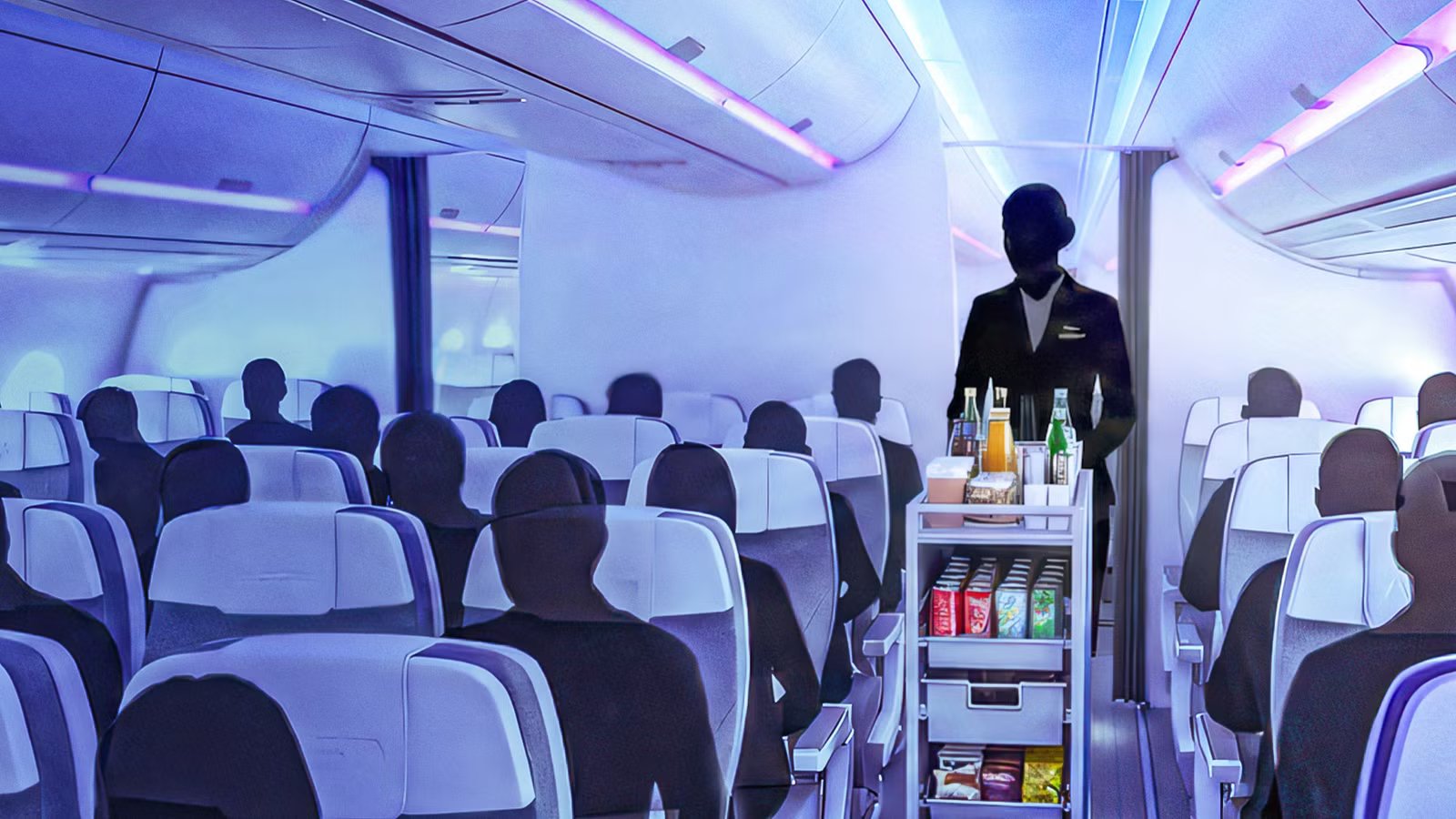
The modern airline industry is continually striving to eliminate inefficiencies and reduce the amount of fuel required for any given flight, with even modest reductions in average takeoff weight capable of saving airlines millions of dollars annually. Despite this ongoing drive toward evidence-led optimization, onboard food and beverage service remains largely dependent on estimates and historical averages rather than actual customer consumption statistics.
This reliance on forecasting is partly due to operational complexity and regulatory constraints, but it nevertheless results in persistent over-provisioning. The outcome is significant financial losses, unnecessary fuel burn, and avoidable environmental impacts across global fleets. In parallel with wider digital transformation efforts in aviation, Airbus’ Smart Catering initiative aims to close this long-standing knowledge gap by introducing real-time data analysis into one of commercial aviation’s most traditionally static and overlooked operational areas.
The Problem It’s Solving

Shutterstock | Simple Flying
The global airline industry produces roughly 3.97m tons (3.6m tonnes) of cabin and catering waste each year, a figure expected to climb to nearly 4.4m tons (4m tonnes) by 2025 and potentially double by 2040 if current trends continue, largely due to growing passenger demand. About 3.3 lb (1.5 kg) of waste is generated for every traveler. Of this total, an estimated 18–20% consists of untouched food and beverages, the majority of which is either incinerated or sent to landfill due to strict international regulations governing In-Flight Catering waste. This uneaten food also contributes needlessly to average flight weight, causing an increase in fuel consumption and overhead costs for airlines.
This issue is complicated by the variability in flyer demand across routes, seasons, and cabin classes, which makes accurate forecasting difficult. Airlines must balance the risk of under-provisioning with the financial and environmental cost of over-provisioning. As a result, catering strategies have historically erred on the side of excess, embedding inefficiencies into the aviation industry that are now becoming increasingly difficult to justify. Reducing the rate of waste production is both an environmental and an economic issue that needs to be addressed.
What Smart Catering Actually Is

Smart Catering is an AI and data analytics driven technology that tracks in-flight catering demand in real time, automatically recording what customers consume and what remains, with the goal of achieving significant reductions in avoidable food waste. At the center of the system is a Food Scanner mounted on the catering trolley: a downward-facing camera identifies the contents of each meal tray as it is served and captures what is left when the tray is returned. A horizontally positioned barcode scanner simultaneously logs beverages placed on the trolley. Importantly, the platform leverages cameras already integrated into crew tablets or mobile devices, eliminating the need for additional hardware while continuously updating onboard inventory for both meals and drinks.
According to Airbus’ cabin and cargo architect Michael Bauer, several airlines have noted that “… as soon as the aircraft doors close, it’s been basically a ‘black hole’ of information….” Smart Catering aims to fill this information gap by using the data gathered by its Food Scanner.
Armed with this data, airlines can refine menu planning and optimize loading strategies, prioritizing items that are more likely to be consumed while reducing overstocking of less popular options. The impact extends beyond waste reduction: lighter catering loads reduce aircraft weight, improving fuel efficiency and cutting emissions. In this sense, Smart Catering positions itself not just as a sustainability tool, but as a driver of logistics and economic optimization. By addressing a long-standing data blind spot, Airbus appears to have identified a meaningful opportunity for innovation in an area of aviation that has historically seen little technological disruption.

6 Airlines With The World’s Most Superior Premium Economy Dining In 2026
These 6 airlines are redefining premium economy dining in 2026 with chef-led menus, Champagne service, and restaurant-quality inflight meals.
The Virgin Atlantic Trial

In 2025, Airbus tested its AI-driven data analytics technology at a Virgin Atlantic cabin simulation center in the UK before deploying it on live flights. Following its successful simulation test, an Airbus A330 operating a round-trip flight from  London Heathrow Airport(LHR) to
  New York JFK Airport (JFK) and an Airbus A350 operating from London Heathrow to
  Orlando International Airport (MCO) were deployed with the technology on board. The Smart Catering process appears to be minimally intrusive and can be easily implemented into existing infrastructure without huge overhauls.
The initial feedback from airlines and crew following the test trials was positive, particularly regarding the system’s ability to operate seamlessly in the background without adding to cabin crew workload. Early results indicated that the technology could deliver meaningful insights into traveler intake patterns while maintaining normal service routines. This combination of low operational disruption and high metric value strengthens the case for broader adoption, suggesting that Smart Catering could scale across fleets without significant barriers. If these outcomes are replicated at a larger scale, the trials may mark an important step toward input-driven catering becoming standard practice in the airline industry.
The Data Layer Behind It

All information collected by the onboard Food Scanner is processed via an off-board, cloud-hosted dashboard that generates key performance indicators, using usage trends and statistics to enable highly accurate catering planning and prediction of food and beverage needs on a route-by-route basis. Airlines are also experimenting with allowing flyers to choose their preferred meals in advance, addressing both the waste problem and the customer experience by processing these selections in a continuous analytical pipeline. Each scanned tray and logged beverage is time-stamped, categorized, and linked to specific flight variables such as route, cabin class, and service phase. This data is then aggregated in the cloud, where machine learning models clean and standardize the inputs. From there, the system applies pattern recognition and predictive modeling techniques to identify repeating consumer behaviors.
Rather than relying on static historical averages, the platform continuously retrains its models with newly collected insights, allowing forecasts to evolve dynamically as more flights are analyzed. Outputs are delivered through a dashboard that translates these models into actionable metrics, such as consumption probability distributions, variance ranges, and confidence intervals, providing catering planners with a statistically grounded basis for decision-making. In this sense, the core of Smart Catering lies not just in information collection, but in the iterative refinement of that evidence into a coherent predictive system.

Here’s What Cabin Crew Notice About Passengers Flying Business Class For The 1st Time
Premium cabin demand has only continued to grow.
Why It Matters Beyond Sustainability

The business case extends well beyond environmental impact. Reducing the amount of food loaded onto aircraft directly cuts weight, which translates into fuel savings, lower operating costs, and reduced emissions on every flight. At the same time, access to detailed consumption statistics allows airlines to better match catering to traveler demographics, route profiles, and travel classes, increasing the likelihood that onboard products are actually purchased and enjoyed. This shift from estimation to precision can improve ancillary revenue while minimizing overstocking and waste. Over time, the ability to continuously refine menus and loading strategies based on real-world figures could turn catering from a cost center into a more responsive, profit-aware component of airline operations.
Beyond immediate cost and revenue benefits, the implications for airline operations are broader. Catering has traditionally been planned using historical averages and limited feedback loops, often resulting in conservative overloading to avoid shortages. By introducing real-time analytics and route-specific insights, airlines can move toward a more dynamic, demand-driven model that aligns closely with actual passenger behavior. This not only improves efficiency across the catering supply chain but also supports wider market efforts to optimize aircraft performance and reduce unnecessary load wherever possible. One possible negative side effect is that, with the shift away from conservative overstocking, some flights may occasionally run into shortages when Smart Catering’s analytical conclusions differ from consumer reality.
What Comes Next

A functional prototype of Smart Catering was presented to potential airline customers at the Aircraft Interiors Expo in Hamburg from April 14–16, with Airbus positioning the showcase as a launchpad for broader commercial adoption. The concept signals a wider shift within aviation toward granular data collection and real-time operational visibility, particularly in areas that have historically lacked measurable insight. As airlines push for greater efficiency, AI-driven systems like Smart Catering enable vast amounts of previously untapped information to be captured, processed, and translated into practical decision-making tools.
If adopted at scale, this approach could redefine how airlines manage not just catering but a range of onboard services, embedding AI intelligence more deeply into everyday flight operations. Alongside efficiency gains, this shift also reflects a growing cultural change within aviation, where intuition-led planning is increasingly being replaced by evidence-based decision-making. As digital infrastructure becomes more integrated into aircraft operations, data is no longer just a byproduct of service but a core operational asset. In this context, Smart Catering represents an early example of how AI could quietly reshape airlines’ understanding and optimization of the passenger experience from loading to touchdown.