dailynewsnblog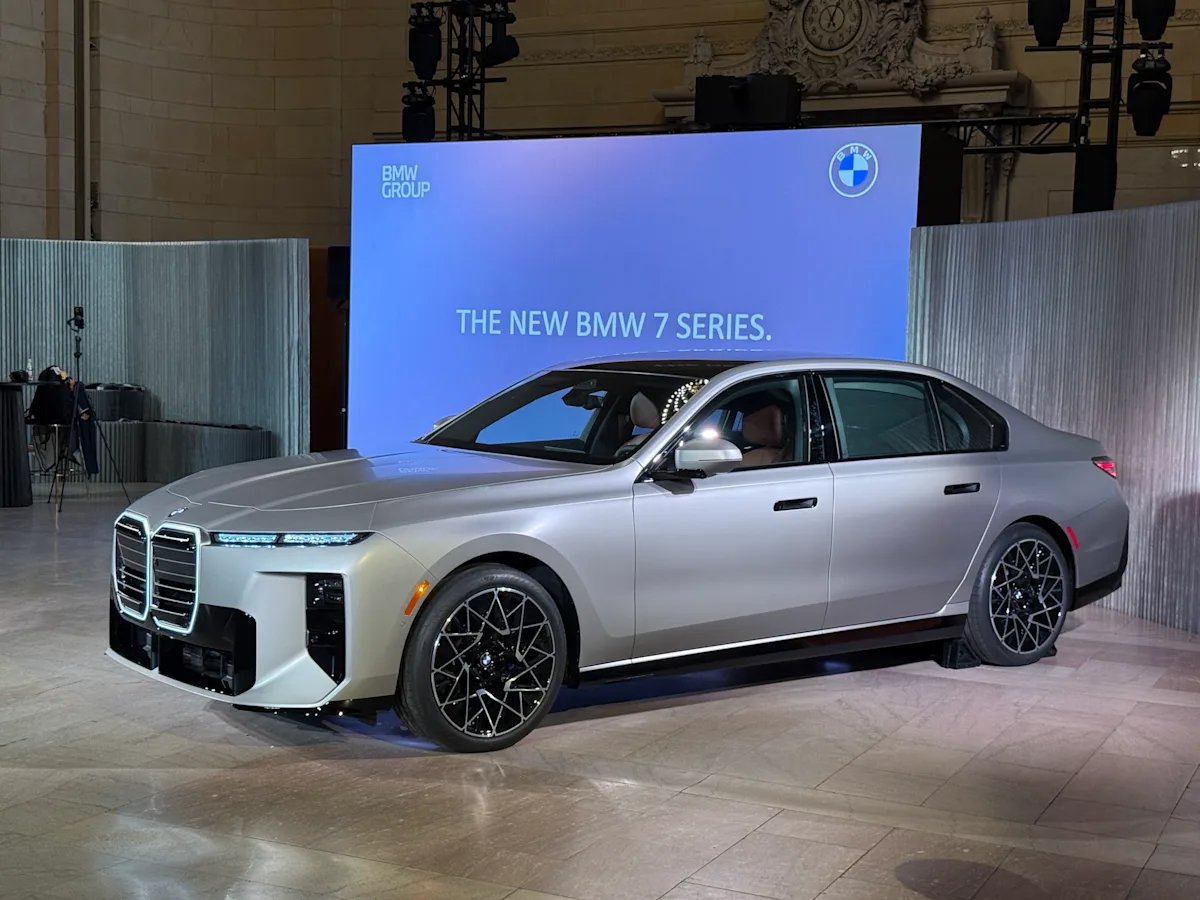
BMW has long treated the 7 Series as its technological proving ground — the halo car where crazy ideas start off before trickling down to the rest of the automaker’s lineup.
The latest 7 Series, the seventh generation, aptly enough, debuted simultaneously on Wednesday at the Beijing Auto Show and in a splashy event at New York City’s Grand Central Terminal. The new 7 Series may also be the most consequential version of the flagship sedan since the original debuted in 1977 (and yes, there are a lot of 7s here).
While the new 7 Series looks somewhat similar to the current-gen version, BMW firmly pushed back on any suggestion that the seventh-generation 7 Series is a routine mid-cycle update.

“I would like to call it a real transformation, and not a refresh,” said Sebastian Mackensen, CEO of BMW North America, in an interview with Yahoo Finance. “The whole customer interface, the whole digital screen world in this vehicle is brand new.”
The car debuts BMW’s Panoramic iDrive system, borrowed from the Neue Klasse EV architecture, projecting information across the full width of the windshield. A new floating center display, a redesigned steering wheel (which will have its critics due to unorthodox design), and the brand’s first passenger screen complete an interior that feels more Millennium Falcon than traditional sedan.

Under the hood, if you will, are more changes.
The 7 Series launches with fully electric i7 models, a 6-cylinder and V8 gas variant, and a plug-in hybrid 750e xDrive arriving in early 2027.
The electric versions received bigger updates. The i7 60 xDrive now posts over 350 miles of estimated range on an upgraded 112.5 kWh battery using sixth-generation cylindrical cells and can charge from 10% to 80% in approximately 28 minutes at compatible fast chargers.
Mackensen calls the powertrain strategy more of a philosophy than a compromise. “We like to call it technology openness,” he said. “We want every BMW 7 Series customer to get the real deal — a full 7 Series. The only difference is you have electric, you have plug-in hybrid, or you drive with a combustion 6 cylinder or a V8 engine. You don’t have to make a compromise to your preference or drivetrain.”
Despite the technology push, Mackensen acknowledged the rough patch facing electric vehicles in the US.
“Right now, because of the disappearance of government incentives, EV sales have gone backward a little bit,” he said. In 2025, roughly 25% of 7 Series sales in the US were fully electric, with another 7% going to the plug-in hybrid — meaning about two-thirds of buyers still chose combustion engines.