dailynewsnblog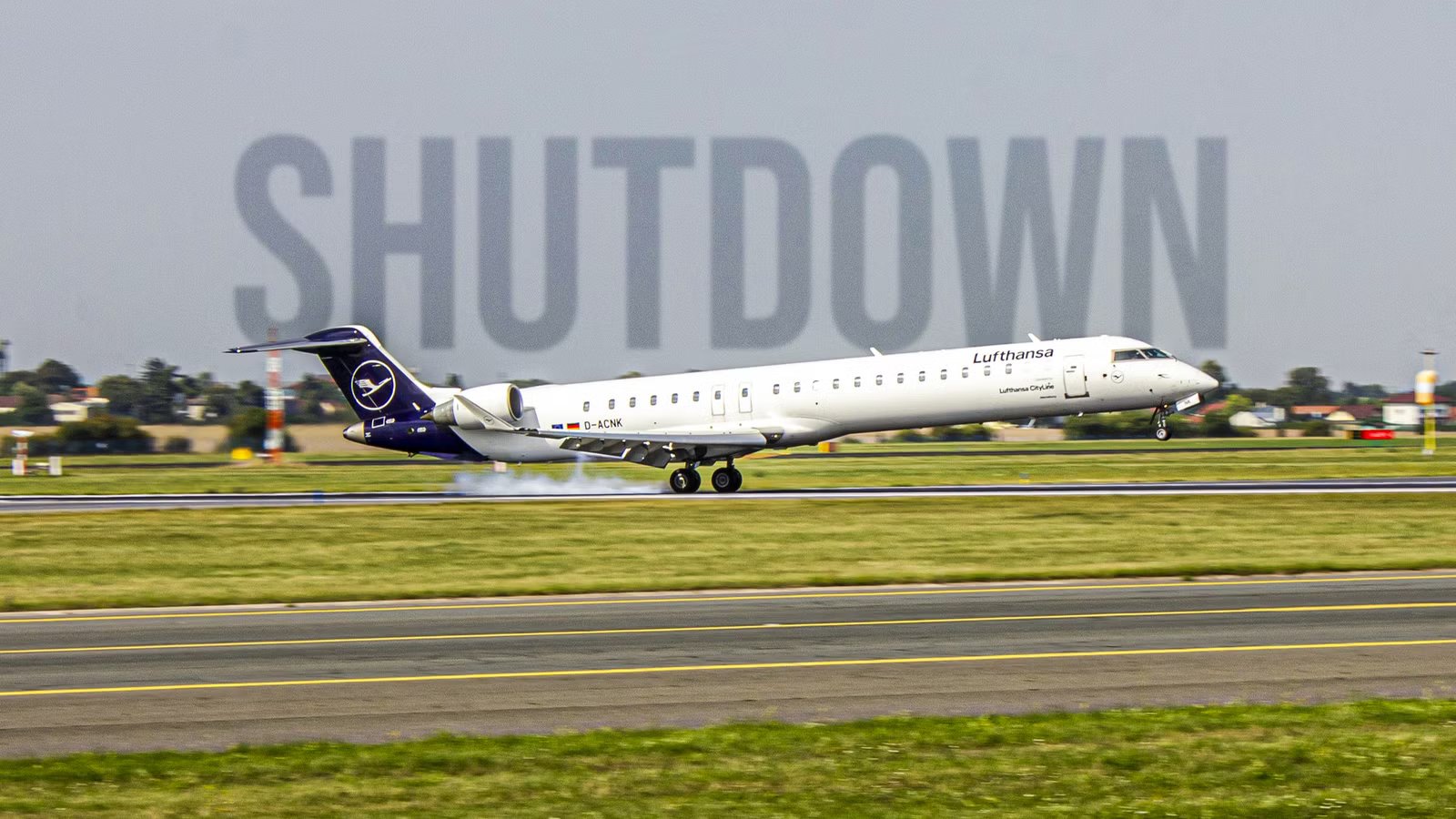
The abrupt closure of Lufthansa CityLine marks one of the clearest recent examples of how quickly airline economics can shift under external pressure. Founded in 1958 (originally as Ostfriesische Lufttaxi before being absorbed into the Lufthansa Group), the carrier has operated short-haul and regional routes across Europe for decades, feeding passengers into major hubs like Frankfurt and Munich. At its peak, CityLine carried millions of passengers annually and formed a critical part of the group’s hub-and-spoke model, operating a fleet dominated by regional jets.
By early 2026, however, the environment had changed dramatically. Lufthansa, Europe’s largest airline group by revenue, was already in the middle of a multi-year restructuring effort aimed at improving margins and simplifying its fleet. The group operates hundreds of aircraft across multiple subsidiaries, including long-haul, low-cost, and regional divisions. Within that ecosystem, CityLine had increasingly become the outlier: an older fleet, higher unit costs, and less flexibility compared to newer operations like Lufthansa City Airlines. When fuel prices surged, it wasn’t the only weak link, but it was the first one that could be removed quickly.
A Shutdown That Arrived A Year Early

The closure of Lufthansa CityLine on April 18 came roughly one year ahead of schedule, compressing what is typically a gradual wind-down into a rapid operational exit. Around 30 aircraft, including Bombardier CRJ900s, Airbus A319s, and A321P2Fs, were grounded almost immediately, representing a substantial portion of Lufthansa’s regional jet capacity. For context, that fleet had been responsible for hundreds of daily short-haul flights across Europe, connecting secondary cities to major hubs.
CityLine itself had long been a core part of Lufthansa’s network strategy. Based primarily in Munich, the airline operated under Lufthansa branding but maintained its own operational structure, including crew contracts and maintenance programs. Its role was to provide high-frequency service on thinner routes where larger aircraft would be uneconomical. This made it indispensable in network design, but also highly sensitive to cost fluctuations.
What changed in 2026 was not demand, but cost tolerance. Airlines can sustain inefficient operations when margins are stable, but when expenditures spike sharply, those same operations become immediate liabilities. By accelerating the shutdown, Lufthansa effectively chose to absorb short-term disruption in exchange for long-term cost savings. It’s a decision that reflects both urgency and strategic clarity: better to cut deeply once than bleed slowly over time.
The Fuel Shock That Changed The Equation

The most immediate trigger for the accelerated closure was the surge in jet fuel prices following geopolitical instability involving the 2026 Iran Crisis. Aviation fuel, typically priced per gallon, rose from roughly $2.00 per gallon ($0.53 per liter) pre-crisis to over $4.00 per gallon (about $1.06 per liter) in some markets. For an industry where fuel already represents a major expense, this kind of increase is transformative.
Fuel typically accounts for about 25% of an airline’s operating costs under normal conditions. With prices doubling, that share can climb to 40% or more, depending on the airline’s hedging strategy. Lufthansa had hedged approximately 80% of its fuel needs, locking in lower prices for most of its consumption. However, the remaining 20%, purchased at market rates, became dramatically more expensive, effectively raising the marginal cost of each additional flight.
This dynamic creates a powerful incentive to reduce overall fuel consumption. Importantly, airlines don’t just look at total fuel burn; they focus on fuel burn per seat. Aircraft that consume more fuel per passenger become disproportionately expensive when prices rise. In this environment, even a relatively small difference in efficiency can translate into millions of dollars in additional costs over the course of a year.

Lufthansa Shuts Down CityLine: Regional Brand To Vanish Within Days
The German flag carrier has cited rising oil prices and labor disputes as key factors behind its operational restructuring.
Why The CRJ900 Became The Weak Link

The CRJ900 was designed for a different economic era, one in which fuel prices were lower and regional connectivity was prioritized over absolute efficiency. With seating for roughly 76 to 90 passengers, the aircraft is ideal for short routes with moderate demand. However, its smaller size creates a fundamental disadvantage: fewer passengers to share the cost of each flight.
A typical CRJ900 flight might consume around 5,500–6,000 lbs of fuel (approximately 2,500–2,700 kg) on a short-haul sector. While that is lower than that of a larger aircraft in absolute terms, the per-seat fuel consumption is significantly higher. Spread across 80 passengers, the per-person fuel cost rises quickly, especially when fuel prices double. This makes it difficult to maintain profitability without raising ticket prices, which is often not feasible in competitive markets.
Additionally, the aircraft’s engines, while proven and reliable, lack the efficiency gains of newer designs. Over time, incremental improvements in aerodynamics, materials, and engine technology have created a significant gap between older regional jets and modern aircraft. In a low-cost environment, that gap is manageable. In a high-cost environment, it becomes critical to turn previously viable routes into loss-making operations almost overnight.
The Per-Seat Cost Gap Vs. New-Generation Aircraft

The shift toward newer aircraft, such as the A220-300, highlights just how large the efficiency gap has become. The A220 typically seats between 130 and 150 passengers and is powered by next-generation engines designed to minimize fuel consumption. These aircraft can deliver fuel savings of approximately 20–30% per seat compared to older regional jets.
To illustrate, an A220 might burn around 6,600 pounds of fuel (about 3,000 kilograms) on a similar route where a CRJ900 burns 5,700 pounds (about 2,600 kilograms). While the total fuel burn is slightly higher, the A220 carries nearly twice as many passengers. This results in a much lower fuel cost per seat, allowing airlines to remain profitable even when fuel prices are elevated.
Beyond fuel efficiency, the A220 also offers advantages in maintenance and operational flexibility. Newer aircraft require fewer heavy maintenance checks and benefit from improved reliability, reducing downtime and associated costs. When combined with a higher seating capacity, these factors significantly lower the cost per available seat mile (or kilometer), making the aircraft far more resilient to economic shocks.

What Is The Difference Between Lufthansa City Airlines & Lufthansa CityLine?
Lufthansa’s new City Airlines aims for lower costs with Airbus jets, but has sparked union concerns over job security.
Labor Costs & Structural Disadvantages

Fuel efficiency alone does not determine profitability; labor costs are equally important. Lufthansa CityLine operated under legacy labor agreements that included higher wages and more restrictive work rules than those of newer subsidiaries. These agreements were shaped by negotiations with unions such as Vereinigung Cockpit, which represents many of the group’s pilots.
In contrast, newer operations like Lufthansa City Airlines were established with more flexible and cost-efficient labor structures. This allowed them to operate at a lower overall cost, even before factoring in differences in fleet efficiency. Over time, this created a growing disparity within the Lufthansa Group, where newer subsidiaries could deliver the same service at a lower cost.
When fuel prices increased, this disparity became impossible to ignore. High fuel costs amplify all other inefficiencies, making expensive labor agreements even more burdensome. The combination of higher crew costs and less efficient aircraft created a compounding effect, pushing CityLine’s cost base beyond sustainable levels. In this context, shutting down the subsidiary was not just about fuel; it was about eliminating a structurally uncompetitive operation.
A Broader Fleet And Strategy Reset

The retirement of CityLine’s fleet is part of a much larger transformation within Lufthansa. The group has been actively phasing out older aircraft, including long-haul models like the A340-600 and the Boeing 747-400. These aircraft, while capable, consume more fuel and require more maintenance than newer alternatives, making them less attractive in a high-cost environment. Many of these jets are also approaching or exceeding 20–25 years of service, a point at which heavy maintenance checks become more frequent and expensive. In practical terms, that means higher downtime, rising overhaul costs, and diminishing returns on continued operation.
At the same time, Lufthansa is investing heavily in modern aircraft such as the A350 and the A220. These aircraft offer significant improvements in fuel efficiency, range, and passenger comfort, with newer engines delivering double-digit percentage reductions in fuel burn per seat. The A350, for example, is designed for long-haul efficiency with advanced composite materials, while the A220 is optimized for short- to medium-haul routes with lower trip and seat costs. By standardizing its fleet to fewer aircraft types, the airline can also reduce pilot training complexity, streamline spare parts inventories, and simplify maintenance operations, each contributing to measurable cost savings over time.
Ultimately, the closure of Lufthansa CityLine is best understood as part of this broader strategic shift. The fuel price shock acted as a catalyst, accelerating decisions that were already in motion and compressing a multi-year transition into a much shorter timeframe. Rather than a sudden collapse, it was a calculated move to align the airline’s operations with a new economic reality, one where efficiency, flexibility, and cost control are more important than ever. In that sense, the decision reflects a wider industry trend: airlines are no longer willing to carry structurally inefficient assets, especially when external shocks expose their weaknesses so clearly.